Jean-Bertrand Aristide's Ouster on February 29, 2004
2004 · Port-au-Prince, Haiti
Jean-Bertrand Aristide, the President of Haiti, was ousted from power and fled the country amid a rebellion and political crisis.
September 30, 1993
The USS Harlan County was withdrawn from a planned peacekeeping mission in Haiti after being confronted by armed supporters of the military regime.
Port-au-Prince, Haiti | United States Navy
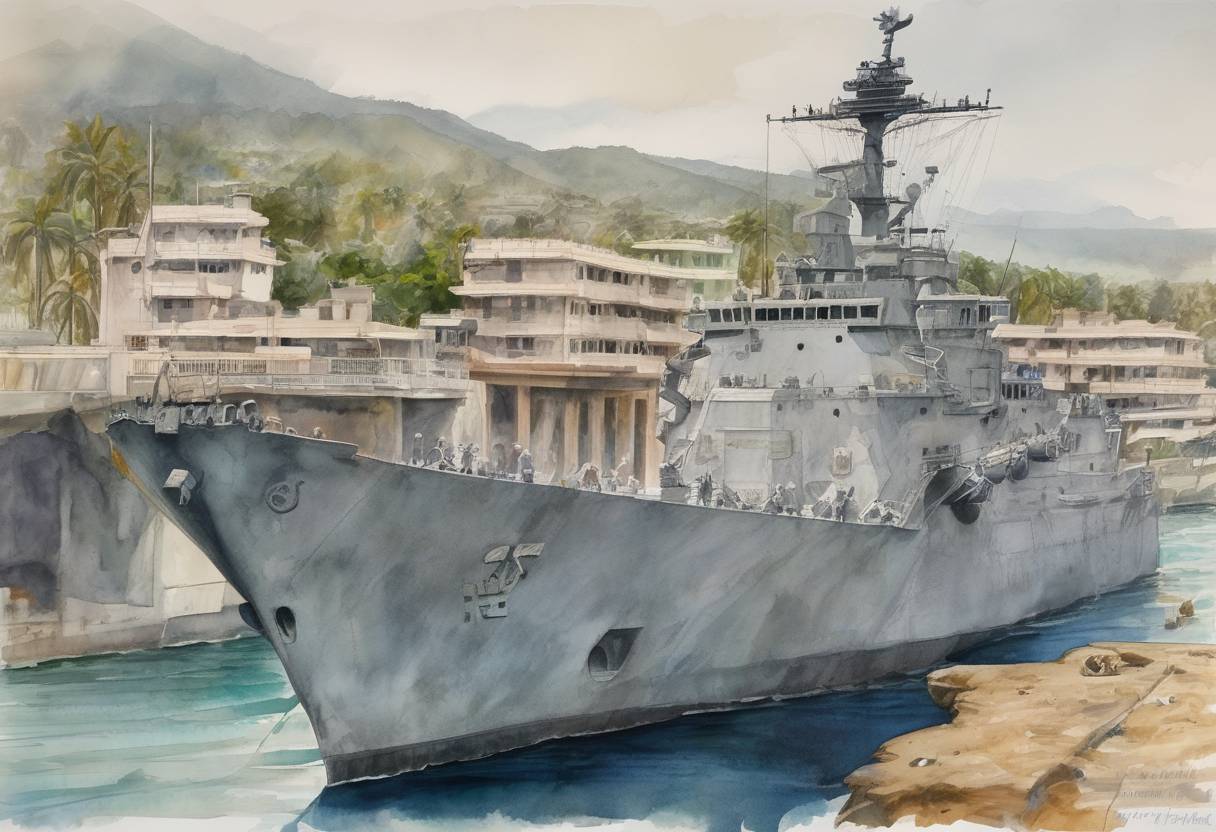
On September 30, 1993, the USS Harlan County, a United States Navy landing ship, was withdrawn from a planned peacekeeping mission in Haiti. This event was a significant moment in the tumultuous political landscape of Haiti during the early 1990s, marked by the confrontation with armed supporters of the Haitian military regime.
Haitian Political Turmoil: Haiti was experiencing severe political instability following the 1991 military coup that ousted the democratically elected President Jean-Bertrand Aristide. The military regime, led by General Raoul Cédras, faced international condemnation and economic sanctions.
International Intervention: In an effort to restore democracy, the United Nations and the Organization of American States imposed sanctions and sought to facilitate Aristide’s return to power. The Governors Island Accord, signed in July 1993, was an agreement intended to reinstate Aristide by October 30, 1993.
USS Harlan County’s Mission: As part of the international effort to support the transition, the USS Harlan County was dispatched to Haiti carrying U.S. and Canadian troops. Their mission was to assist in the implementation of the Governors Island Accord by providing security and logistical support.
Arrival and Opposition: Upon the ship’s arrival in Port-au-Prince harbor, it was met with hostility from armed supporters of the military regime. These groups, known as “attachés” and “FRAPH” (Front for the Advancement and Progress of Haiti), staged a protest on the docks, brandishing weapons and threatening violence.
Decision to Withdraw: In response to the volatile situation and the potential risk to the troops, the U.S. decided to withdraw the USS Harlan County. The decision was made to avoid a direct confrontation that could have escalated into violence.
Impact on U.S. Policy: The withdrawal was seen as a setback for U.S. foreign policy and highlighted the challenges of intervention in Haiti. It underscored the strength and influence of the military regime and its supporters.
Continued Efforts: Despite the withdrawal, international efforts to restore democracy in Haiti continued. In 1994, a larger multinational force led by the United States successfully intervened, leading to the eventual return of Aristide to power.
Long-term Significance: The incident demonstrated the complexities of international peacekeeping and the difficulties in dealing with entrenched military regimes. It also highlighted the importance of careful planning and assessment of on-ground realities in peacekeeping missions.
The USS Harlan County’s withdrawal remains a notable example of the challenges faced in international diplomatic and military interventions, particularly in politically unstable regions.
Source: en.wikipedia.org