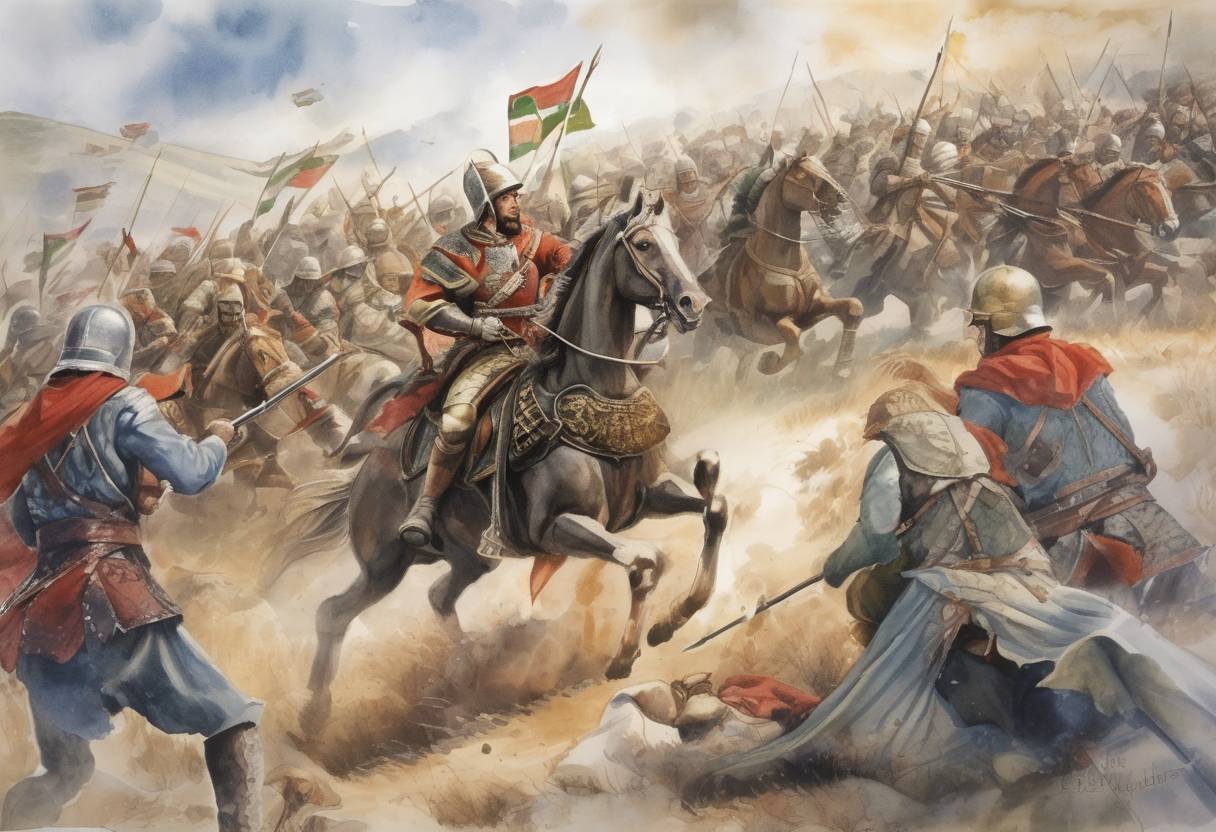
The Battle of the Rishki Pass: November 4, 751
The Battle of the Rishki Pass, which took place on November 4, 751, was a significant confrontation during the Byzantine-Bulgarian Wars. This battle marked a pivotal moment in the ongoing conflict between the Byzantine Empire and the Bulgarian state, highlighting the strategic prowess of the Bulgarian forces under Khan Kormisosh.
Historical Context
The Byzantine-Bulgarian Wars were a series of conflicts that spanned several centuries, primarily driven by territorial disputes and the desire for regional dominance. By the mid-8th century, the Byzantine Empire, under the rule of Emperor Constantine V, was engaged in efforts to stabilize and expand its borders, often clashing with the emerging power of the Bulgarian state.
Khan Kormisosh, who ruled Bulgaria from around 753 to 756, was determined to assert Bulgarian strength and secure his territory against Byzantine incursions. The Rishki Pass, located in the Balkan Mountains, was a strategic location that served as a gateway between the Byzantine territories and the Bulgarian lands.
The Battle
On November 4, 751, the Byzantine army, likely seeking to penetrate deeper into Bulgarian territory, encountered the forces of Khan Kormisosh at the Rishki Pass. The Bulgarians, familiar with the terrain and employing effective military tactics, were able to decisively defeat the Byzantine forces.
The victory at the Rishki Pass was significant for several reasons:
- Strategic Advantage: The Bulgarians’ control over the pass allowed them to secure a critical defensive position, hindering further Byzantine advances into their territory.
- Military Prestige: The defeat of a Byzantine army enhanced the military reputation of the Bulgarian state and demonstrated their capability to defend against one of the most powerful empires of the time.
- Political Implications: The victory bolstered Khan Kormisosh’s position as a leader and strengthened the internal cohesion of the Bulgarian state.
Aftermath and Consequences
The defeat at the Rishki Pass was a setback for the Byzantine Empire, which continued to face challenges in its efforts to control the Balkans. For the Bulgarians, the victory reinforced their independence and contributed to the consolidation of their state.
In the broader context of the Byzantine-Bulgarian Wars, the battle exemplified the ongoing struggle for dominance in the region. It underscored the resilience of the Bulgarian state and its ability to resist Byzantine expansion, setting the stage for future conflicts and negotiations between the two powers.
The Battle of the Rishki Pass remains a notable event in the history of the Byzantine-Bulgarian Wars, illustrating the complex dynamics of medieval European geopolitics and the enduring legacy of these early medieval conflicts.