The Establishment of the Tetrarchy: March 1, 293
293 · Nicomedia, Roman Empire
Diocletian and Maximian appoint Constantius Chlorus and Galerius as Caesars, marking the beginning of the Tetrarchy in the Roman Empire.
November 20, 0284
Diocletian is proclaimed Roman Emperor by his soldiers after the death of the Emperor Carus.
Nicomedia, Roman Empire | Roman Army
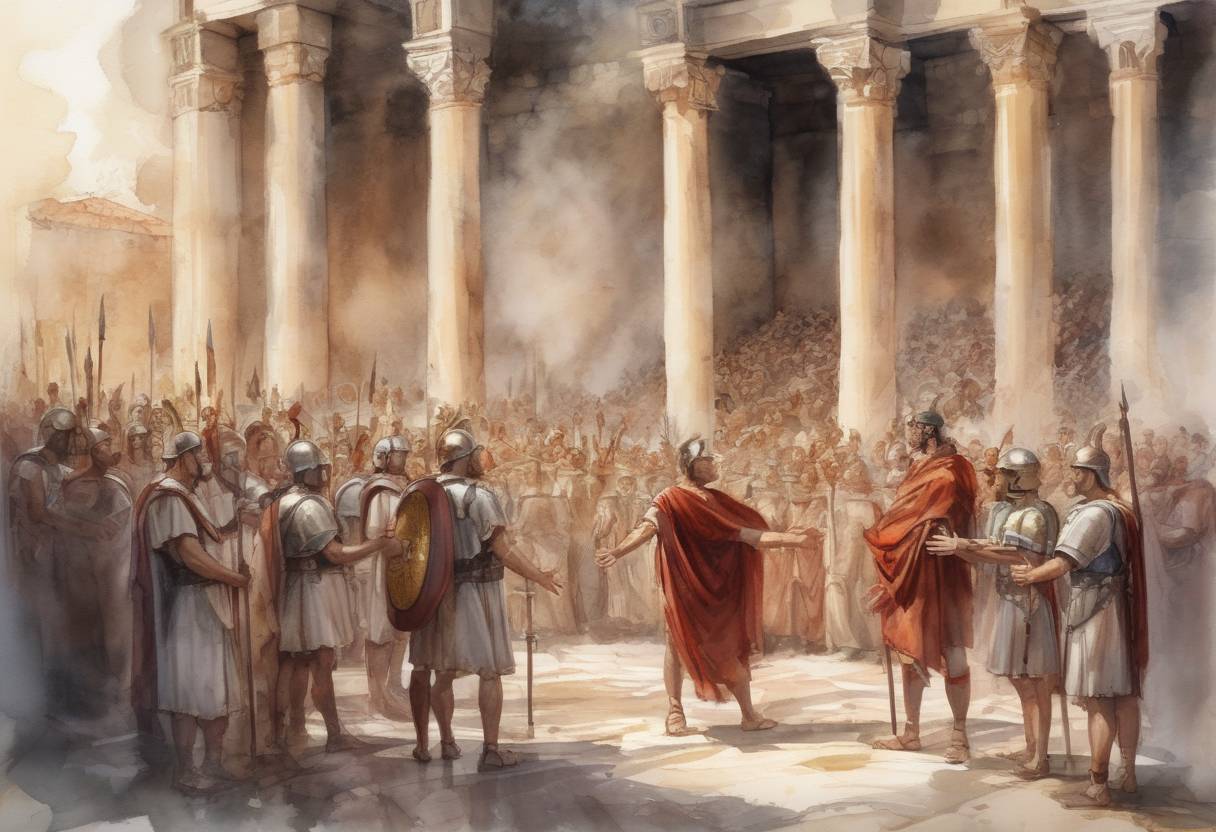
On November 20, 284, Gaius Aurelius Valerius Diocletianus, commonly known as Diocletian, was proclaimed Roman Emperor by his soldiers. This significant event marked the beginning of a transformative era in Roman history, known as the Dominate, which followed the earlier Principate period.
Crisis of the Third Century: The Roman Empire was experiencing a period of severe instability known as the Crisis of the Third Century (235-284 AD). This era was characterized by frequent changes of emperors, military defeats, economic troubles, and internal strife.
Emperor Carus: Diocletian’s predecessor, Emperor Carus, had ruled briefly from 282 to 283 AD. His reign ended abruptly when he died under mysterious circumstances during a campaign against the Sassanid Empire in Persia. His death left a power vacuum and his sons, Carinus and Numerian, as his successors.
Numerian’s Death: Numerian, one of Carus’s sons, died under suspicious circumstances in 284 AD while returning from the Persian campaign. His death was allegedly due to an eye disease, but rumors of foul play circulated, implicating his praetorian prefect, Aper.
Military Support: Diocletian, a commander of the cavalry and a trusted military leader, was proclaimed emperor by his troops in Nicomedia (modern-day İzmit, Turkey) on November 20, 284. His rise to power was largely due to the support of the army, which was crucial in the politically unstable environment of the time.
Execution of Aper: Shortly after his proclamation, Diocletian accused Aper of murdering Numerian and executed him personally, solidifying his position and eliminating a potential rival.
Tetrarchy: Diocletian is best known for establishing the Tetrarchy, a system of government that divided the Roman Empire into four regions, each ruled by a co-emperor. This system was designed to bring stability and more efficient governance to the sprawling empire.
Administrative Reforms: He reorganized the empire’s administrative structure, increasing the number of provinces and creating dioceses to improve local governance.
Economic Measures: Diocletian attempted to curb inflation and stabilize the economy through measures such as the Edict on Maximum Prices, which set price controls on goods and services.
Persecution of Christians: His reign is also noted for the Diocletianic Persecution, the last and most severe persecution of Christians in the Roman Empire, which sought to reinforce traditional Roman religious practices.
Diocletian’s reign marked a turning point in Roman history. His reforms laid the groundwork for the later Byzantine Empire and helped stabilize the Roman Empire after decades of turmoil. Although the Tetrarchy eventually collapsed, his efforts to restore order and strengthen imperial authority had a lasting impact on the Roman state.
Diocletian’s abdication in 305 AD was unprecedented, as he voluntarily stepped down from power, setting a rare example of a peaceful transition in Roman imperial history. His legacy is a testament to his ability to adapt and reform the empire during one of its most challenging periods.
Source: en.wikipedia.org