Adolf Hitler Marries Eva Braun: April 29, 1945
1945 · Berlin, Germany
Adolf Hitler marries Eva Braun in a bunker in Berlin as World War II nears its end.
November 5, 1937
Adolf Hitler held a secret meeting and outlined his plans for acquiring 'living space' for the German people, which later became known as the Hossbach Memorandum.
Berlin, Germany | Nazi Germany
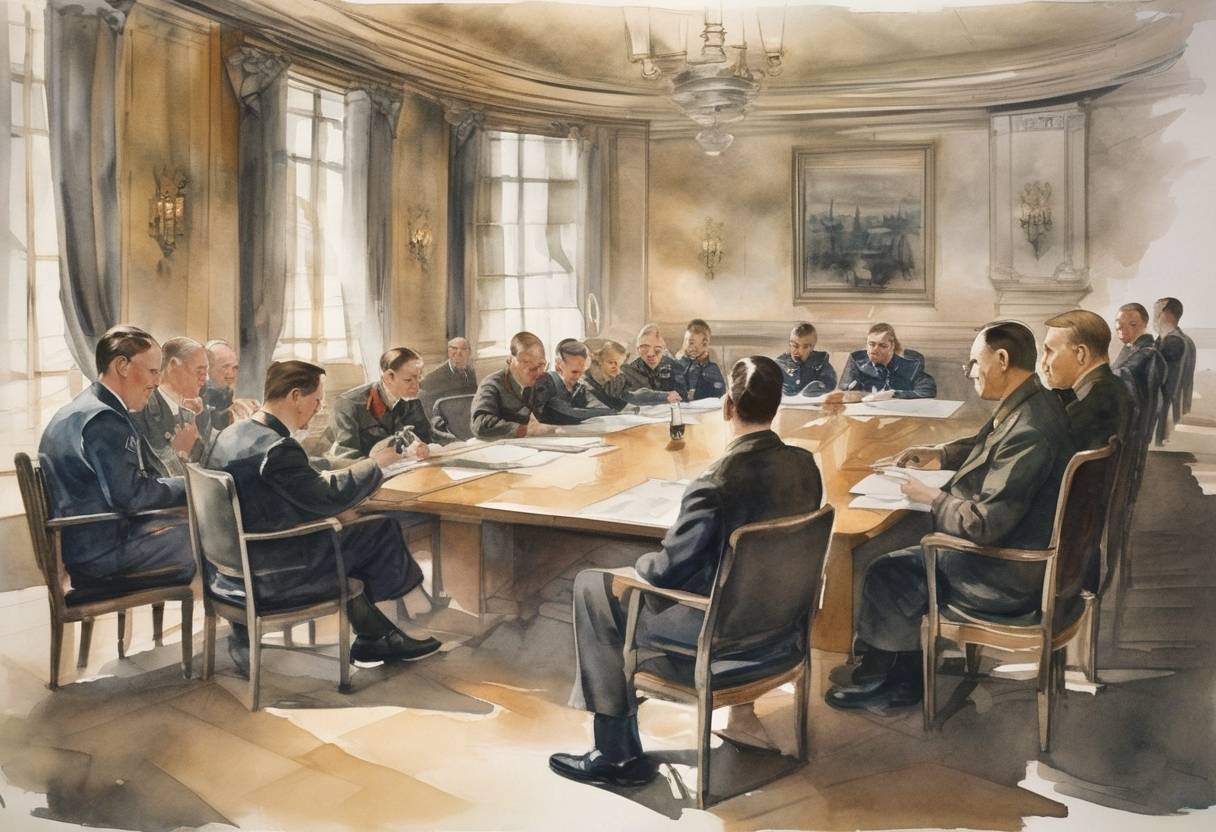
On November 5, 1937, Adolf Hitler convened a secret meeting with several of his top military and political leaders in the Reich Chancellery in Berlin. This meeting, later documented in what became known as the Hossbach Memorandum, was pivotal in outlining Hitler’s aggressive expansionist policies that would eventually lead to World War II.
By 1937, Adolf Hitler had been in power for four years, during which he had consolidated his control over Germany and begun rearming the nation in violation of the Treaty of Versailles. His foreign policy was increasingly aggressive, aimed at overturning the post-World War I international order and expanding German territory.
The meeting was attended by several key figures in the Nazi regime, including:
The memorandum was named after Colonel Friedrich Hossbach, Hitler’s military adjutant, who took detailed notes during the meeting.
During the meeting, Hitler outlined his vision for Germany’s future, emphasizing the need for “Lebensraum” or “living space” to ensure the nation’s survival and prosperity. Key points included:
The Hossbach Memorandum is significant for several reasons:
The Hossbach Memorandum thus serves as a crucial document in understanding the trajectory of Nazi Germany’s expansionist policies and the origins of World War II. It highlights the premeditated nature of Hitler’s plans and the early warning signs that were present before the outbreak of global conflict.
Source: en.wikipedia.org