Release of Walt Disney's "Fantasia" on November 13, 1940
1940 · New York City, United States
Walt Disney's animated film 'Fantasia' is released.
November 10, 1940
Walt Disney's animated film 'Fantasia' premiered in New York City, introducing stereophonic sound to motion pictures.
New York City, United States | Walt Disney Productions
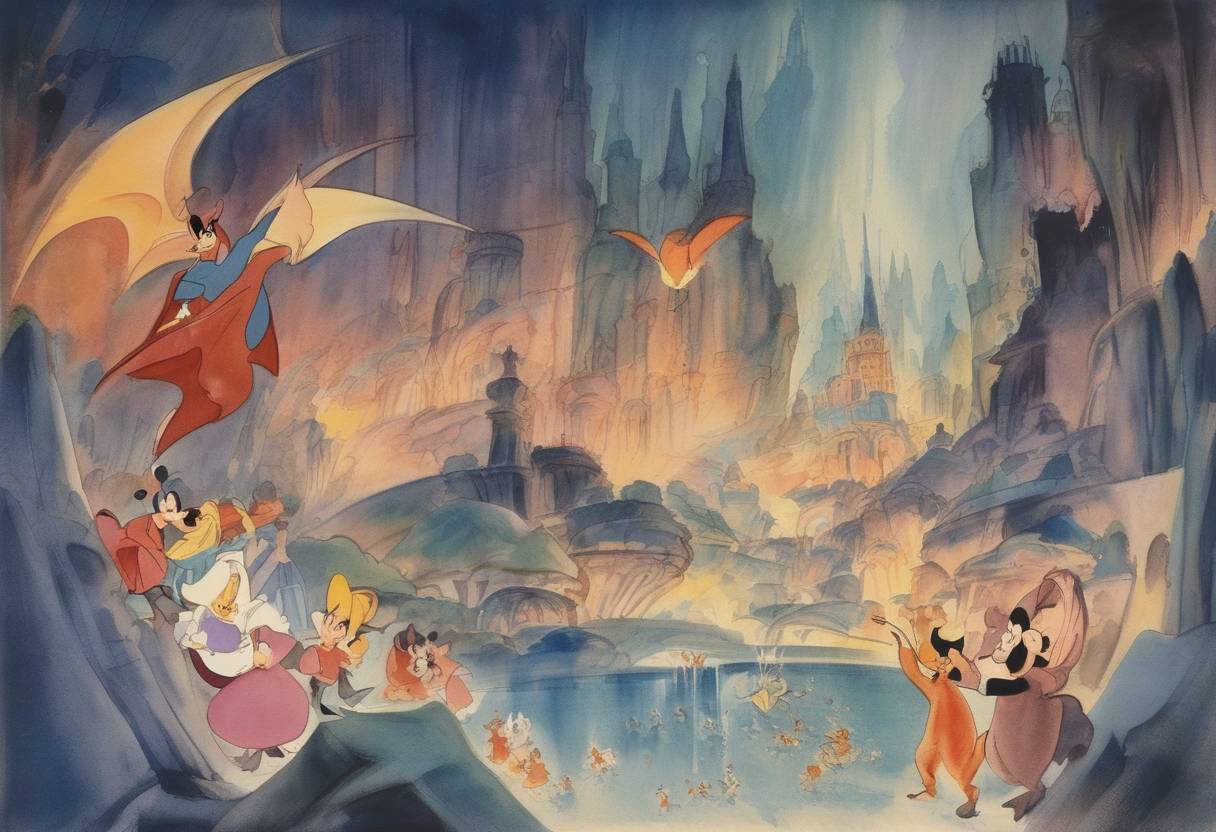
On November 10, 1940, Walt Disney’s animated film Fantasia premiered at the Broadway Theatre in New York City. This groundbreaking film was notable not only for its innovative animation techniques but also for introducing stereophonic sound to motion pictures, a significant advancement in the cinematic experience.
Fantasia was Disney’s ambitious project that combined classical music with animated imagery. The film was conceived as a collaboration between Walt Disney and conductor Leopold Stokowski, who led the Philadelphia Orchestra in recording the film’s soundtrack. The idea was to create a new form of entertainment that would elevate animation to an art form, blending visual and auditory experiences in a novel way.
One of the most remarkable aspects of Fantasia was its use of “Fantasound,” an early stereophonic sound system developed by Disney’s engineers in collaboration with RCA. This system was designed to create a more immersive audio experience by using multiple audio channels and speakers placed throughout the theater. It was a precursor to modern surround sound systems and marked a significant technological leap in film audio.
Fantasia is structured as a series of eight animated segments set to classical music pieces, including:
Each segment was designed to visually interpret the music, ranging from abstract imagery to narrative-driven stories, such as the iconic sequence featuring Mickey Mouse as the Sorcerer’s Apprentice.
Upon its release, Fantasia received mixed reviews. While praised for its artistic ambition and technical achievements, it faced challenges at the box office, partly due to the high costs of installing Fantasound equipment in theaters. Despite this, Fantasia has since been recognized as a classic, influencing generations of filmmakers and animators.
The film’s innovative approach to sound and animation paved the way for future developments in the industry, and its legacy endures as a testament to Walt Disney’s vision and creativity. Today, Fantasia is celebrated for its artistic contributions and remains a beloved piece of cinematic history.
Source: en.wikipedia.org