1783 · Paris, France
The Treaty of Paris was signed, officially ending the American Revolutionary War and recognizing American independence from Britain.
December 10, 1898
The Treaty of Paris was signed, officially ending the Spanish-American War. Spain relinquished its claims over Cuba and ceded Puerto Rico, Guam, and the Philippines to the United States.
Paris, France | United States and Spain
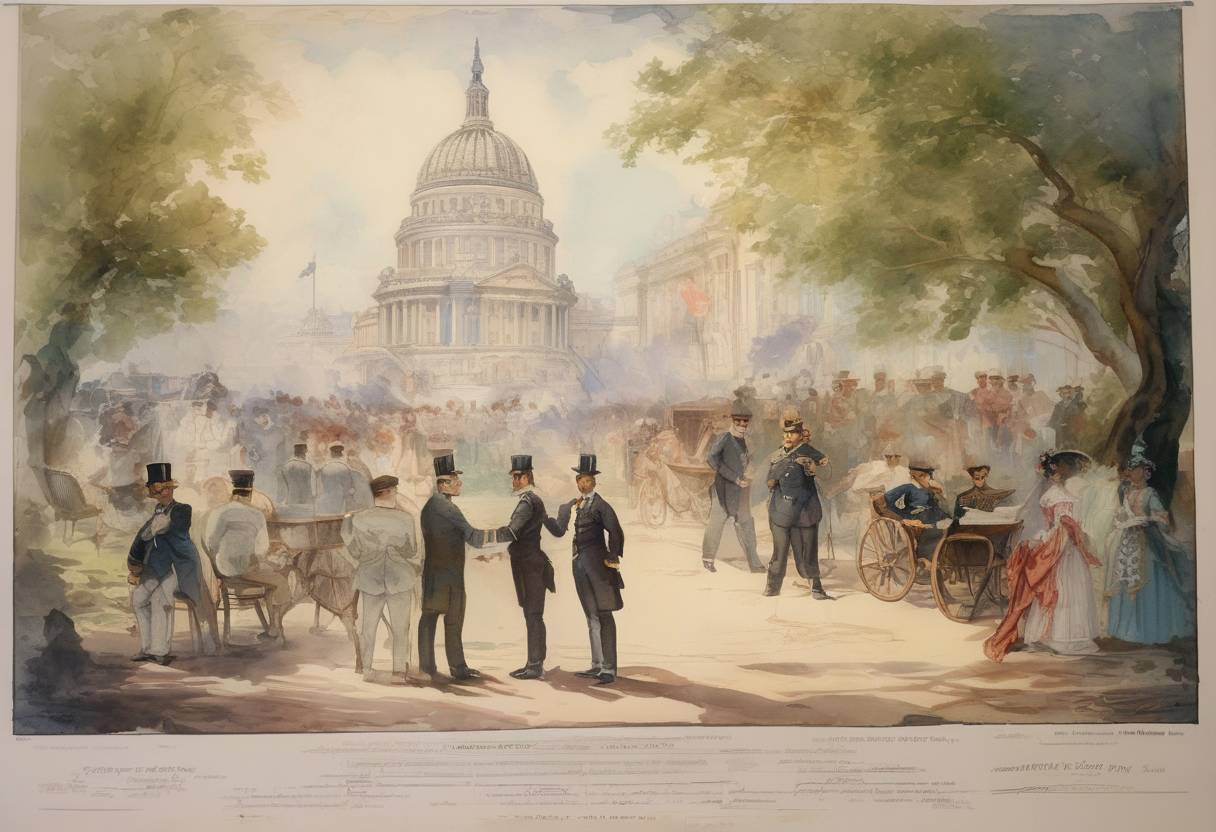
On December 10, 1898, the Treaty of Paris was signed, officially bringing an end to the Spanish-American War. This treaty marked a significant turning point in both Spanish and American history, as it resulted in the dissolution of Spain’s colonial empire in the Americas and the Pacific, and the emergence of the United States as a global power with overseas territories.
The Spanish-American War began in April 1898, primarily due to the United States’ intervention in the Cuban War of Independence. Tensions had been escalating due to the harsh Spanish policies in Cuba, which were widely reported in the American press, and the mysterious explosion of the USS Maine in Havana Harbor, which was blamed on Spain. The war was relatively short, lasting only a few months, with the United States achieving decisive victories both in the Caribbean and the Pacific.
The Treaty of Paris consisted of several key provisions:
Cuban Independence: Spain relinquished all claims of sovereignty over Cuba. Although Cuba was not annexed by the United States, it remained under U.S. military occupation until 1902, when it became formally independent.
Cession of Territories: Spain ceded Puerto Rico and Guam to the United States. These territories became unincorporated territories of the U.S., with Puerto Rico remaining a U.S. territory to this day.
The Philippines: Spain ceded the Philippines to the United States in exchange for a payment of $20 million. This transfer of sovereignty led to the Philippine-American War as Filipino revolutionaries, who had been fighting for independence from Spain, resisted American control.
The Treaty of Paris had profound implications:
End of Spanish Colonial Rule: The treaty effectively ended Spain’s colonial empire, which had lasted for over four centuries. Spain’s influence in the Western Hemisphere was significantly diminished.
Rise of the United States as a Global Power: The acquisition of overseas territories marked the United States’ emergence as a global power. This expansion was part of a broader trend of American imperialism during the late 19th and early 20th centuries.
Impact on the Philippines: The cession of the Philippines led to the Philippine-American War (1899-1902), a conflict that resulted in significant casualties and highlighted the complexities of American imperialism.
Puerto Rico and Guam: These territories have remained under U.S. sovereignty, with Puerto Rico being a U.S. commonwealth and Guam an unincorporated territory.
The Treaty of Paris of 1898 was a pivotal moment in history, reshaping the geopolitical landscape and setting the stage for future American foreign policy and territorial expansion.
Source: en.wikipedia.org