The Treaty of Versailles Takes Effect: January 10, 1920
1920 · Paris, France
The Treaty of Versailles takes effect, officially ending World War I.
August 27, 1928
The Kellogg-Briand Pact, also known as the Pact of Paris, was signed by 15 nations, including the United States, France, and Germany. The pact was an international agreement that aimed to prevent war by making it illegal as a tool of national policy, although it lacked enforcement mechanisms.
Paris, France | League of Nations
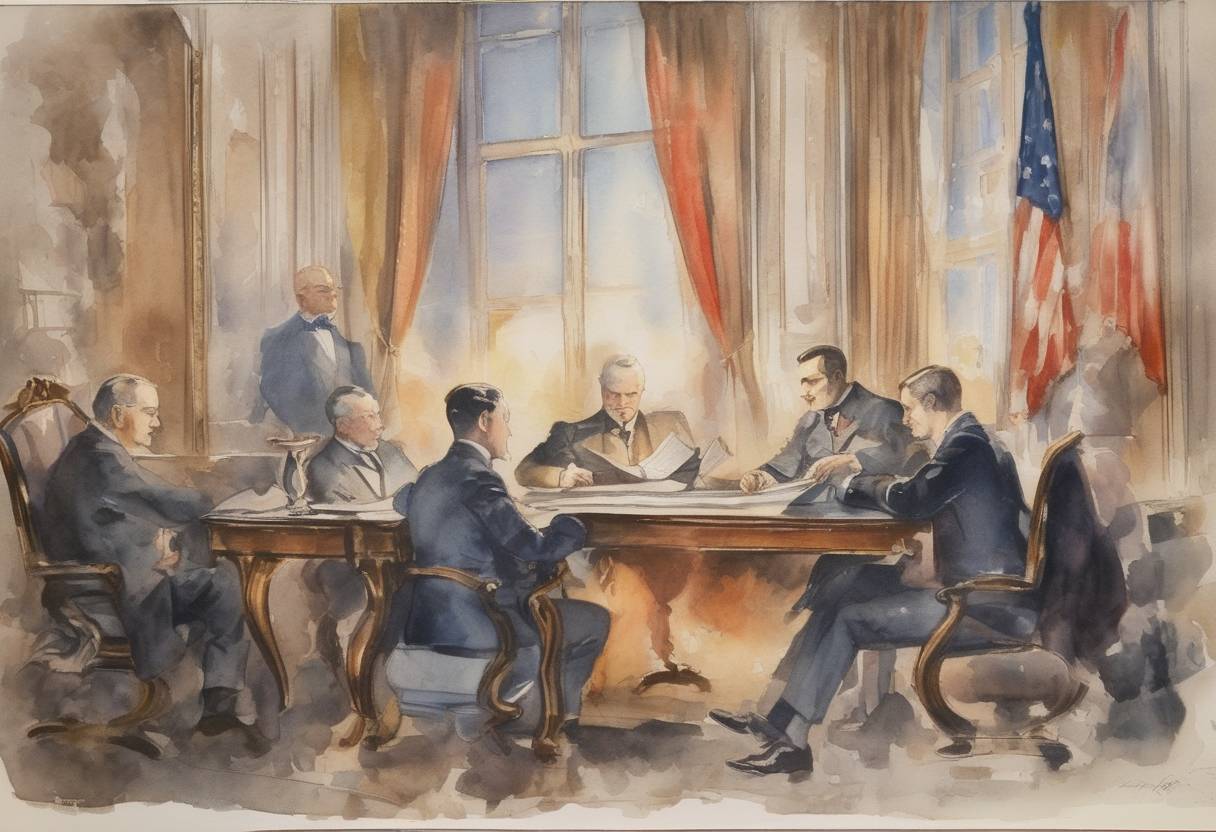
On August 27, 1928, the Kellogg-Briand Pact, also known as the Pact of Paris, was signed by 15 nations, including major powers such as the United States, France, and Germany. This international agreement aimed to renounce war as a means of resolving conflicts and disputes between countries, marking a significant moment in the interwar period’s diplomatic history.
The aftermath of World War I left the world grappling with the devastating consequences of large-scale conflict. The League of Nations was established to promote peace and cooperation, but its effectiveness was limited. Against this backdrop, the idea of legally prohibiting war gained traction.
The initiative for the pact began with French Foreign Minister Aristide Briand, who initially proposed a bilateral agreement with the United States to outlaw war between the two nations. U.S. Secretary of State Frank B. Kellogg expanded the proposal into a multilateral treaty, inviting other nations to join.
The Kellogg-Briand Pact consisted of a preamble and two articles:
Article I: The signatory states condemned recourse to war for the resolution of international controversies and renounced it as an instrument of national policy.
Article II: The parties agreed that the settlement of disputes or conflicts of whatever nature or of whatever origin they may be, which may arise among them, shall never be sought except by pacific means.
Initially signed by 15 countries, the pact eventually garnered the support of 62 nations, reflecting widespread international desire for peace. The original signatories included:
Despite its noble intentions, the Kellogg-Briand Pact faced significant limitations:
While the Kellogg-Briand Pact did not achieve its ultimate goal of eradicating war, it represented an important step in the evolution of international law and diplomacy. It laid the groundwork for future treaties and institutions aimed at promoting peace, including the United Nations Charter, which incorporated similar principles against the use of force.
The Kellogg-Briand Pact remains a poignant reminder of the international community’s enduring aspiration for peace. Despite its shortcomings, the pact’s legacy persists in the ongoing efforts to resolve conflicts through diplomacy and legal frameworks rather than warfare.
Source: www.britannica.com