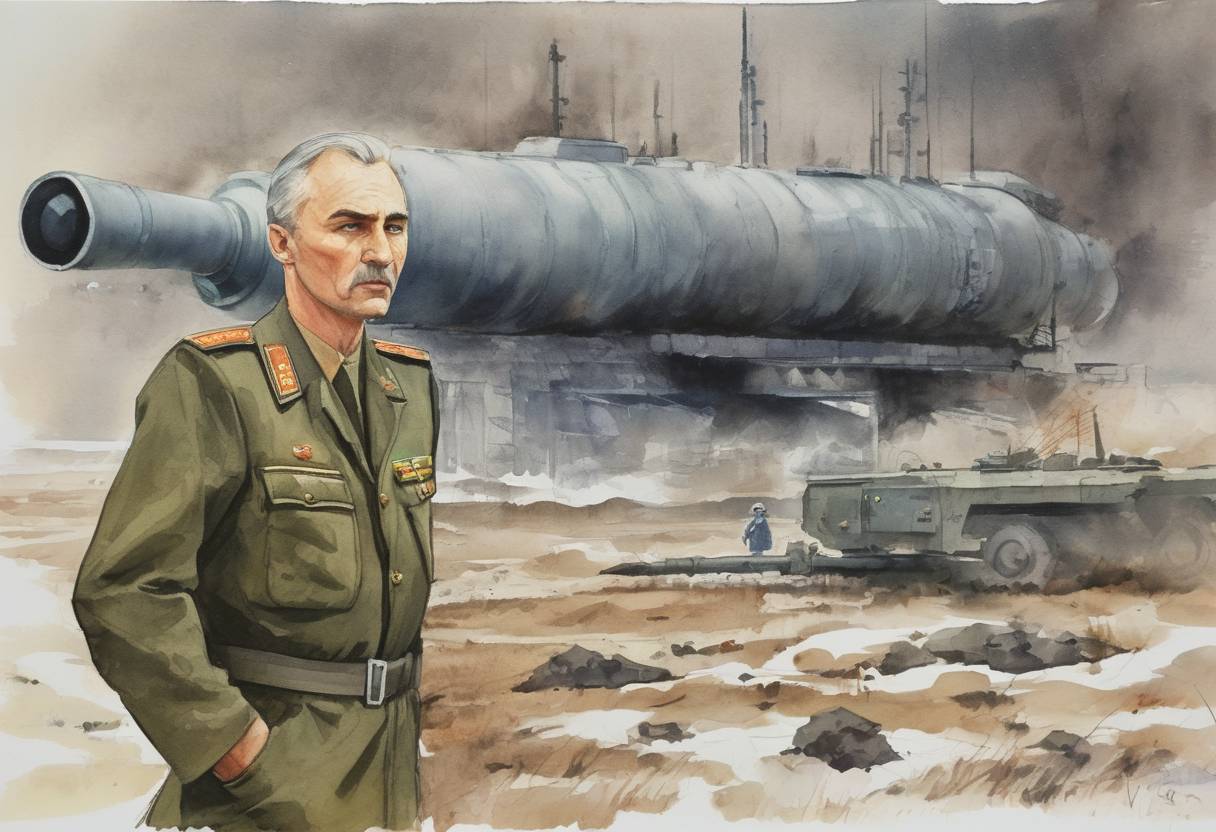
Stanislav Petrov and the Averted Nuclear Disaster on September 26, 1983
On September 26, 1983, a critical incident occurred that could have escalated into a full-scale nuclear war between the United States and the Soviet Union. This event is notable for the decisive actions of Soviet Lieutenant Colonel Stanislav Petrov, who played a pivotal role in preventing a potential catastrophe.
Context
The early 1980s were marked by heightened tensions between the United States and the Soviet Union, a period often referred to as the “Second Cold War.” Relations were particularly strained due to several factors, including the Soviet invasion of Afghanistan, the U.S. military buildup under President Ronald Reagan, and the deployment of intermediate-range nuclear missiles in Europe.
In this climate of mutual distrust, both superpowers maintained sophisticated early-warning systems designed to detect incoming nuclear missiles. The Soviet Union’s system, known as Oko, was tasked with providing early alerts of any potential U.S. missile launches.
The Incident
On the night of September 26, 1983, Stanislav Petrov was on duty at the Serpukhov-15 bunker near Moscow, the command center for the Soviet Union’s early-warning satellites. Suddenly, the system reported that a U.S. intercontinental ballistic missile (ICBM) had been launched, followed by up to five more.
According to standard protocol, such an alert would have necessitated a retaliatory nuclear strike by the Soviet Union. However, Petrov was skeptical of the alarm. Several factors influenced his decision:
- System Reliability: Petrov was aware that the satellite system was new and had experienced technical glitches in the past.
- Strategic Logic: He reasoned that a first-strike nuclear attack by the U.S. would likely involve hundreds of missiles to ensure a crippling blow, not just a handful.
- Human Judgment: Trusting his instincts and judgment, Petrov concluded that the alarm was a false positive.
Consequences
Petrov’s decision to classify the alert as a false alarm and not report it to his superiors averted a potential nuclear exchange. Subsequent investigations confirmed that the alarm was indeed triggered by a malfunction in the satellite system, which had mistakenly interpreted sunlight reflecting off clouds as missile launches.
Aftermath and Historical Significance
- Recognition: Initially, Petrov’s actions were not publicly acknowledged, and he faced criticism for not following protocol. However, his decision was later recognized as a critical moment in preventing nuclear war.
- Legacy: Petrov’s actions have been celebrated as an example of the importance of human judgment in military decision-making. He has been honored with several international awards, including the Dresden Peace Prize.
- Broader Impact: The incident highlighted the dangers of automated systems in nuclear command and control and underscored the need for improved communication and trust between nuclear powers.
Stanislav Petrov’s calm and rational response on that fateful night remains a testament to the profound impact one individual’s decision can have on global history. His story serves as a reminder of the precarious nature of nuclear deterrence and the importance of vigilance and restraint in international relations.