The Russo-Turkish War of 1828–1829: Russia Declares War
1828 · Saint Petersburg, Russia
Russia declares war on the Ottoman Empire, marking the start of the Russo-Turkish War of 1828–1829.
October 20, 1827
The Battle of Navarino took place during the Greek War of Independence, where a combined British, French, and Russian fleet defeated the Ottoman and Egyptian armada.
Navarino, Greece | Allied Fleet
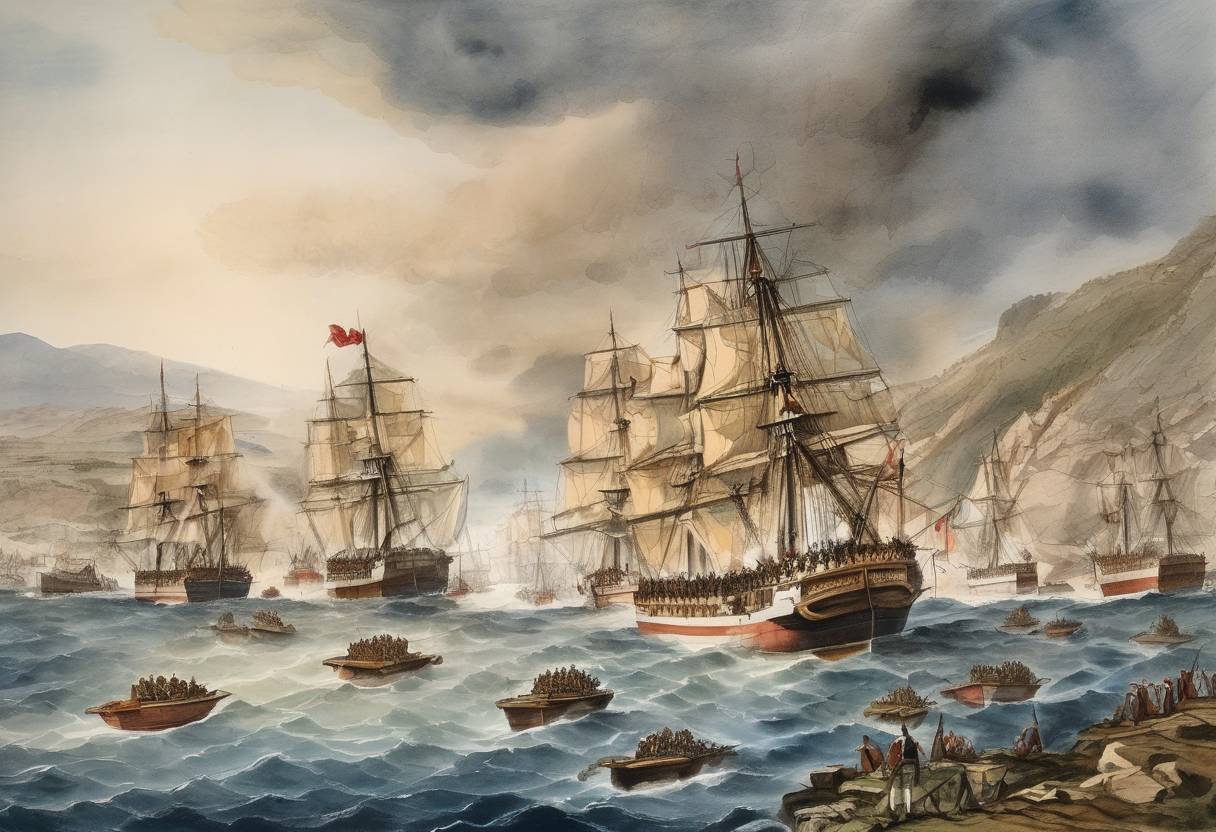
The Battle of Navarino was a pivotal naval engagement during the Greek War of Independence, which saw a combined fleet of British, French, and Russian forces decisively defeat the Ottoman and Egyptian armada. This battle played a crucial role in the eventual independence of Greece from Ottoman rule.
Greek War of Independence: The conflict began in 1821 as Greeks sought to liberate themselves from centuries of Ottoman domination. The war was marked by brutal fighting and significant atrocities on both sides.
International Involvement: By the mid-1820s, the plight of the Greeks had garnered sympathy across Europe, leading to increased diplomatic and military interest. The Great Powers—Britain, France, and Russia—were motivated by a mix of humanitarian concerns and strategic interests in the Eastern Mediterranean.
Ottoman-Egyptian Alliance: The Ottoman Empire, struggling to suppress the Greek uprising, enlisted the help of its vassal state, Egypt, under the leadership of Muhammad Ali. The Egyptian fleet, commanded by his son Ibrahim Pasha, was instrumental in the Ottoman efforts to regain control.
Location: The battle took place in Navarino Bay, located on the west coast of the Peloponnese peninsula in Greece.
Allied Fleet: Commanded by Admiral Sir Edward Codrington, the allied fleet consisted of 27 ships, including battleships and frigates from Britain, France, and Russia.
Ottoman-Egyptian Fleet: The opposing fleet comprised approximately 78 ships, including warships and transports, anchored in a defensive crescent formation within the bay.
Engagement: On October 20, 1827, the allied fleet entered Navarino Bay under orders to enforce an armistice and prevent further Ottoman-Egyptian attacks on Greek forces. Tensions escalated, and a misunderstanding led to an exchange of fire. The battle quickly intensified, resulting in a full-scale engagement.
Outcome: The allied forces, benefiting from superior firepower and naval tactics, inflicted a devastating defeat on the Ottoman-Egyptian fleet. The battle resulted in the destruction or capture of most of the enemy ships, with significant loss of life.
Strategic Impact: The destruction of the Ottoman-Egyptian fleet at Navarino severely weakened Ottoman naval power in the region and marked a turning point in the Greek War of Independence.
Diplomatic Consequences: The battle underscored the resolve of the Great Powers to intervene in the conflict, leading to increased diplomatic pressure on the Ottoman Empire to recognize Greek independence.
Greek Independence: The victory at Navarino paved the way for the eventual recognition of Greek independence in 1830, following further negotiations and military engagements.
Legacy: The Battle of Navarino is remembered as one of the last major naval battles fought entirely with sailing ships and is celebrated in Greece as a crucial step towards national sovereignty.
In conclusion, the Battle of Navarino was a decisive moment in the Greek struggle for independence, showcasing the impact of international intervention in national liberation movements and altering the balance of power in the Eastern Mediterranean.
Source: en.wikipedia.org