Approval of the Dominican Order by Pope Honorius III
1216 · Rome, Italy
Pope Honorius III officially approved the Dominican Order, a Roman Catholic religious order founded by Saint Dominic.
November 29, 1223
Pope Honorius III formally approved the Franciscan Order, founded by St. Francis of Assisi, which became one of the most influential religious orders in the Catholic Church.
Rome, Italy | Catholic Church
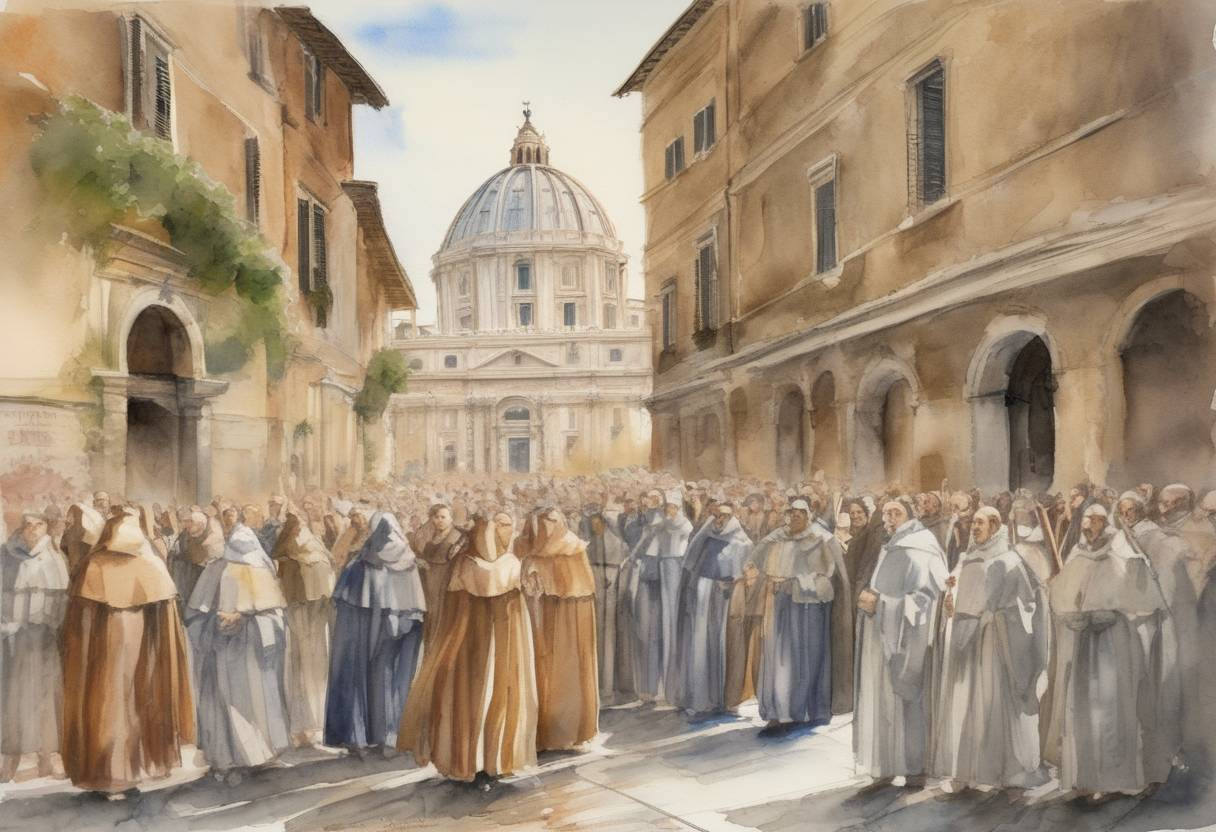
On November 29, 1223, Pope Honorius III formally approved the Franciscan Order, a pivotal moment in the history of the Catholic Church. This approval was granted through the papal bull “Solet annuere,” which officially recognized the Rule of the Order of Friars Minor, founded by St. Francis of Assisi.
St. Francis of Assisi: Born Giovanni di Pietro di Bernardone in 1181 or 1182, St. Francis was the son of a wealthy merchant in Assisi, Italy. He experienced a spiritual transformation in his early twenties, renouncing his wealth and dedicating his life to poverty, humility, and service to the poor.
Formation of the Order: In 1209, Francis and his followers sought to live a life modeled on the teachings of Jesus Christ, emphasizing poverty and simplicity. They began preaching repentance and peace, attracting a growing number of followers.
Initial Papal Approval: In 1209, Francis traveled to Rome to seek approval from Pope Innocent III for his way of life. The Pope gave verbal approval, allowing Francis and his companions to continue their mission.
Formal Recognition: The papal bull “Solet annuere” issued by Pope Honorius III in 1223, provided formal recognition and approval of the Franciscan Rule. This document outlined the principles by which the Franciscans would live, emphasizing poverty, chastity, and obedience.
Significance of the Rule: The Rule of 1223 was a revision of earlier versions, providing a more structured framework for the rapidly growing order. It balanced the ideals of poverty and simplicity with the practical needs of an expanding religious community.
Growth of the Order: Following papal approval, the Franciscan Order expanded rapidly throughout Europe. By the time of St. Francis’s death in 1226, the order had thousands of members and numerous convents.
Influence on the Church: The Franciscans played a significant role in the spiritual renewal of the Church during the Middle Ages. Their emphasis on poverty and service inspired many and contributed to the broader mendicant movement, which included other orders like the Dominicans.
Cultural and Educational Contributions: The Franciscans were instrumental in the development of medieval universities and contributed significantly to theology, philosophy, and the arts.
The formal approval of the Franciscan Order by Pope Honorius III on November 29, 1223, marked a significant milestone in the history of the Catholic Church. The Franciscans’ commitment to poverty, humility, and service left a lasting legacy, influencing religious thought and practice for centuries. Their impact is still felt today, as the order continues to be a vital part of the Catholic Church’s mission worldwide.
Source: www.britannica.com