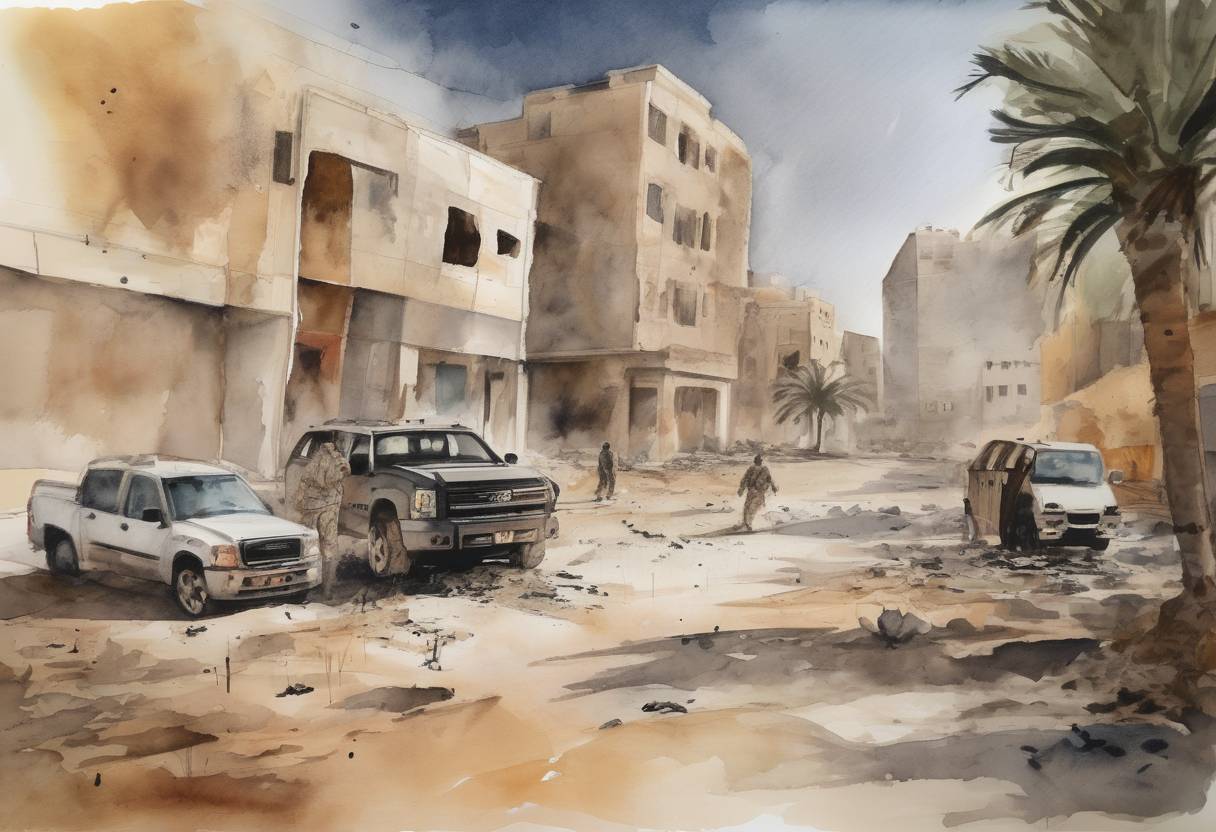
The 2012 Benghazi Attack
On September 11, 2012, a coordinated assault was launched against two United States government facilities in Benghazi, Libya. This attack was carried out by members of the Islamic militant group Ansar al-Sharia and resulted in the tragic deaths of four Americans, including U.S. Ambassador J. Christopher Stevens.
Background
In the wake of the 2011 Libyan Civil War, Libya was in a state of political instability and security challenges. Various militant groups, including Ansar al-Sharia, were active in the region, exploiting the power vacuum left by the fall of Muammar Gaddafi’s regime. The U.S. had established a diplomatic presence in Benghazi, including a temporary diplomatic mission and a CIA annex, to support the country’s transition and protect American interests.
The Attack
The attack unfolded in two phases:
Assault on the U.S. Diplomatic Mission:
- The assault began around 9:40 PM local time when armed militants stormed the U.S. diplomatic compound in Benghazi.
- The attackers set fire to the main building, causing smoke inhalation that led to the deaths of Ambassador Stevens and Information Officer Sean Smith.
- Security personnel and Libyan guards attempted to repel the attackers and evacuate the compound.
Attack on the CIA Annex:
- A second assault occurred in the early hours of September 12 at the CIA annex, located approximately a mile away from the diplomatic mission.
- Two former Navy SEALs, Tyrone Woods and Glen Doherty, were killed during this attack while defending the annex.
Aftermath and Consequences
Broader Historical Significance
The Benghazi attack highlighted the complexities and dangers of diplomatic missions in volatile regions. It underscored the challenges of ensuring the safety of diplomatic personnel in conflict zones and the importance of accurate intelligence and rapid response capabilities. The event also had lasting political ramifications in the U.S., influencing debates on foreign policy and security.
The Benghazi attack remains a poignant reminder of the risks faced by diplomats and the need for robust security measures in unstable regions.