The Nanking Massacre Begins: December 13, 1937
1937 · Nanjing, China
The Nanking Massacre begins as Japanese troops capture Nanjing, China.
September 15, 1894
The first Sino-Japanese War: Japanese forces captured the port city of Pyongyang from China.
Pyongyang, Korea (present-day North Korea) | Imperial Japanese Army
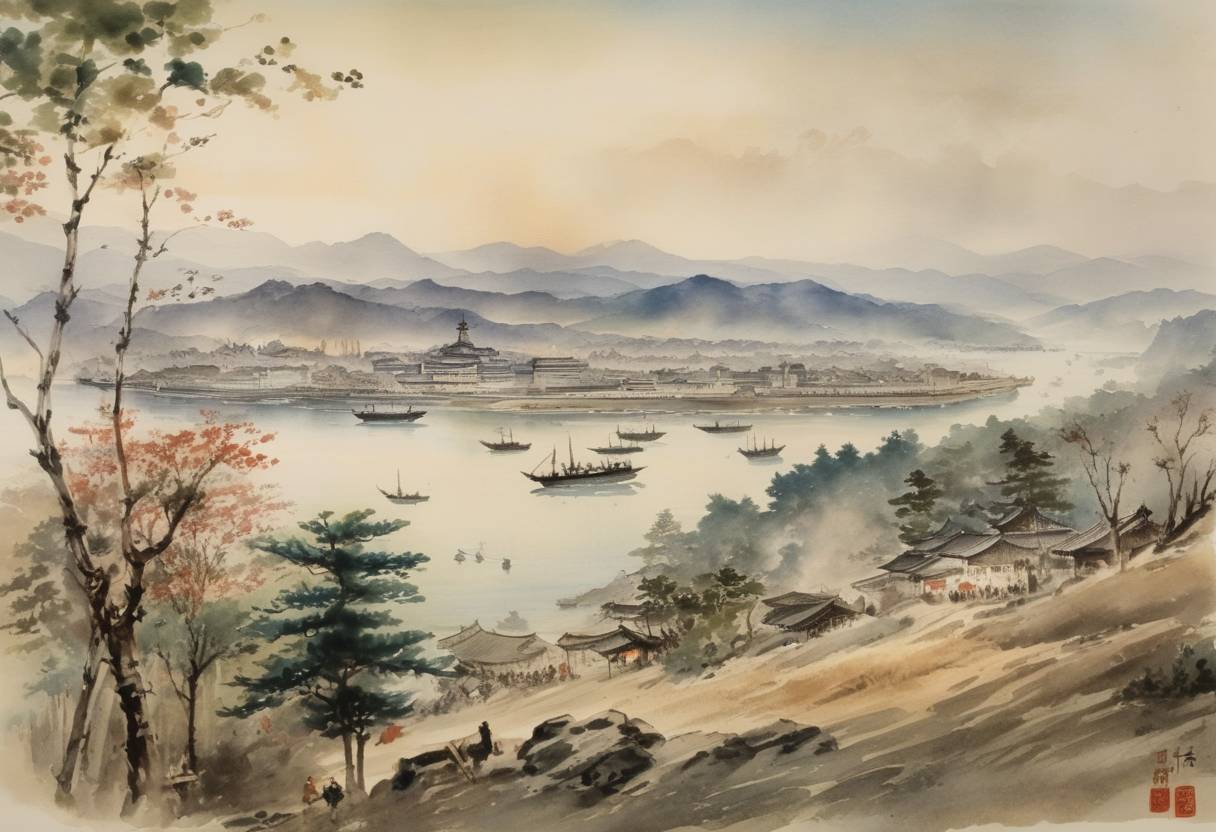
On September 15, 1894, during the First Sino-Japanese War, Japanese forces successfully captured the strategic port city of Pyongyang in Korea from Chinese control. This victory was a pivotal moment in the conflict, marking Japan’s growing military power and its influence in East Asia.
The First Sino-Japanese War (1894-1895) was primarily driven by control over Korea, which had long been a tributary state of China. As Japan sought to expand its empire and influence, Korea became a critical area of contention between the two nations.
Japan declared war on China on August 1, 1894, after a series of tensions that included the Tonghak Rebellion in Korea and disputes over disarmament agreements. The Japanese aimed to force China to renounce its influence over Korea and recognize its independence, creating a buffer zone between Japan and China.
Pyongyang, located on the Taedong River, was a key strategic stronghold for the Chinese forces. The city was well-fortified, with walls and defensive structures bolstered for the approaching conflict. The Japanese army, under the command of General Ōyama Iwao and Lieutenant General Nozu Michitsura, launched an attack on Pyongyang in mid-September.
In the battles leading up to the capture, Japanese forces executed a coordinated assault, attacking from multiple directions. They utilized modern weaponry and tactics, which overpowered the traditionally equipped Chinese troops. The Japanese army, though outnumbered, showed superior tactical efficiency and coordination.
The fall of Pyongyang marked a significant turning point in the war. It demonstrated the effectiveness of the Japanese military reforms and its burgeoning industrial capacity. The victory bolstered Japan’s confidence and military prestige, paving the way for further successes in the war.
Following the capture, Japanese forces continued their advancement on the Korean Peninsula, eventually leading to further victories, including the decisive Battle of the Yalu River. These successes would eventually force China to negotiate terms of peace, culminating in the Treaty of Shimonoseki in April 1895.
The capture of Pyongyang showcased the decline of the Qing Dynasty’s military power and underscored the rapid modernization and expansion of Japan as an emerging global force. It set the stage for Japan’s future engagements in international conflicts and significantly altered the geopolitical landscape of East Asia.
This victory was not only a crucial military success but also a signal of the changing power dynamics in the region, heralding an era where Japan would assert itself over its continental neighbors, influencing the course of East Asian history well into the 20th century.
Source: www.britannica.com