Olusegun Obasanjo Sworn in as President of Nigeria - May 29, 1999
1999 · Abuja, Nigeria
Olusegun Obasanjo was sworn in as President of Nigeria, marking the end of military rule and the beginning of the Fourth Nigerian Republic.
August 27, 1985
The Nigerian government, led by Major General Ibrahim Babangida, overthrows Major General Muhammadu Buhari in a military coup.
Abuja, Nigeria | Nigerian military
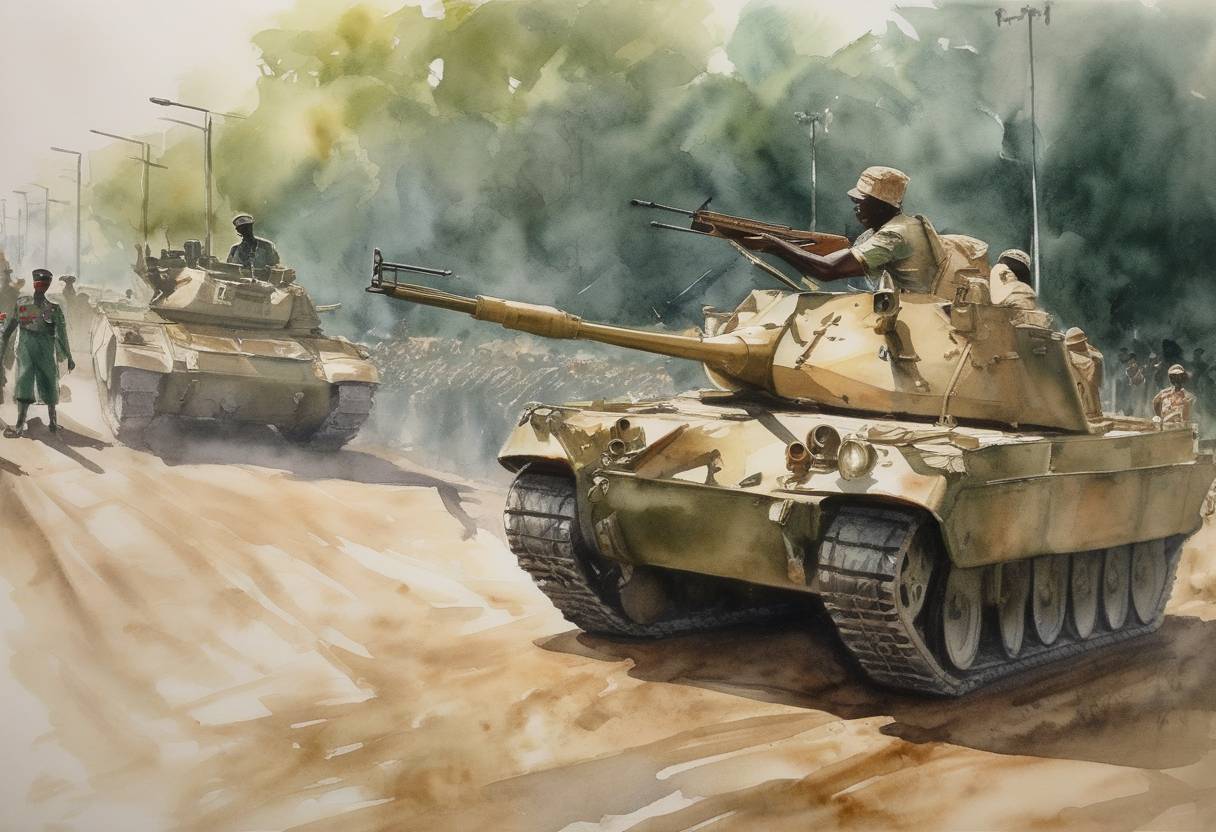
On August 27, 1985, Nigeria witnessed a significant shift in its political landscape due to a military coup. Major General Ibrahim Badamasi Babangida led this coup, which resulted in the ousting of then Head of State, Major General Muhammadu Buhari. This political upheaval marked a pivotal moment in Nigeria’s military and political history.
Before the coup, Nigeria was under the leadership of Muhammadu Buhari, who had himself come to power through a military coup on December 31, 1983. Buhari’s regime was noted for its strict discipline and efforts to curb corruption, but it also faced criticism for its harsh and draconian measures, including human rights abuses and a heavily centralized power structure.
Dissatisfaction within Nigeria’s military ranks had been brewing due to several factors:
Major General Ibrahim Babangida, who was then the Chief of Army Staff, orchestrated the coup. The operation was executed with minimal violence and led swiftly to a change in leadership.
The coup resulted in the establishment of a new military regime under Babangida, who declared himself the President and Commander-in-Chief of the Armed Forces.
This coup represented a significant moment in Nigeria’s turbulent political history, influencing the patterns of military governance and civilian transition in the years that followed.
Source: www.britannica.com