The Treaty of Cambrai: The Ladies’ Peace
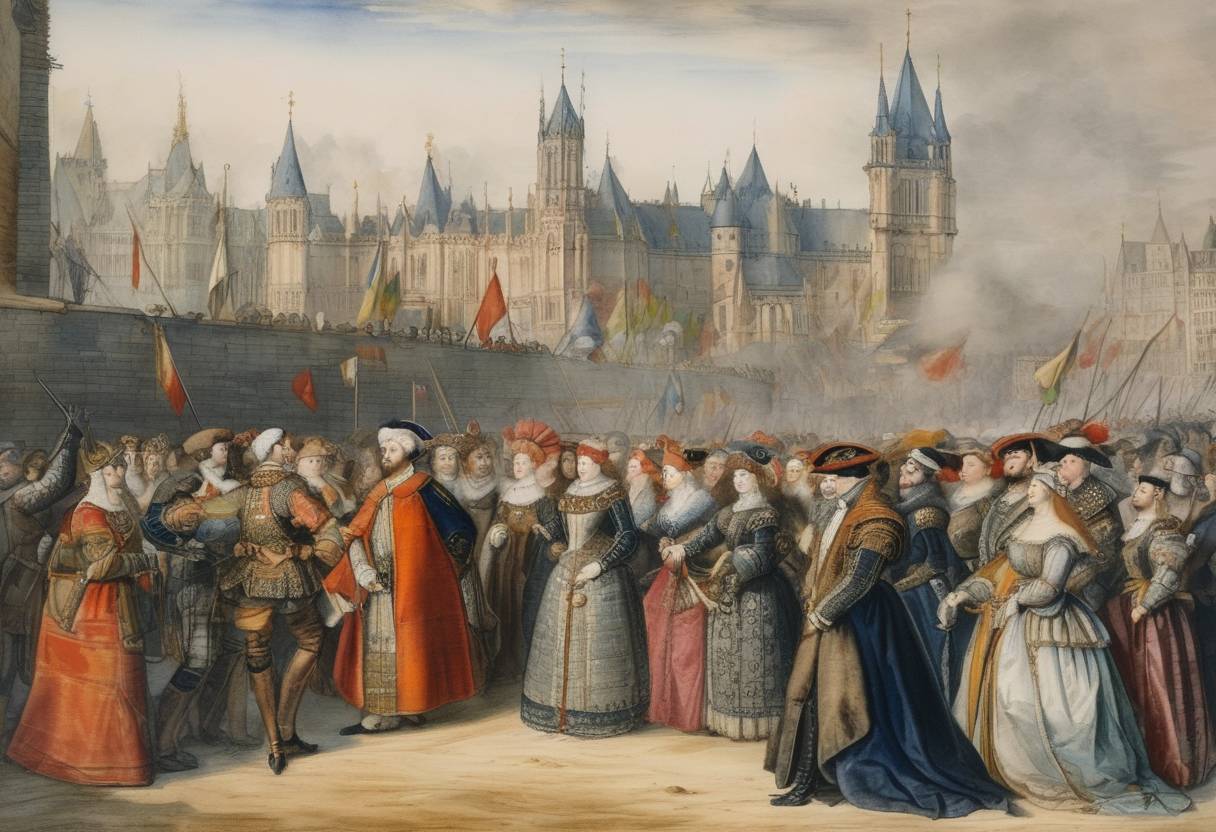
On August 3, 1529, the Treaty of Cambrai, famously known as the “Ladies’ Peace,” was signed. This treaty marked the end of hostilities between Francis I of France and Charles V, Holy Roman Emperor, primarily over the control of regions including the Duchy of Burgundy. The negotiation of this treaty was notably conducted by two influential women: Louise of Savoy, representing her son Francis I, and Margaret of Austria, the aunt of Charles V.
Historical Context
The Treaty of Cambrai concluded a series of conflicts that were part of the larger tapestry of power struggles between the Habsburgs and Valois during the early 16th century. The contention over Burgundy was a significant aspect of the rivalry between these two powerful European dynasties. Prior to this treaty, the French had suffered several military defeats and financial strains, exacerbating their need for peace.
Key Provisions
- Territorial Agreements: Francis I was forced to abandon his claims to the Duchy of Burgundy, which remained under Habsburg control. This was a significant loss for France as control of Burgundy was strategically and economically crucial.
- Financial Reparations: France agreed to pay a significant ransom for the release of French princes, who had been held as captives by Charles V since the earlier war engagements, including the disastrous Battle of Pavia in 1525.
- Marriage Alliances: The treaty included plans for future marriage alliances to reinforce the peace, illustrating how dynastic marriages were used as political tools.
Aftermath and Significance
While the treaty momentarily halted direct conflict between France and the Holy Roman Empire, it did not resolve the underlying tensions and competition between the two powers. The agreement exemplified the era’s diplomacy, wherein women played crucial roles due to their familial and dynastic ties.
The Treaty of Cambrai is a poignant reminder of the period’s complex interrelationships between power, politics, and kinship, setting the stage for continued rivalry until the eventual outbreak of renewed hostilities in later decades. It highlights the transitional nature of European politics, moving from feudal disputes towards more structured international diplomacy.
The significance of the Ladies’ Peace lies not only in its immediate impact but also in its demonstration of the potential for diplomatic resolution during an era typically characterized by martial confrontations.