The Battle of Barnet: April 14, 1471
1471 · Barnet, England
The Battle of Barnet took place during the Wars of the Roses, where Edward IV defeated the Lancastrian forces led by the Earl of Warwick, solidifying his claim to the English throne.
October 6, 1403
Wars of the Roses: The Battle of Tewkesbury took place.
Tewkesbury, England
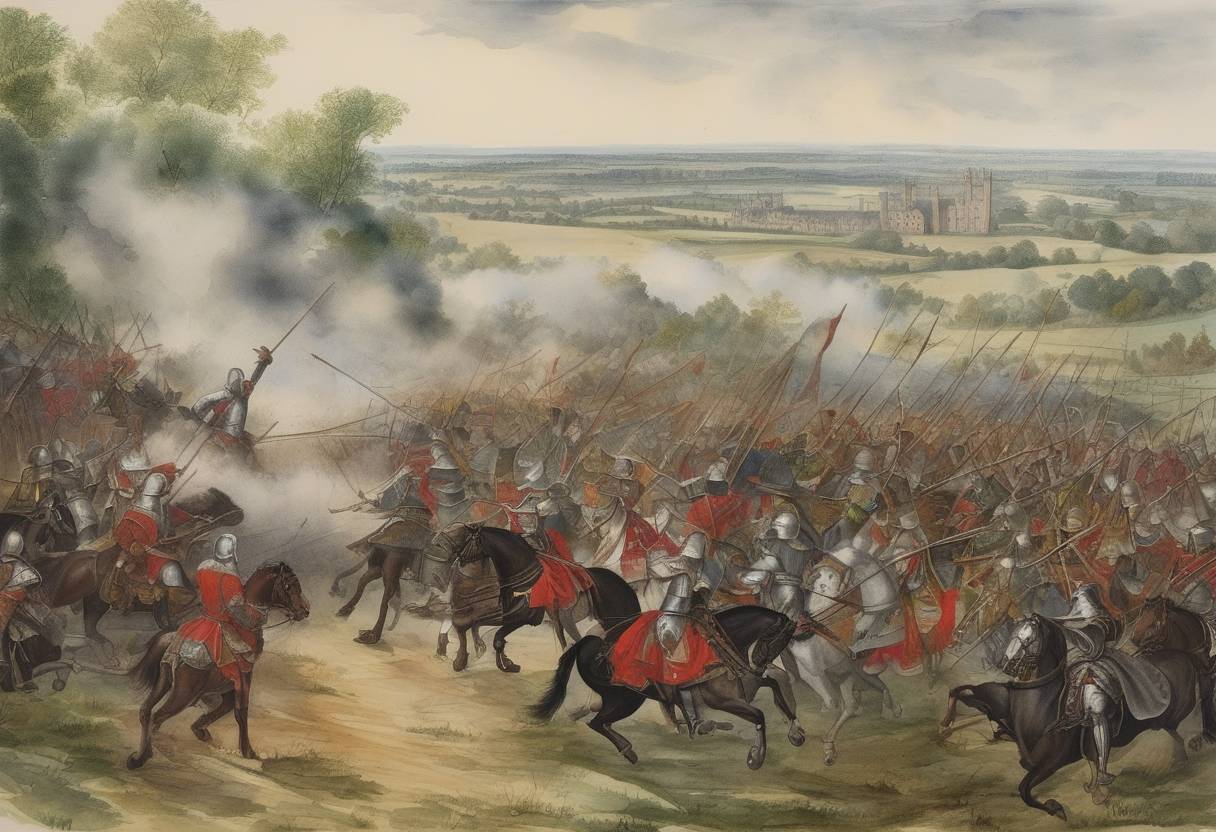
The Battle of Tewkesbury, a significant conflict in the Wars of the Roses, did not occur on October 6, 1403. Instead, Tewkesbury was fought on May 4, 1471. This battle was a pivotal engagement during the protracted dynastic struggle between the Houses of Lancaster and York for control of the English throne.
The Wars of the Roses were a series of civil wars fought over the English crown between supporters of the rival branches of the royal House of Plantagenet: Lancaster and York. The conflict drew its name from the symbols of the two houses: a red rose for Lancaster and a white rose for York.
In the spring of 1471, Edward IV of the House of York sought to solidify his claim to the throne after having been briefly deposed by the Lancastrian forces under Henry VI. Edward had returned from exile in the Netherlands and reclaimed London on April 11. With momentum in his favor, Edward marched westward to confront the Lancastrian army.
The clash at Tewkesbury took place near the town of Tewkesbury in Gloucestershire. The Lancastrian forces, commanded by Queen Margaret of Anjou, newly arrived from France, aimed to join with forces loyal to Henry VI. However, they were intercepted by Edward IV’s army.
Yorkist Forces: Led by Edward IV and his loyal brothers, including Richard, Duke of Gloucester (the future Richard III), the Yorkists were well-organized and battle-hardy.
Lancastrian Forces: Queen Margaret commanded the Lancaster side with prominent nobles like Edmund Beaufort, 4th Duke of Somerset. Her forces were fatigued, having marched extensively before the battle.
The battle began with a Yorkist assault on the Lancastrian position. The effective use of artillery and disciplined infantry allowed Edward to penetrate the Lancastrian lines. The fighting was intense, but ultimately the Yorkists’ superior tactics and morale prevailed.
The defeat at Tewkesbury was catastrophic for the Lancastrian cause:
Casualties: Many key Lancastrian commanders were killed, including the Duke of Somerset and Prince Edward of Westminster, the only son of Henry VI and Margaret.
Capture and Execution: Several Lancastrians were captured and executed shortly after the battle, solidifying Yorkist dominance.
End of Resistance: The defeat effectively ended organized Lancastrian resistance. King Henry VI, once again a prisoner in the Tower of London, died shortly after under mysterious circumstances, often attributed to murder.
The Battle of Tewkesbury marked a comprehensive Yorkist victory, strengthening Edward IV’s position as king. It was not merely a military triumph but a turning point that quelled the Lancastrian threat for several years until the later resurgence in the Tudor ascent. This battle effectively ended significant Lancastrian opposition and allowed for a brief period of stability under Yorkist reign until renewed conflicts would arise, heralding the eventual rise of the Tudor dynasty through Henry VII.
Source: en.wikipedia.org