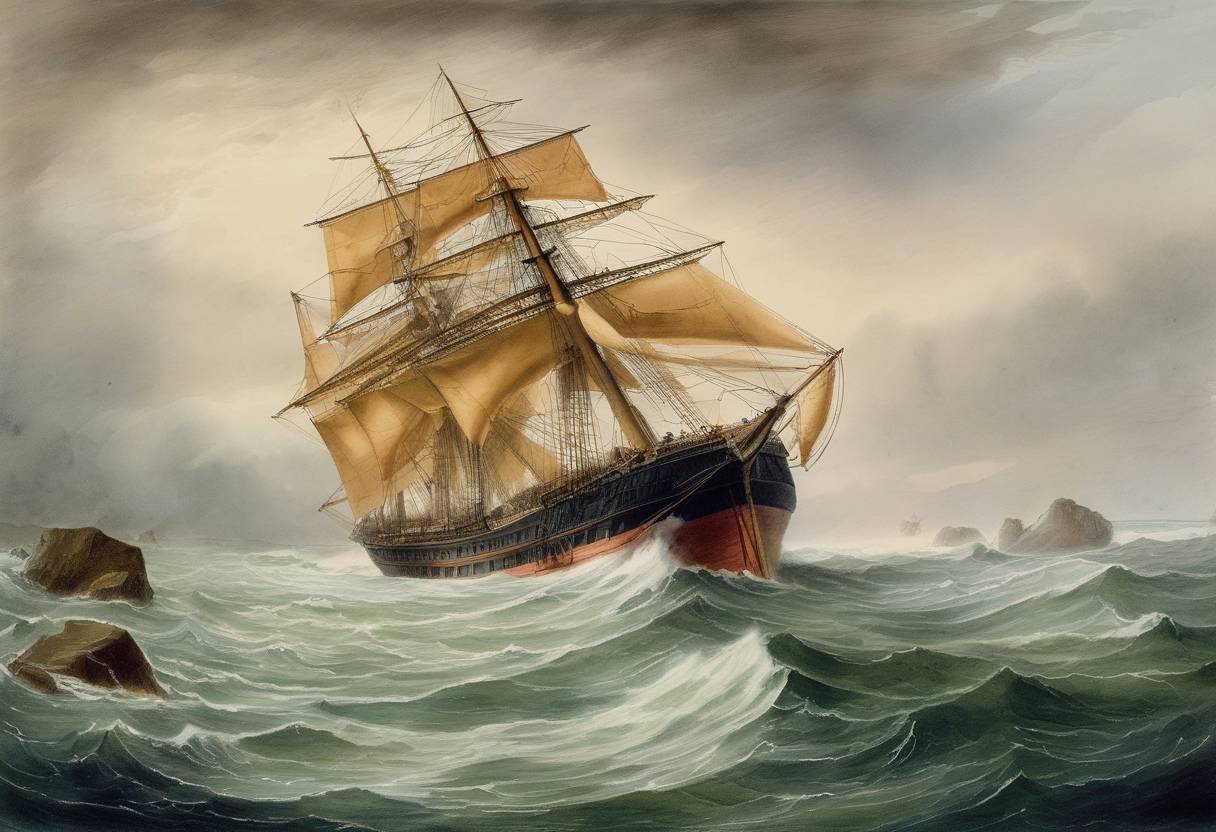
The Wreck of the Steamer Ship ‘Ranier’ - January 5, 1854
On January 5, 1854, the steamer ship ‘Ranier’ met a tragic fate while navigating the treacherous waters near the coastline, resulting in the loss of several lives. This incident underscored the perilous conditions faced by maritime travelers during the California Gold Rush era—a period characterized by rapid but often perilous maritime travel, as countless people sought fortune in the booming California gold fields.
Background
The California Gold Rush, starting in 1848, led to a massive influx of people to the West Coast of the United States. As a result, steamships became a vital mode of transportation, facilitating travel across the often unpredictable and hazardous Pacific waters. These ships were integral in meeting the massive demand for transport, bringing both hopeful prospectors and essential goods to the booming communities in California.
The Incident
The ‘Ranier’, a San Francisco-based steamer, was one such vessel. On January 5, 1854, it encountered a severe storm that would ultimately lead to its undoing. The intense weather conditions overwhelmed the ship, culminating in its wreckage. The exact details of the storm highlight the challenges faced by maritime crews at the time, as forecasts and navigational aids were rudimentary compared to modern standards.
Aftermath and Significance
The loss of the ‘Ranier’ and several of its passengers was a poignant reminder of the inherent risks of sea travel during this transformative era in American history. The incident reaffirmed the need for improved maritime safety measures and better infrastructure, contributing to a broader awareness and eventual advancements in shipbuilding and navigational techniques.
This tragedy not only illustrated the human cost of the Gold Rush but also highlighted the relentless drive for prosperity that characterized the age, often at the expense of safety. The story of the ‘Ranier’ serves as a historical lens into the myriad challenges and hazards that accompanied the adventurous spirit of the 19th century.