The Eighth Crusade and the Death of King Louis IX
1270 · Tunis, Tunisia
The Eighth Crusade, led by King Louis IX of France, ends with his death from dysentery in Tunis.
February 8, 1250
The Seventh Crusade suffered a major setback as the Ayyubid Egyptians defeated the Crusaders at the Battle of Al Mansurah.
Al Mansurah, Egypt | Seventh Crusade
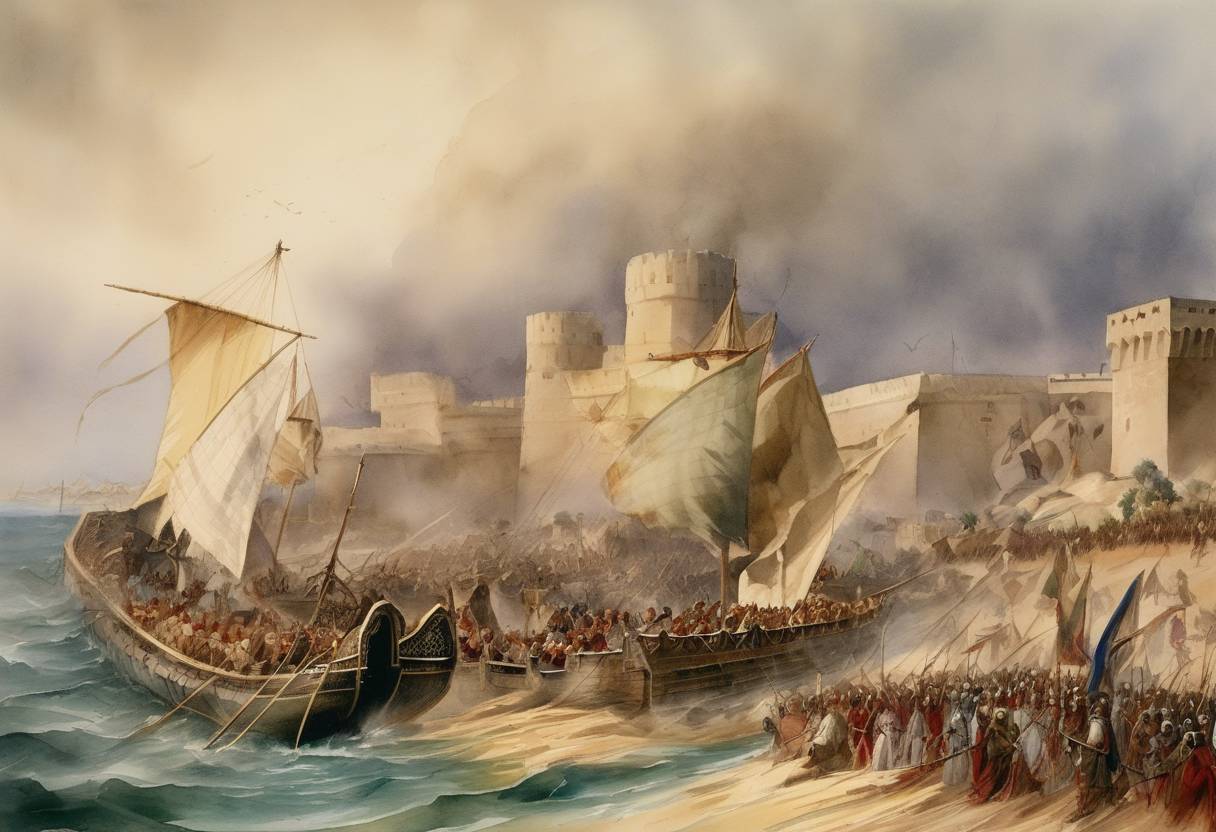
The Seventh Crusade, led by King Louis IX of France, aimed to reclaim Jerusalem and strengthen Christian control in the Holy Land. Initiated in 1248, this crusade was part of a series of religious military campaigns by European powers against Muslim states in the Eastern Mediterranean. Louis IX, a devout Christian, saw the crusade not only as an opportunity for territorial gain but also as a spiritual mission.
Louis IX landed in Egypt, targeting the strategic city of Damietta in June 1249, hoping to weaken the Ayyubid sultanate by disrupting its center of power. After capturing Damietta, Louis advanced southward along the Nile towards Cairo. The ultimate objective was to capture the Ayyubid capital and force concessions from the Muslim rulers.
As the Crusader forces pushed towards Cairo, they encountered the fortified city of Al Mansurah on February 8, 1250. The initial phase of their advance involved crossing the river Nile, an operation entailing both strategic finesse and risk. However, the main engagement took place just outside the city.
The Ayyubid forces, commanded by the capable sultan As-Salih Ayyub’s widow, Shajar al-Durr, and military leader Fakhr ad-Din, prepared a robust defense. They employed an effective combination of tactics that included mobile cavalry units and fortified positions, exploiting their knowledge of the local terrain.
The Crusaders faced significant logistical challenges, with supply lines stretched thin and a lack of foreseen resistance intensity. The ensuing battle was marked by fierce fighting and heavy losses on both sides, but the tactical acumen of the Ayyubid commanders ultimately turned the tide. The Crusaders were unable to breach the city’s defenses and suffered severe casualties, leading to a crippling defeat for Louis IX’s forces.
The defeat at Al Mansurah significantly altered the trajectory of the Seventh Crusade. King Louis and thousands of his troops were eventually captured during the retreat. This incarceration lasted several months, culminating in a hefty ransom payment for their release and a coerced surrender of the city of Damietta back to the Egyptians.
The battle highlighted the difficulties Western forces faced in foreign campaigns against skilled, motivated defenders. Additionally, it showcased the adept leadership within the Ayyubid dynasty, particularly the role of Shajar al-Durr in orchestrating the victory.
The Battle of Al Mansurah serves as a pivotal moment not only for the Seventh Crusade but also in the chronicles of the Crusades, marking the decline of European success in the region and emphasizing the formidable challenge posed by Muslim forces during this period.
Source: en.wikipedia.org