Transit of Venus: June 5-6, 2012
2012 · N/A, Global
The last transit of Venus of the 21st century occurred, a rare astronomical event where Venus passes directly between the Earth and the Sun.
May 20, 1769
A transit of Venus was observed by Jerimiah Dixon and Charles Mason at the Royal Observatory, Cape of Good Hope, which was part of efforts to measure the distance from Earth to the sun.
Cape of Good Hope, South Africa | Royal Observatory
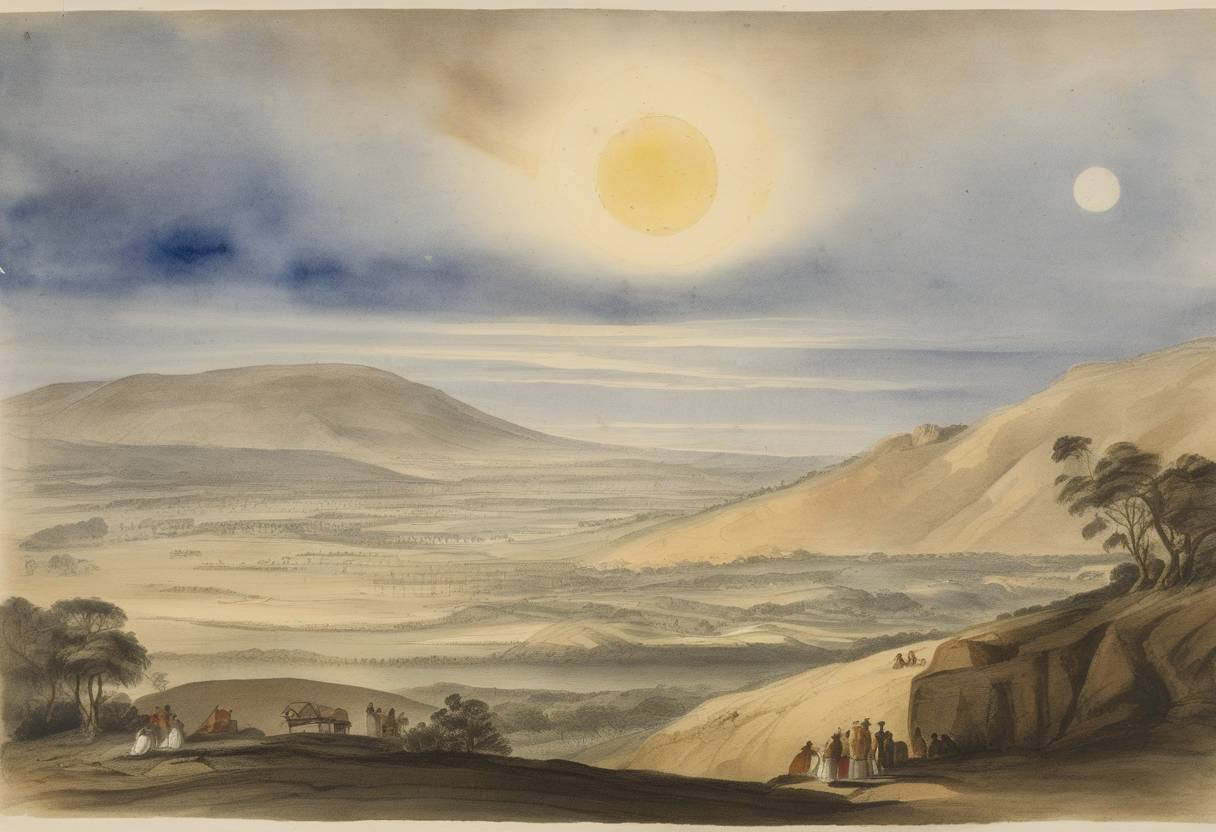
In the 18th century, astronomers sought to determine the astronomical unit (AU), the distance between the Earth and the Sun, which was crucial for understanding the scale of the solar system. One promising method was timing the transit of Venus across the Sun, using observations from different locations on Earth to apply the principles of parallax and triangulation.
The transit of Venus on May 20, 1769, was a major event that mobilized astronomers worldwide. Notable British astronomers Jeremiah Dixon and Charles Mason were dispatched to the Royal Observatory in the Cape of Good Hope, South Africa, specifically for this task. Their participation was part of a larger, international scientific collaboration organized by the Royal Society in London.
Dixon and Mason, who were already renowned for their previous work in surveying the Mason-Dixon line in America, were chosen for their reliability and expertise in precise measurements. At the Cape of Good Hope, they joined other astronomers in meticulously recording the transit data, which involved noting the exact times when Venus entered and exited the Sun’s disk.
The data collected from these observations were invaluable. They contributed significantly to calculating the astronomical unit with greater accuracy than ever before. Although slight discrepancies existed in the international datasets due to various observational conditions and equipment limitations, the 1769 transit contributed to narrowing down the distance significantly.
This event underscored the importance of international cooperation in scientific endeavors. It also highlighted the advancements in astronomical techniques and instrumentation. The collaborative effort across different locations globally paved the way for modern astronomical research and reinforced the value of empirical data in scientific calculations.
The work of Dixon and Mason at the Cape of Good Hope, along with their fellow astronomers around the world, remains a testament to the enduring pursuit of knowledge and the collaborative spirit that continues to drive scientific exploration today.
Source: en.wikipedia.org