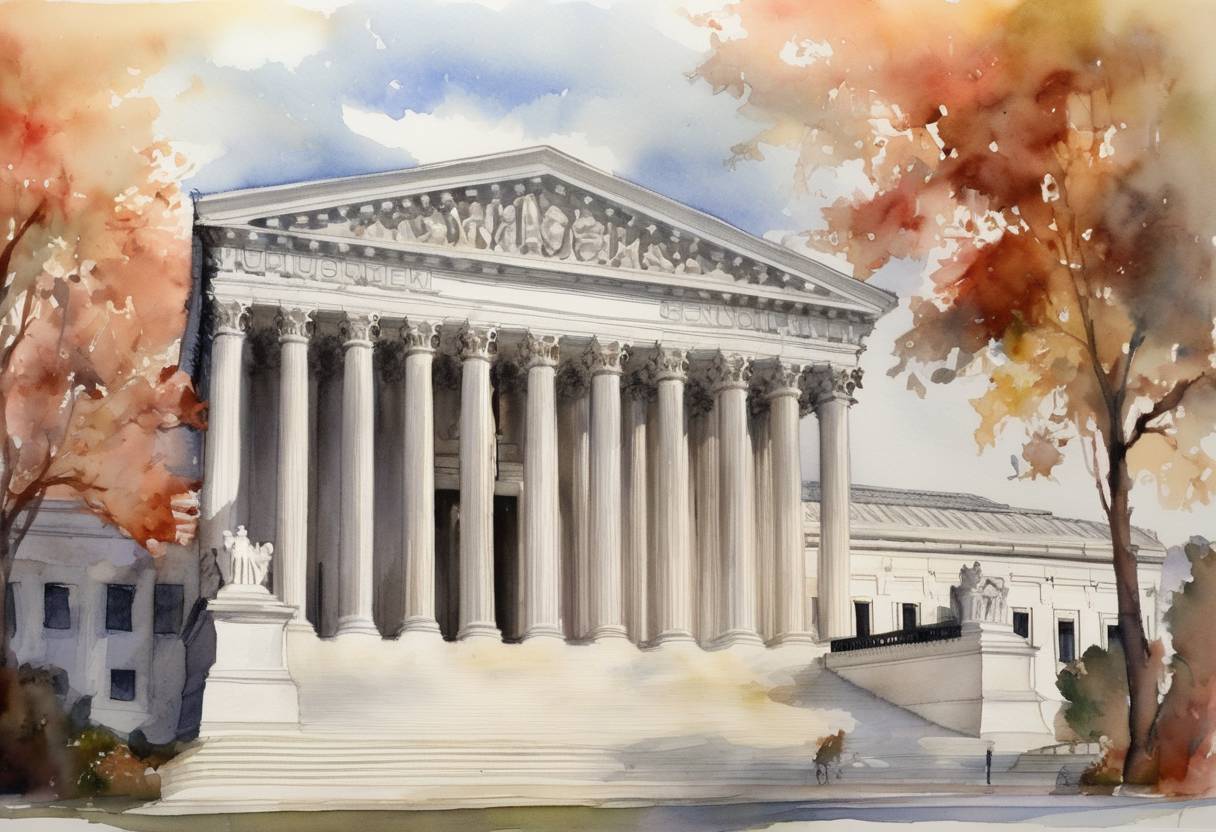
National Federation of Independent Business v. Sebelius: The Supreme Court’s Decision on June 28, 2012
On June 28, 2012, the Supreme Court of the United States delivered a highly consequential decision in the case of National Federation of Independent Business v. Sebelius. This landmark ruling upheld the constitutionality of the Affordable Care Act (ACA), often referred to as “Obamacare,” a comprehensive health care reform law enacted by President Barack Obama on March 23, 2010.
Background
The Affordable Care Act was designed to expand access to health insurance, control health care costs, and improve health care quality. Its key provision, the “individual mandate,” required most Americans to purchase health insurance or face a penalty. This mandate prompted significant legal challenges, consolidating several lawsuits into a single challenge led by the National Federation of Independent Business among other plaintiffs.
The Supreme Court’s Ruling
The Supreme Court, in a closely watched and intensely debated decision, ruled in a 5-4 vote to uphold the main provisions of the ACA. Chief Justice John Roberts played a pivotal role in the outcome, joining the court’s liberal justices in the majority opinion, which deemed the individual mandate constitutional. The court’s justification was that the mandate could be construed as a tax, which falls within Congress’s taxing power.
Key Points of the Decision
- Individual Mandate: Upheld as a constitutional exercise of Congress’s power to tax.
- Medicaid Expansion: The court ruled that the federal government could not coerce states into participating in the ACA’s Medicaid expansion by threatening to withhold existing federal Medicaid funding. States were given the option to expand Medicaid without losing existing funds.
Significance
The decision marked a significant triumph for the Obama administration, affirming the ACA’s constitutionality and ensuring its continuation. The ruling also set a precedent on the reach of federal power, particularly concerning congressional taxing authority and state-federal relations in the context of Medicaid.
Broader Implications
The decision had far-reaching implications, affecting millions of Americans by preserving health coverage gains achieved under the ACA. It also signified an important moment in American jurisprudence, illustrating the intricate checks and balances among different branches of government.
Aftermath
Following the decision, the ACA continued to unfold and face various political and legal challenges. However, the 2012 decision solidified its foundation, allowing further efforts to refine and alter the law through legislative and executive means in subsequent years.
The ruling remains a vital part of discussions on health care policy, reflecting the complex interplay of law, politics, and social welfare in the United States.