The Congress of Verona Concludes: December 12, 1822
1822 · Verona, Italy
The Congress of Verona formally concluded its sessions.
January 10, 1821
The First proto-socialist Congress of Laibach (now Ljubljana, Slovenia) was convened as part of the European meetings following the Napoleonic Wars.
Ljubljana, Austrian Empire | Holy Alliance
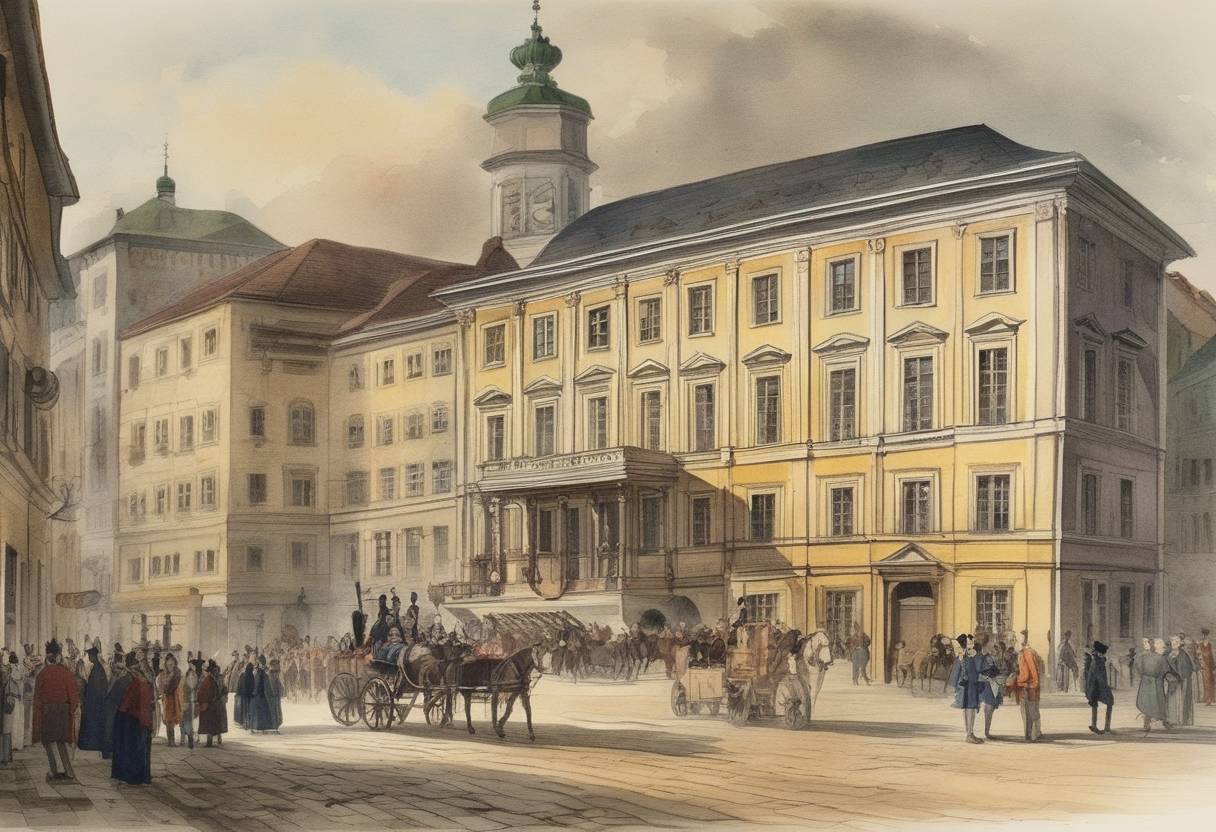
The Congress of Laibach, held on January 10, 1821, in what is now Ljubljana, Slovenia, was an integral part of the series of meetings that formed the Concert of Europe. This congress was one of several diplomatic conferences held by the Great Powers of Europe following the Napoleonic Wars, aimed at preserving peace and maintaining the balance of power within the continent.
Following the defeat of Napoleon, the Congress of Vienna in 1815 had established a framework for a new European order. The major powers—the United Kingdom, Austria, Prussia, Russia, and France—sought to prevent the rise of another emperor like Napoleon and to quell revolutionary movements inspired by the French Revolution. The period known as the “Restoration” aimed to restore pre-revolutionary monarchies and suppress nationalist and liberal uprisings.
Before the Congress of Laibach, the Congress of Troppau in 1820 had seen Austria, Russia, and Prussia agree on principles to intervene in revolutionary affairs, specifically targeting revolutions that threatened their interests. This was notably applied to uprisings in Spain and Italy.
The Laibach Congress was a continuation of these discussions, responding primarily to the situation in the Kingdom of the Two Sicilies, where King Ferdinand I had been forced to grant a constitution following revolutionary pressures, particularly in Naples.
At Laibach, representatives from the major powers gathered to discuss how to handle the situation in Italy. The congress served as a forum for these powers, especially Austria, under the conservative statesman Prince Klemens von Metternich, to reinforce their commitment to interventionism. They agreed to allow Austrian troops to invade the Kingdom of the Two Sicilies and restore King Ferdinand’s absolute power, thereby overturning the constitutional regime.
While the Congress itself was not oriented specifically towards socialism, the period’s conservative clampdown on revolutionary movements also inadvertently set the stage for the development of various 19th-century socialist and nationalist ideologies as they stood in opposition to the reactionary measures of the Concert of Europe.
The intervention in Naples and the outcome of the Congress of Laibach underscored the dominance of reactionary policies in post-Napoleonic Europe. This conservatism, buttressed by military intervention, was aimed at maintaining the old order and suppressing any liberal or nationalistic movements. However, this did not stamp out revolutionary fervor, which continued to simmer across Europe, eventually contributing to upheavals and revolutions in the later part of the 19th century.
The measures taken at Laibach reinforced the agitating divide between conservative rulers and revolutionary movements, contributing to the complex political landscape that shaped Europe throughout the 19th century.
Source: www.britannica.com