The Validation of Henry VIII and Anne Boleyn's Marriage
1533 · London, England
The Archbishop of Canterbury, Thomas Cranmer, declares the marriage between King Henry VIII and Anne Boleyn to be valid.
March 30, 1533
Thomas Cranmer was consecrated as the Archbishop of Canterbury, marking a significant moment in the English Reformation.
Canterbury, England | Church of England
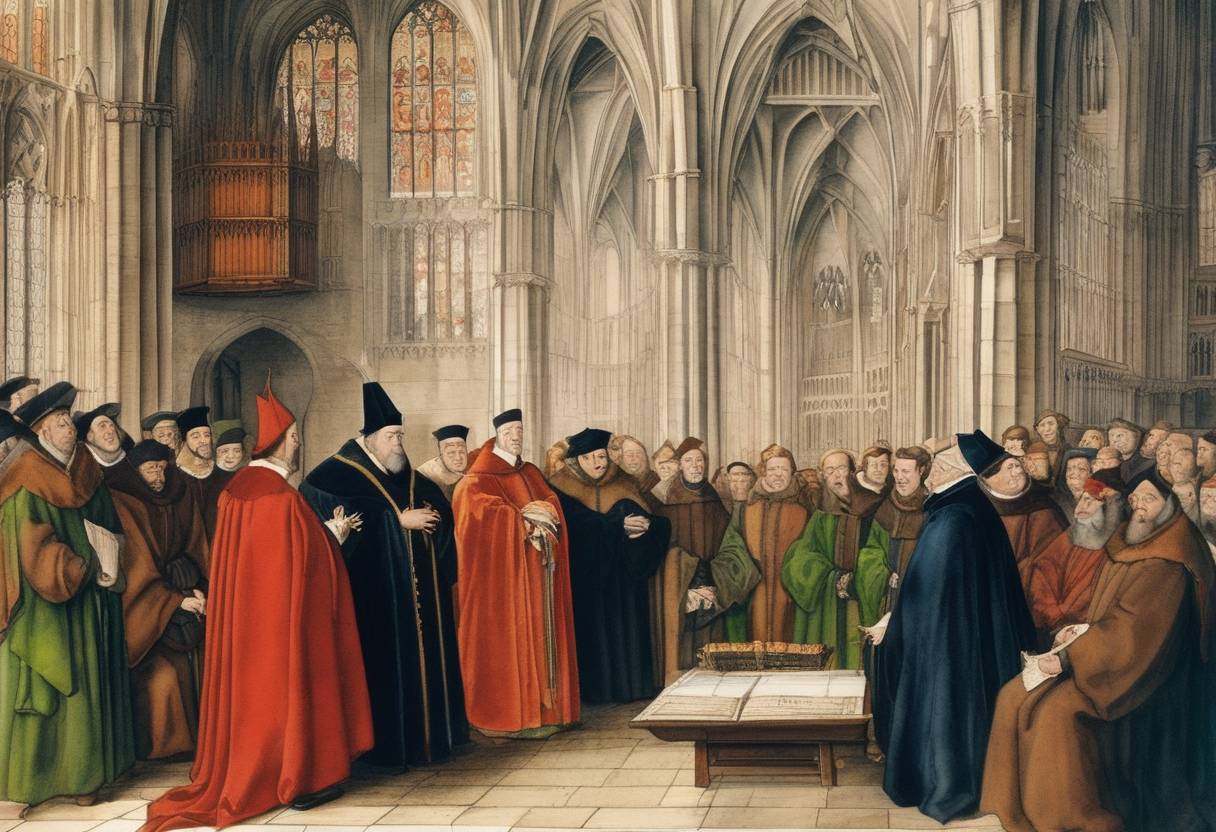
On March 30, 1533, Thomas Cranmer was consecrated as the Archbishop of Canterbury, a pivotal event in the English Reformation. This appointment was instrumental in shaping the religious landscape of England under King Henry VIII.
Thomas Cranmer was a scholar and clergyman who had become known to King Henry VIII for his theological acumen and reformist ideals. His rise to the position of Archbishop of Canterbury was deeply intertwined with Henry VIII’s quest to annul his marriage to Catherine of Aragon. The Pope’s refusal to grant the annulment impelled Henry to seek independence from papal authority.
Initial Support and Influence: Cranmer had expressed his support for the King’s desire to secure an annulment for his marriage, which aligned with Henry’s interests and the broader objectives of Reformation thinkers who advocated for reducing the Pope’s influence over national churches.
Royal Appointment: Despite opposition from some traditionalists within the Church, Cranmer was appointed by Henry VIII and supported by Thomas Cromwell, Henry’s chief minister, who also championed ecclesiastical reforms.
Papal Approval and Oath: On March 30, 1533, Cranmer was consecrated, taking an oath that included a clause asserting his loyalty to the Pope. However, he also took a separate oath of loyalty to the King, which demonstrated the shifting allegiances as England moved towards religious reformation.
Cranmer’s consecration was a defining moment in the English Reformation:
Facilitating the Annulment: As Archbishop, Cranmer presided over the annulment of Henry VIII’s marriage to Catherine, allowing the King to marry Anne Boleyn. This marriage produced Elizabeth I, an influential future monarch who would shape England’s Protestant identity.
Break from Rome: Cranmer’s role helped solidify the Church of England’s break from the Roman Catholic Church, setting a precedent for religious autonomy and national church governance.
Doctrinal Reforms: During his tenure, Cranmer championed significant doctrinal reforms, including the introduction of the Book of Common Prayer, shaping the liturgical and doctrinal direction of the Church of England.
Cranmer’s consecration and subsequent actions as Archbishop laid the groundwork for the establishment of Protestantism as England’s dominant faith. His tenure paved the way for religious transformations, and despite later challenges, including his execution under Mary I, his reforms left an enduring mark on English religion and governance.
Source: en.wikipedia.org