Treaty of the Sixty Articles (Baft Convention)
1837 · Isfahan, Persia
The Treaty of the Sixty Articles, also known as the Baft Convention, was signed between Persia and Britain.
February 20, 1827
The Treaty of Turkmenchay was signed, ending the Russo-Persian War (1826–1828). The treaty ceded the Iranian territories of Erivan khanate (modern-day Yerevan) and Nakhchivan khanate to Russia, marking significant territorial losses for Persia.
Turkmenchay, Persia | Russian Empire, Qajar Iran
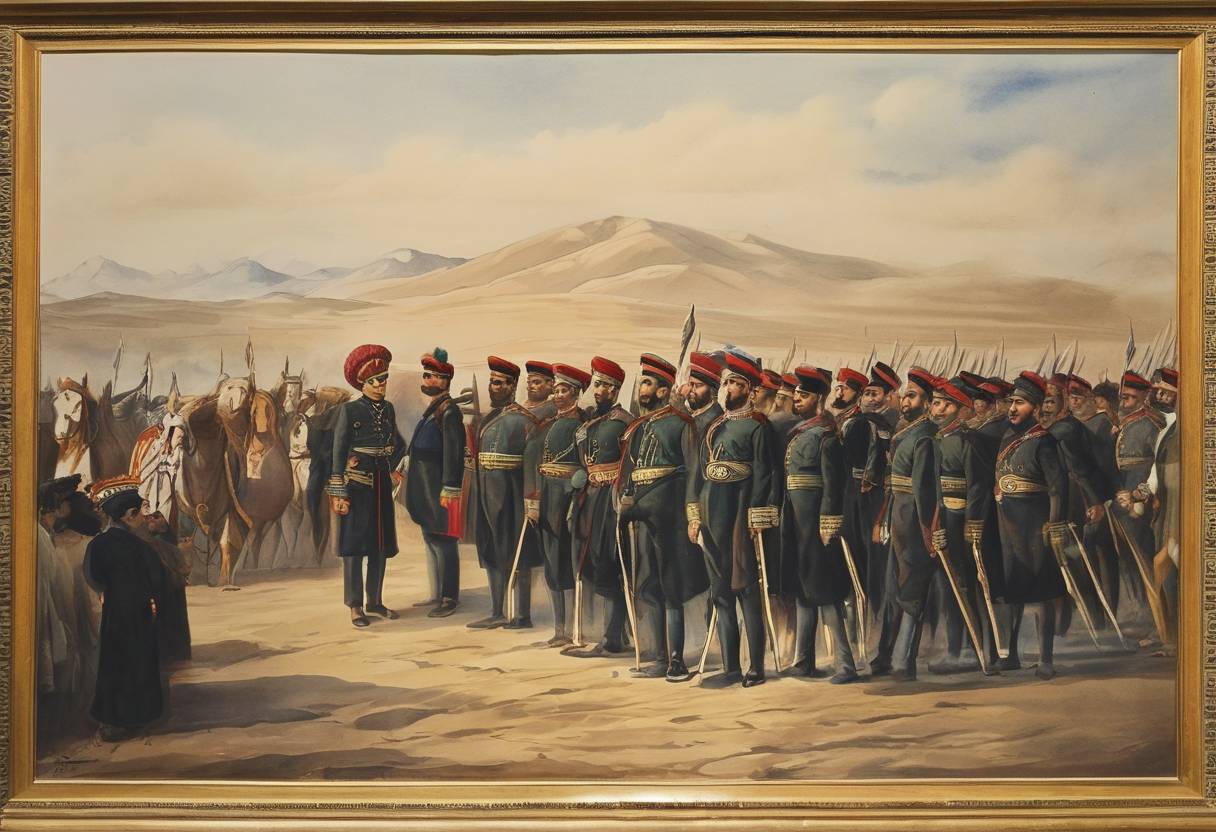
The Treaty of Turkmenchay was a pivotal agreement signed on February 21, 1828, concluding the Russo-Persian War of 1826–1828. This treaty resulted in substantial territorial losses for Persia, dramatically altering the geopolitical landscape of the region.
The Russo-Persian War (1826–1828) was the culmination of escalating tensions between the Persian Empire and the Russian Empire over their competing influence in the South Caucasus region. This conflict was part of a series of Russo-Persian wars that reflected the broader imperial rivalry between Russia and Persia during this era.
The Treaty of Turkmenchay included several significant clauses:
Territorial Cession: The treaty mandated that Persia cede the Erivan Khanate, which is now the area around modern-day Yerevan, and the Nakhchivan Khanate to Russia. This represented a major territorial loss for Persia and consolidation of Russian power in Transcaucasia.
War Indemnity: Persia was required to pay a substantial indemnity to Russia, further weakening the Persian economy.
Trade Rights: The treaty granted Russian merchants special privileges and rights in Persia, enhancing Russian influence over Persian commerce and trade routes.
Diplomatic Relations: The agreement stipulated the exchange of ambassadors between the two empires and reaffirmed the rights of Russian consuls in Persia.
The Treaty of Turkmenchay had lasting impacts on both empires:
Geopolitical Shift: The treaty solidified Russian dominance in the Caucasus region and marked the decline of Persian influence.
Cultural Implications: The cession of territories with significant Persian populations altered the cultural and demographic makeup of the affected areas.
Domestic Reaction: Within Persia, the treaty was viewed as a national humiliation, spurring internal discontent and criticism of the ruling Qajar dynasty.
Ultimately, the Treaty of Turkmenchay exemplified the broader patterns of 19th-century imperialism and illustrated the strategic importance of the Caucasus region. This agreement not only redefined the boundaries and power dynamics in the area but also set the stage for future conflicts and diplomatic relations in the region.
Source: en.wikipedia.org