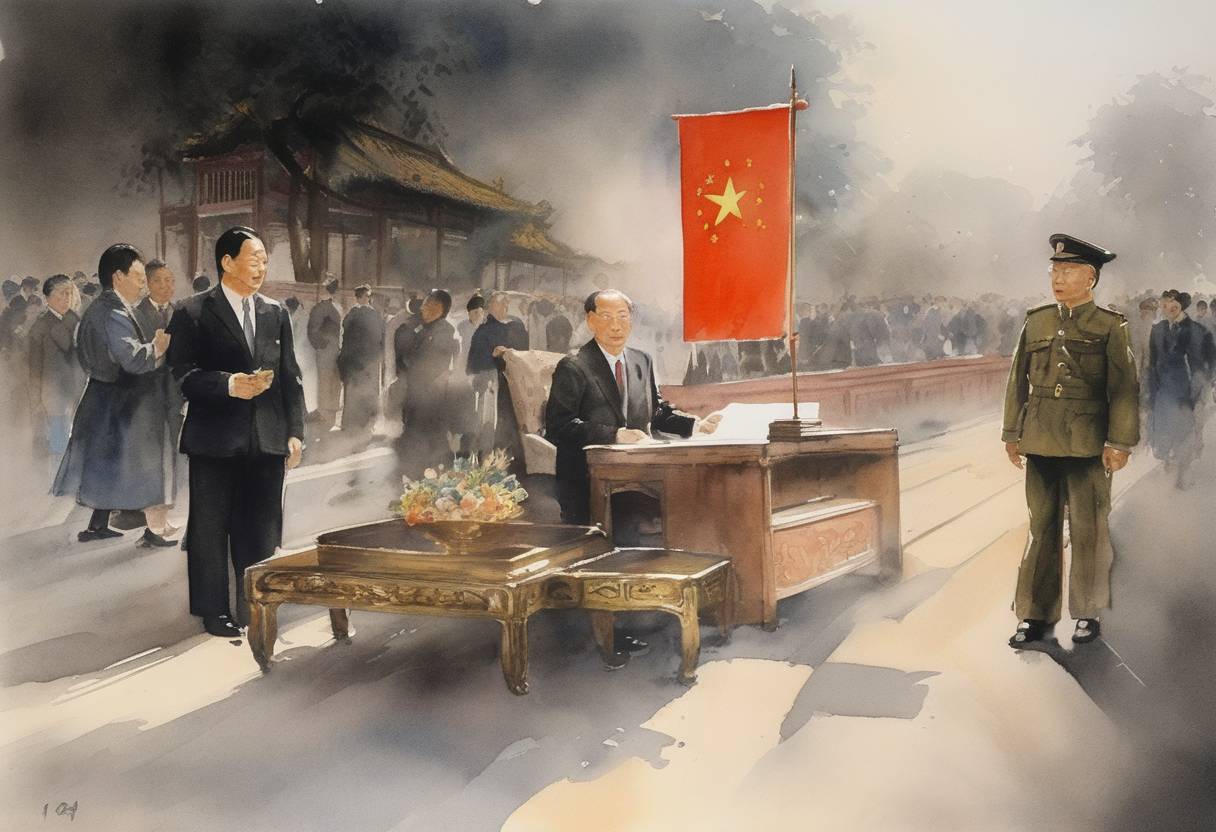
The Sino-British Joint Declaration
The Sino-British Joint Declaration was a pivotal agreement signed on December 19, 1984, in Beijing, outlining the terms under which Hong Kong would be handed over from British to Chinese control. This historic document was concluded between the United Kingdom and the People’s Republic of China, addressing the future governance of Hong Kong upon the expiry of the 99-year lease of the New Territories, which comprised the majority of the Hong Kong territory.
Key Provisions
Sovereignty Transfer: The declaration stipulated that Hong Kong would return to Chinese sovereignty on July 1, 1997.
One Country, Two Systems: China committed to maintaining Hong Kong’s existing economic, social, and legal systems, separate from those of Mainland China, for 50 years after the transfer—until 2047. This framework was famously termed as “One Country, Two Systems.”
Capitalist System: The agreement assured the continuation of Hong Kong’s capitalist system and lifestyle. This included maintaining its own legal system, leading to an independent judiciary and a high degree of autonomy, except in foreign and defense affairs.
Basic Law: It was also agreed that Hong Kong would draft its own Basic Law—an effective, mini-constitution guaranteeing the rights of the territory’s residents and detailing the preservation of its system.
Legal and Administrative Arrangements: The declaration set out to preserve Hong Kong’s laws and granted the courts of Hong Kong jurisdiction over cases, except for defense, foreign affairs, and other areas outside its autonomy.
Historical Context
The move towards the transfer of sovereignty was driven by the impending end of Britain’s lease on the New Territories, which was not set to expire until 1997. Recognizing the geographical and infrastructural indivisibility of Hong Kong proper, Kowloon, and the New Territories, negotiations were ignited to determine the territory’s future.
Dating back to the Treaty of Nanking in 1842 and subsequent treaties that enlarged British holdings, Hong Kong had been a British colony for over 150 years. The negotiations reflected a complex interplay of global politics, post-colonial independence movements, and a rising China’s emerging position on the world stage.
Significance
The Sino-British Joint Declaration was a landmark in the history of diplomatic agreements, demonstrating a peaceful transfer of sovereignty predicated on compromise and mutual respect for differing systems. It set a precedent for how significant geopolitical issues could be resolved through negotiation and was pivotal in shaping the future political landscape of East Asia.
The agreement was widely seen as a pragmatic solution for both leaders involved—Margaret Thatcher for the UK and Deng Xiaoping for China—who sought an arrangement that would ensure Hong Kong’s stability and prosperity while respecting its complex legal and economic traditions.
Consequences and Legacy
The implementation of “One Country, Two Systems” has since been a subject of scrutiny and international interest, particularly as questions arose over its interpretation and application in light of evolving political climates and civil movements.
The legacy of the Joint Declaration continues to be a major influence in Hong Kong’s identity and governance structure and remains a key reference point in Sino-British relations and discussions concerning autonomy and governance around the world.