Selma to Montgomery March: March 21, 1965
1965 · Selma, United States
Martin Luther King Jr. led 3,200 people on the start of the third and finally successful civil rights march from Selma to Montgomery, Alabama.
May 3, 1963
Police in Birmingham, Alabama deploy dogs and fire hoses against civil rights protesters led by Martin Luther King Jr. and Southern Christian Leadership Conference affiliates.
Birmingham, United States | Southern Christian Leadership Conference
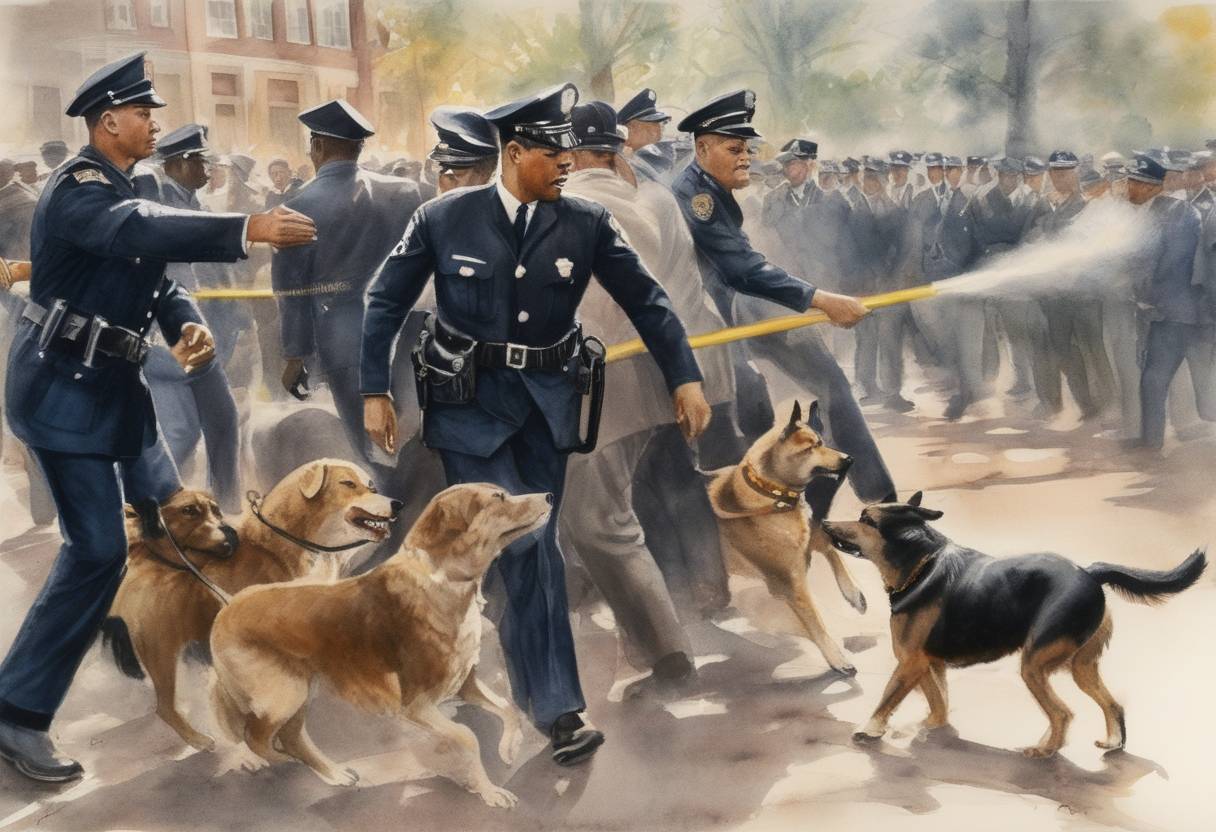
On May 3, 1963, during the Birmingham campaign, also known as “Project C” (for “confrontation”), the Southern Christian Leadership Conference (SCLC), led by Martin Luther King Jr., organized a series of peaceful protests in Birmingham, Alabama. These protests were a crucial part of the Civil Rights Movement, aiming to challenge racial segregation and disenfranchisement in one of America’s most divided cities.
Birmingham, at the time, was one of the most racially segregated cities in the United States, with deeply entrenched Jim Crow laws. The local government, led by Public Safety Commissioner Eugene “Bull” Connor, had a history of extreme measures against African Americans seeking civil rights. The campaign began in April 1963, focusing on direct nonviolent action to fill jails and gain national attention to the plight of African Americans in the South.
The Birmingham campaign’s success and visibility were instrumental in leading to the subsequent passage of the Civil Rights Act of 1964, marking a major milestone in the American civil rights era.
Source: www.history.com