Giovanni da Verrazzano's 1524 Voyage
1524 · Funchal, Portugal
Italian explorer Giovanni da Verrazzano sets sail westward from Madeira on a voyage of discovery on behalf of King Francis I of France, eventually reaching the North American coastline.
July 17, 1497
King James IV of Scotland issues a report about the sea travels of explorer John Cabot, reflecting inter-European interest in transatlantic exploration following Cabot’s discovery of parts of North America.
Edinburgh, Scotland | Court of James IV of Scotland
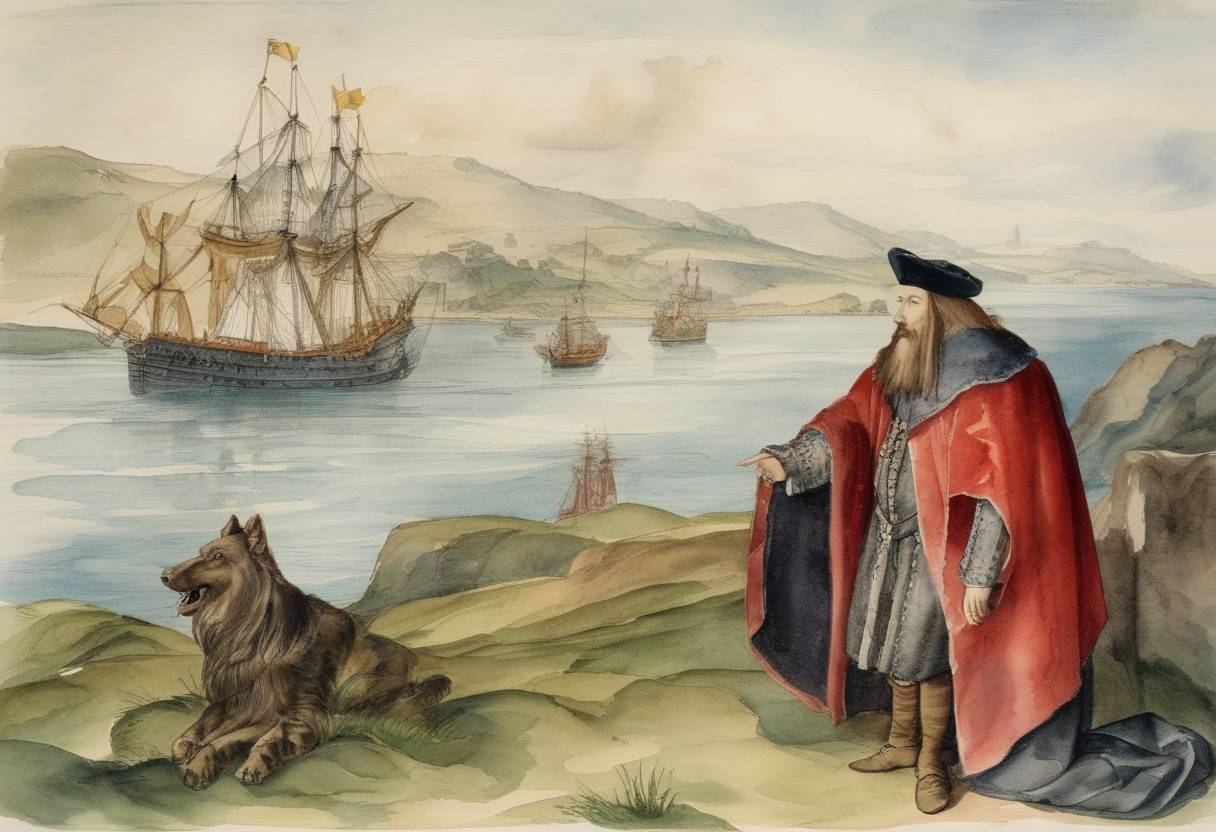
On July 17, 1497, King James IV of Scotland issued a report concerning the maritime activities of the Italian explorer John Cabot. This document highlights the burgeoning interest among European monarchs in transatlantic exploration, a significant consequence of the period’s Age of Discovery.
John Cabot, originally Giovanni Caboto, was an explorer under the commission of King Henry VII of England. Seeking a westward maritime route, Cabot embarked on a journey to discover new lands, contributing to what would later be recognized as the European discovery of parts of North America. Earlier that year, Cabot completed a successful voyage across the Atlantic, landing on the North American coast, which he claimed for England.
King James IV’s report illustrates the international implications of Cabot’s voyage. As word of Cabot’s landfall spread, it sparked considerable interest among the European powers in expanding maritime exploration and securing new territories. King James IV, aware of the potential for wealth and prestige, sought to be informed about Cabot’s discoveries and the possibilities they might present for Scotland.
Transatlantic Exploration: Cabot’s successful crossing of the Atlantic demonstrated the feasibility of westward voyages from Europe to the Americas, challenging existing navigation paradigms and showing new routes to previously uncharted territories.
Claim for England: The voyage underscored England’s emerging role in the competitive race for overseas expansion and territorial claims, setting a precedent for future English expeditions.
Influence on European Politics: Reports like those issued by King James IV influenced political dynamics and rivalries on the European continent, as different monarchies vied for power, territory, and influence through overseas exploration.
The report and Cabot’s voyage marked a burgeoning period of exploration and colonization efforts by European nations. These early explorations laid the groundwork for future claims and settlements in North America. In the subsequent decades, this momentum would lead to the establishment of permanent colonies and the eventual widespread European impact on indigenous cultures and lands.
The actions of explorers like John Cabot and their reception by leaders such as King James IV underscored the interconnectedness of European powers and the global shift toward exploration, colonization, and the broader Age of Discovery.