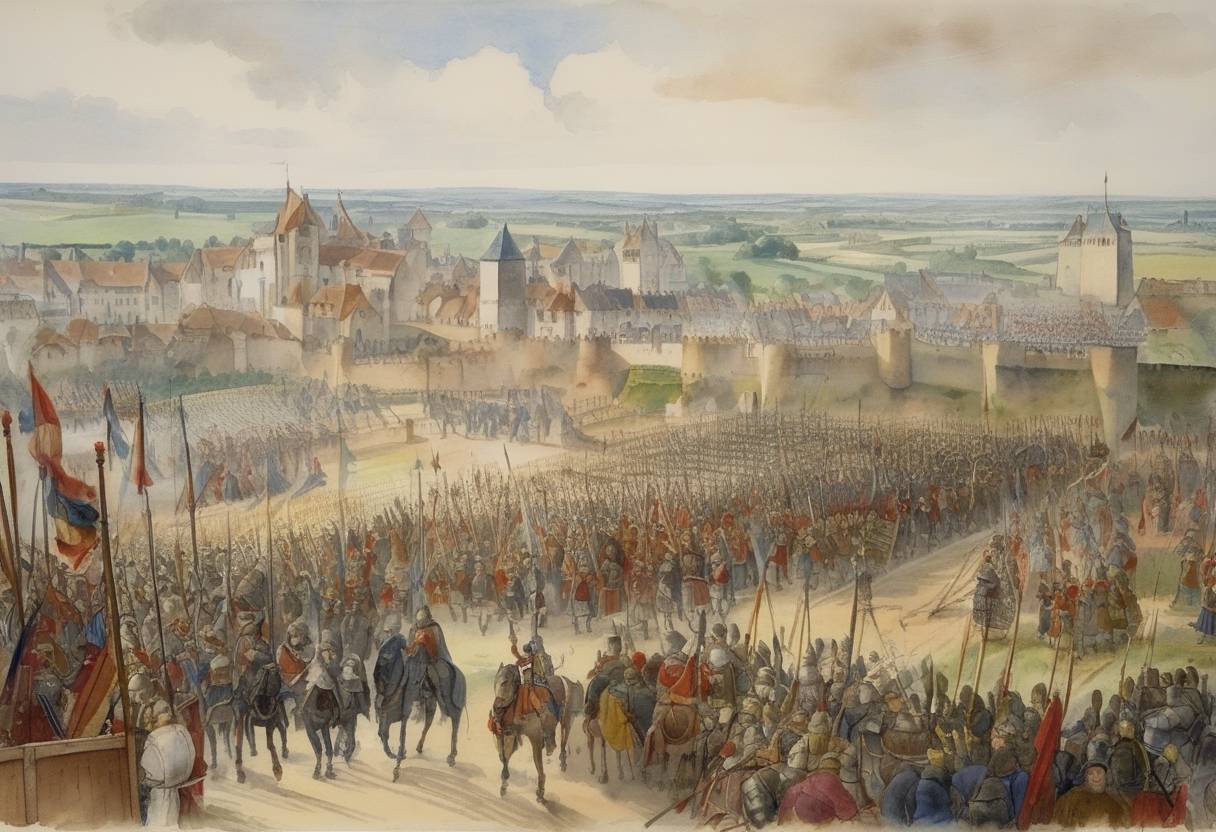
Treaty of Brétigny
On May 15, 1360, the Treaty of Brétigny was ratified, marking a pivotal moment in the protracted conflict between England and France known as the Hundred Years’ War. This treaty established a temporary peace between the two warring nations, with significant territorial and political implications.
Background
The Hundred Years’ War, spanning from 1337 to 1453, was primarily a dynastic conflict between the Kingdom of England and the Kingdom of France. The war saw numerous phases of intense fighting and intermittent truces. By the mid-14th century, English forces under King Edward III had achieved several significant victories, most notably the Battle of Crécy in 1346 and the capture of King John II of France at the Battle of Poitiers in 1356.
Key Provisions
The Treaty of Brétigny was formulated during negotiations initiated in April 1360 after these English victories had put substantial pressure on the French crown:
Territorial Gains for England: England acquired full sovereignty over extensive territories in France. This included lands in Aquitaine and Gascony, as well as areas around Calais which England already controlled. These territories were to be held independent of the French crown.
Ransom for King John II: In exchange for his release, King John II was to pay a substantial ransom of three million gold crowns to England, which was a considerable sum at the time. The process for payment was structured in installments.
Recognition of Edward’s Claims: King Edward III of England renounced his claim to the French throne and any English territorial gains in France insofar as they were part of the Kingdom of France.
Historical Significance
The treaty temporarily altered the balance of power in France, providing a respite from ongoing hostilities and allowing both kingdoms to address internal issues. However, the peace established by the Treaty of Brétigny was unstable. By the late 1360s, hostilities resumed under King Charles V of France, leading to the eventual dissolution of the treaty’s provisions.
Aftermath
The resumption of war after the treaty highlighted the limitations of diplomatic resolutions without mutual willingness and capacity to maintain them. It underscored the enduring complexities of Anglo-French relations and set the stage for further prolongation of the Hundred Years’ War, which continued until the mid-15th century.
In retrospect, the Treaty of Brétigny was significant for illustrating attempts at formal peace during the extended conflict and the difficulties in maintaining such peace amidst shifting power dynamics and enduring rivalries.