Founding of Queen's University
1841 · Kingston, Canada
Queen's University is founded in Kingston, Ontario, by a Royal Charter from Queen Victoria.
April 18, 1831
The University of Alabama was founded, becoming the state's first public college and one of the oldest public universities in the United States.
Tuscaloosa, United States | University of Alabama
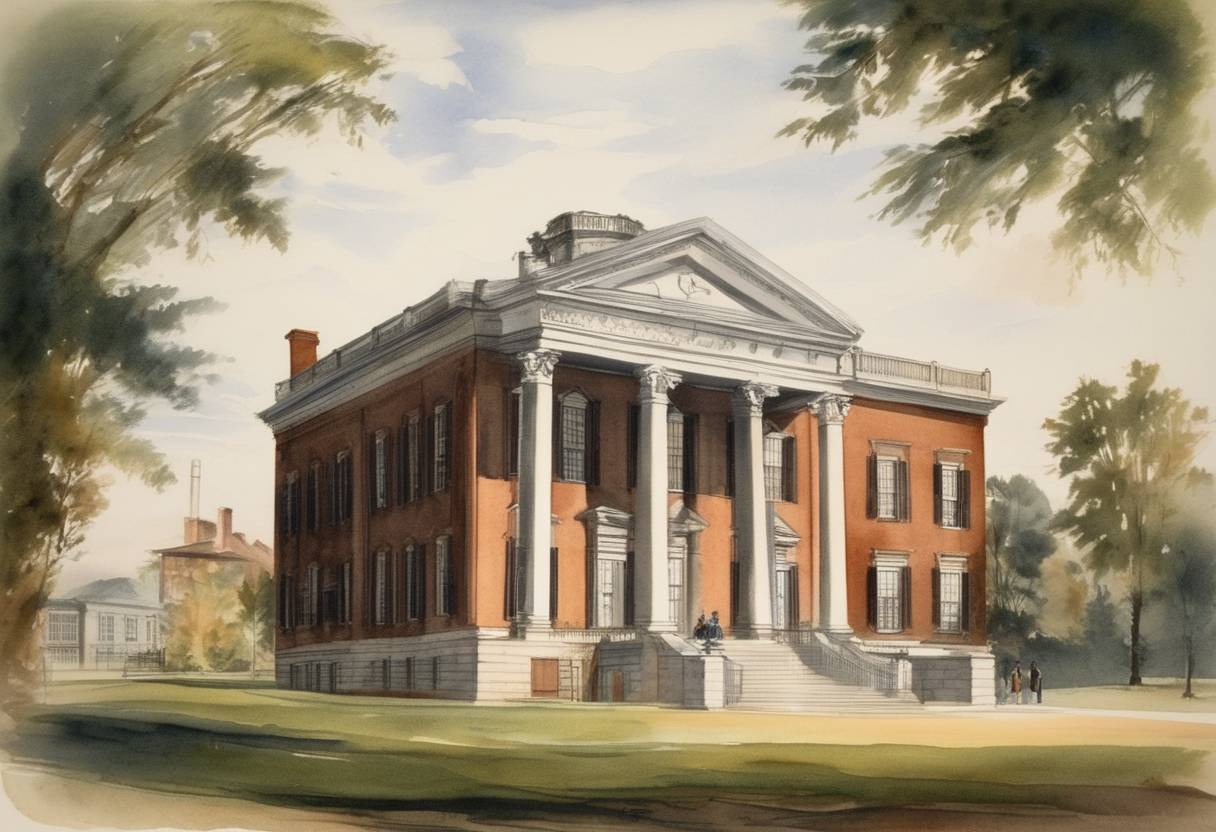
On April 18, 1831, The University of Alabama was officially opened as the state’s first public college in Tuscaloosa, Alabama. Founded through the Alabama Legislature’s decision to create an institution of higher learning, the university was established as a result of the provisions set forth in the Alabama Enabling Act of 1819. This act, which facilitated Alabama’s admission to the Union as a state, reserved land for the purpose of establishing a “seminary of learning.”
The initial curriculum was classical, reflecting the educational trends of the early 19th century, focusing on disciplines such as ancient languages, philosophy, and sciences. The university’s mission was to educate the state’s youth and prepare them for leadership roles, embodying the desire to create a well-educated citizenry that would foster the state’s growth.
The University of Alabama’s early campus architecture was heavily influenced by the Georgian style, featuring notable buildings designed by architect William Nichols. The main building, often referred to as the “Rotunda,” was completed in 1839 but was tragically burned during the Civil War in 1865, along with much of the campus.
Over its history, The University of Alabama has developed into one of the oldest public universities in the United States, contributing significantly to Alabama’s educational landscape. Its founding was a landmark in providing accessible higher education in the region and shaping the intellectual life of the state.
The university today stands as a testament to its commitment to education, having survived the destruction of the Civil War, periods of reconstruction, and continual growth to become a leading institution in the South. It has produced many notable alumni and continues to play a crucial role in academic, cultural, and social spheres within Alabama and beyond.
Source: www.ua.edu