The Siege of Yorktown Begins: September 28, 1781
1781 · Yorktown, United States
The Siege of Yorktown begins during the American Revolutionary War, leading to the eventual surrender of British forces.
July 27, 1778
The First Battle of Ushant, a naval battle between British and French fleets during the American Revolutionary War, took place in the English Channel. The battle was indecisive and led to political fallout for some British commanders.
Off Ushant, English Channel | Royal Navy, French Navy
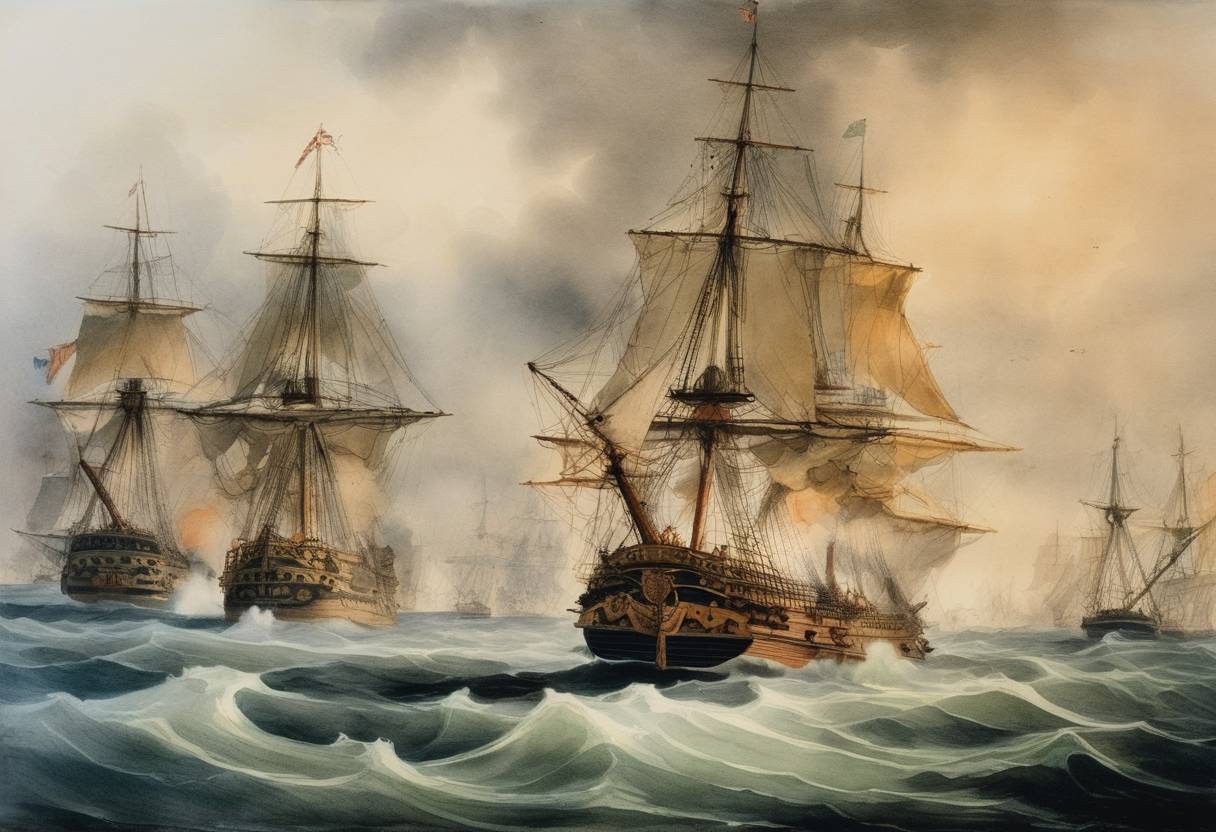
The First Battle of Ushant took place on July 27, 1778, during the American Revolutionary War, in the English Channel near Ushant, an island off the coast of Brittany, France. This naval engagement involved the British Royal Navy and the French Navy, marking France’s entry into the American War of Independence on the side of the American colonies.
The American Revolutionary War had expanded into a global conflict, influencing European powers. After the American colonies declared independence in 1776, France, a traditional rival of Britain, saw an opportunity to weaken British influence and formally entered the war in support of the Americans in 1778. This shift prompted the mobilization of naval forces in anticipation of conflict.
The confrontation on July 27 commenced after days of maneuvering and signaling errors between the fleets, under poor weather conditions that complicated command. The combat began in earnest in the afternoon, with both fleets engaging in sporadic and disorganized exchanges of cannon fire. The lack of decisive leadership, compounded by communication difficulties between ships in both fleets, led to a drawn-out, inconclusive battle.
Although neither side secured a clear victory, the battle ended with both fleets withdrawing. The damage was relatively uneven, and both fleets avoided crippling losses. Yet, neither could claim a significant strategic advantage, rendering the encounter indecisive.
The battle’s indecisive nature triggered political repercussions back in Britain. Admiral Keppel faced public and political criticism, leading to his court-martial. Although he was acquitted in 1779, the court-martial highlighted tensions within the British Navy and provoked disputes among high-ranking officers, notably between Keppel and Sir Hugh Palliser, a member of Keppel’s command who had led a cautious approach during the engagement. This schism reflected broader divisions within British society regarding the conduct of the war.
While the Battle of Ushant did not significantly alter the immediate strategic situation, it symbolized the beginning of increased naval hostilities that would continue throughout the European and Atlantic theaters during the war. It also underscored the French commitment to the American Revolutionary cause, setting the stage for future confrontations at sea that would further strain British naval resources.
The First Battle of Ushant exemplifies the complexities of command and the challenges of naval warfare during the period. Though tactically inconclusive, its political and strategic implications reverberated throughout the rest of the conflict, marking a key moment in the involved nations’ naval histories.
Source: www.britannica.com