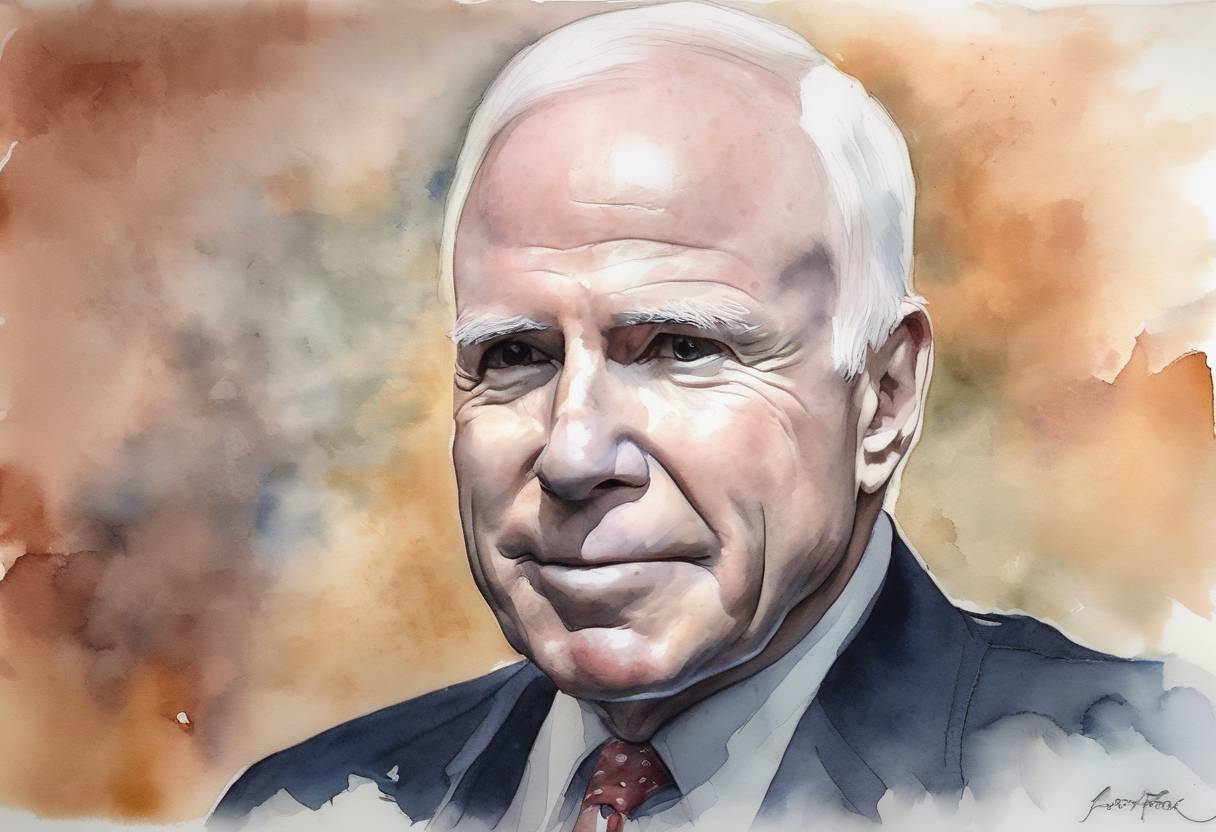
John McCain: A Life of Service and Legacy
On August 26, 2018, John McCain, a prominent U.S. Senator and former presidential candidate, passed away at the age of 81 after a courageous battle with glioblastoma, an aggressive form of brain cancer. McCain’s life was marked by his dedication to public service, both as a military officer and a long-serving politician.
Early Life and Military Service
John Sidney McCain III was born on August 29, 1936, at Coco Solo Naval Air Station in the Panama Canal Zone. Coming from a distinguished military family, McCain followed in the footsteps of his father and grandfather, both four-star admirals in the U.S. Navy. He attended the United States Naval Academy, graduating in 1958.
During the Vietnam War, McCain served as a naval aviator. In 1967, his plane was shot down during a bombing mission over Hanoi, North Vietnam. He was captured and endured over five years as a prisoner of war, facing severe torture and solitary confinement. His resilience and refusal to accept early release, offered for propaganda purposes, earned him widespread respect and recognition.
Political Career
After retiring from the Navy in 1981, McCain transitioned to politics. He was elected to the U.S. House of Representatives from Arizona in 1982 and then to the U.S. Senate in 1986, where he served until his death. Known for his maverick persona, McCain often crossed party lines and was respected for his willingness to work with both Republicans and Democrats.
Key Legislative Contributions
Campaign Finance Reform: McCain was a leading advocate for campaign finance reform, co-sponsoring the Bipartisan Campaign Reform Act of 2002, commonly known as the McCain-Feingold Act, which aimed to eliminate the influence of soft money in political campaigns.
Military and Foreign Policy: As a senior member of the Senate Armed Services Committee, McCain was a vocal advocate for a strong national defense and played a significant role in shaping U.S. military and foreign policy.
Healthcare and Immigration: McCain was involved in various bipartisan efforts to reform healthcare and immigration, though not all were successful.
Presidential Campaigns
McCain sought the presidency twice. In 2000, he ran for the Republican nomination but lost to George W. Bush. In 2008, he secured the Republican nomination and chose Sarah Palin as his running mate. Despite a spirited campaign, McCain was defeated by Barack Obama in the general election.
Legacy and Impact
John McCain’s legacy is characterized by his commitment to service, integrity, and bipartisanship. He was awarded numerous honors, including the Silver Star, Bronze Star, and Purple Heart for his military service. His willingness to stand by his principles, even when unpopular within his party, earned him admiration across the political spectrum.
McCain’s passing was met with tributes from leaders worldwide, reflecting his impact on both national and international stages. His life and career continue to inspire discussions on patriotism, courage, and the importance of reaching across the aisle in American politics.