Alberto Fujimori Charged with Murder and Forced Disappearance
2001 · Lima, Peru
Peru's former President Alberto Fujimori is charged with murder and forced disappearance.
July 5, 2000
President Alberto Fujimori of Peru won re-election in controversial circumstances, leading to political unrest.
Lima, Peru | Government of Peru
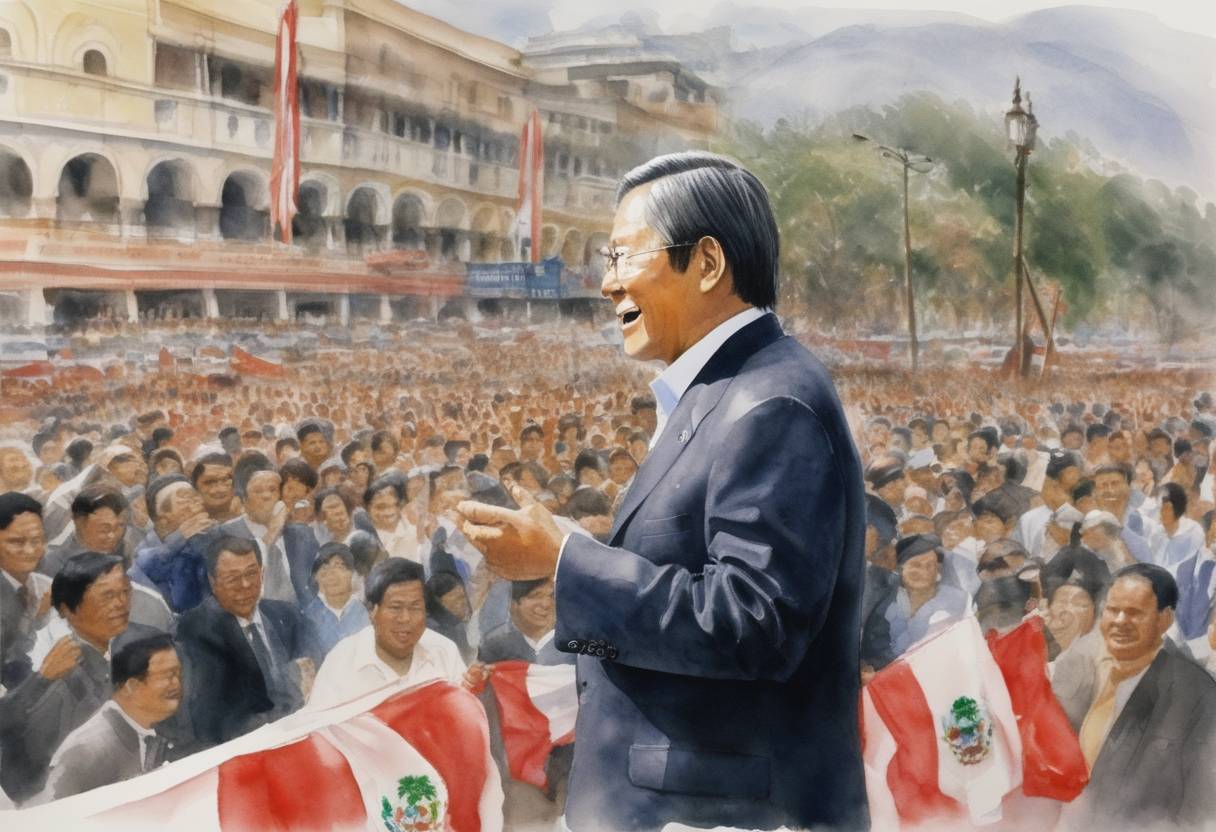
On July 5, 2000, Alberto Fujimori was declared the winner of the presidential election in Peru, securing a third term under contentious circumstances. His re-election marked a significant moment in Peruvian politics, characterized by accusations of electoral fraud, widespread protests, and international scrutiny.
Alberto Fujimori first took office in 1990 and was re-elected in 1995. His tenure was marked by economic reforms and a successful campaign against the Shining Path insurgency. However, his presidency was also criticized for authoritarian practices and human rights violations. In 1996, a legal amendment permitted Fujimori to seek a third term, a decision met with resistance as it was widely perceived as undermining democratic principles.
The election process itself was fraught with controversy from its outset:
Allegations of Rigging: Fujimori’s administration faced accusations of manipulating the electoral process. Allegations included media bias favoring Fujimori, voter intimidation, and manipulation of electoral frameworks to disadvantage opposition candidates.
International Concerns: International observers, including the Organization of American States (OAS), expressed concerns over the fairness of the electoral process. Reports highlighted irregularities and a lack of transparency in the conduct of the elections.
Opposition Boycott: The main opposition candidate, Alejandro Toledo, withdrew from the run-off, citing the corrupt practices of electoral authorities, though his name appeared on the ballot.
Despite the controversies, Fujimori officially won the election with about 74% of the votes, a figure heavily disputed by opposition parties and independent observers. The perceived lack of legitimacy in Fujimori’s victory led to widespread public discontent and political unrest across the country.
Protests and Civil Unrest: Thousands of Peruvians took to the streets to protest against Fujimori’s continued governance, leading to significant political instability.
International Response: The international community, including the United States and European Union, criticized the electoral process, and some nations reevaluated their diplomatic relations with Peru.
Fujimori’s Downfall: The contentious re-election was a precursor to Fujimori’s political downfall. By November 2000, amid mounting scandal and a collapsing regime, Fujimori fled to Japan and submitted his resignation via fax. His resignation was not accepted, and he was instead removed by the Peruvian Congress, which declared him morally unfit to lead.
Fujimori’s controversial re-election and subsequent political crisis emphasized the fragility of democratic institutions in Peru and marked a pivotal episode in the nation’s contemporary political history.
Source: www.bbc.com