Hurricane Rita Landfall: September 25, 2005
2005 · Texas-Louisiana border, USA
Hurricane Rita made landfall as a Category 3 hurricane at the Texas-Louisiana border, causing major flooding and damage.
August 17, 1969
Hurricane Camille, a Category 5 storm, makes landfall along the Mississippi Gulf Coast, causing extensive damage and resulting in over 250 deaths.
Pass Christian, United States | National Hurricane Center
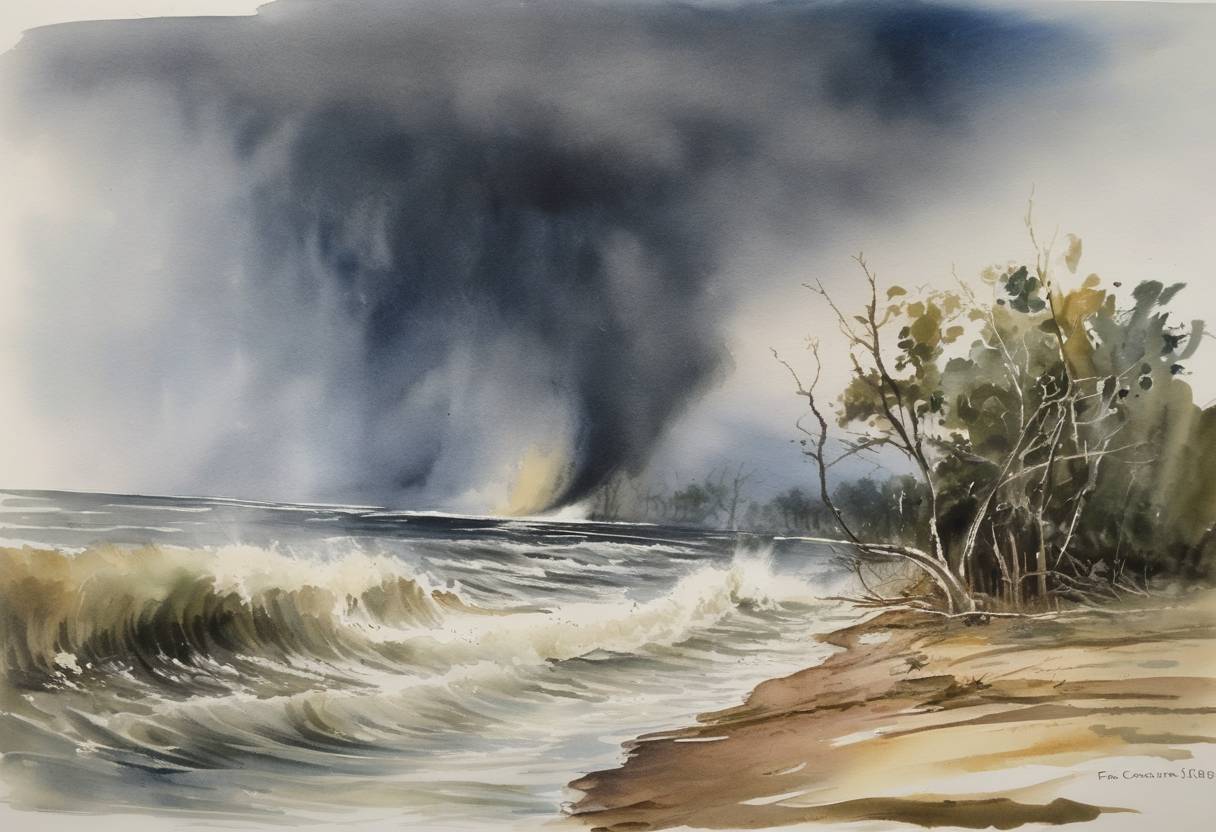
On August 17, 1969, Hurricane Camille made a catastrophic landfall on the Mississippi Gulf Coast as a Category 5 hurricane. This event marked one of the strongest storm systems to ever strike the United States mainland, and its devastation left an indelible mark on the region.
Camille originated as a tropical wave off the coast of Africa and traveled westward into the Caribbean Sea. It gained tropical storm status on August 14, 1969, in the Caribbean, and within 48 hours, it intensified rapidly into a hurricane. The storm continued to gain strength as it moved northwest, and by the time it reached the Gulf of Mexico, Camille had reached Category 5 status—the highest level on the Saffir-Simpson hurricane wind scale.
The impact of Hurricane Camille was profound:
Hurricane Camille prompted significant changes in disaster preparedness and response strategies in the United States. The unprecedented severity of the storm underscored the importance of improved forecasting, emergency management, and public awareness regarding hurricane dangers. It also led to better building codes and storm mitigation practices in coastal areas.
Camille remains a benchmark for measuring the intensity and potential impact of hurricanes along the Gulf Coast and serves as a powerful reminder of the destructive capabilities of tropical cyclones. Its legacy continues to influence meteorological research and the formulation of policies aimed at reducing hurricane-related risks.
Source: www.history.com