Patent of the First Personal Toilet System by George Berry
1800 · New York, United States
First personal toilet system was patented by George Berry in the United States.
March 28, 1797
Nathaniel Briggs of New Hampshire was awarded the first U.S. patent for a washing machine.
Nashua, United States | United States Patent and Trademark Office
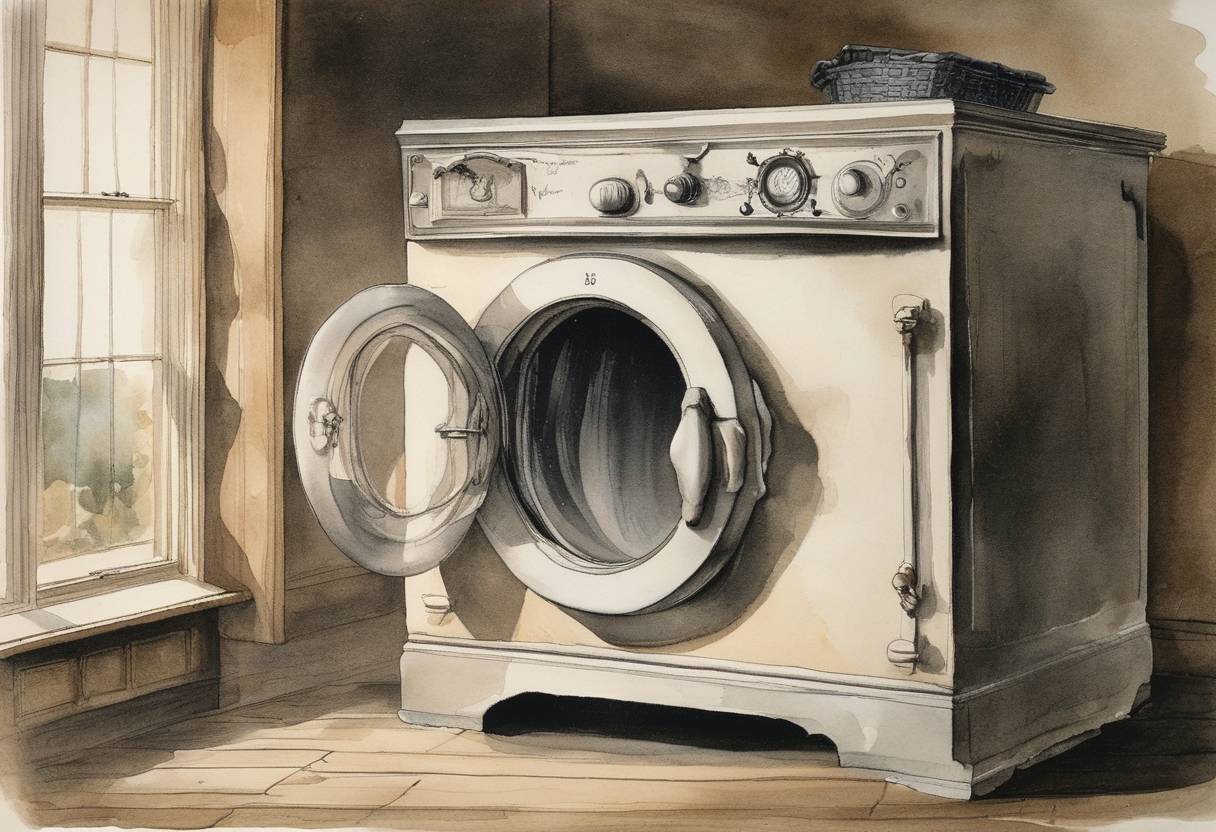
On March 28, 1797, the United States Patent Office awarded Nathaniel Briggs of New Hampshire the first patent for a washing machine. This marked a significant development in domestic technology during the late 18th century, as it represented an early effort to mechanize and simplify the process of washing clothes.
Before the advent of washing machines, laundry was a labor-intensive chore. It involved manual scrubbing of clothes against washboards, often using harsh soaps that could be damaging to fabrics. The cumbersome nature of this work spurred inventors to seek mechanical solutions.
Nathaniel Briggs’s patent is notably the first to be recognized by the U.S. Patent Office for a device specifically designed to aid in the washing of clothes. Although the exact specifications of Briggs’s washing machine are not detailed in surviving records due to a fire in 1836 that destroyed many early patents, it is understood that his invention likely relied on manual operation, possibly incorporating systems of paddles or rotating drums to agitate the clothes, mimicking the action of manual washing.
Briggs’s patent represents an early step in the evolution of laundry technology that would eventually lead to the fully automated washing machines of the modern era. At the time, the idea of mechanizing the laundering process was innovative, laying foundational concepts that would be built upon by future inventors.
The progress in washing machine technology continued throughout the 19th century, with various inventors improving on prior designs. Despite the lack of detailed documentation on Briggs’s specific machine design and functionality, his patent is often cited as a starting point for developments that would fundamentally change domestic and commercial laundering practices.
This pioneering effort not only reflects the inventive spirit of the post-Revolutionary War period in America but also highlights the growing importance of patents in encouraging innovation and protecting intellectual property during the nascent years of the United States.
Source: www.uspto.gov