Founding of the International Telegraph Union - May 17, 1865
1865 · Paris, France
The International Telegraph Union was founded in Paris, France.
April 16, 1881
The world's first telephoned performance takes place at the Théâtre de l'Opéra in Paris.
Paris, France | Théâtre de l'Opéra
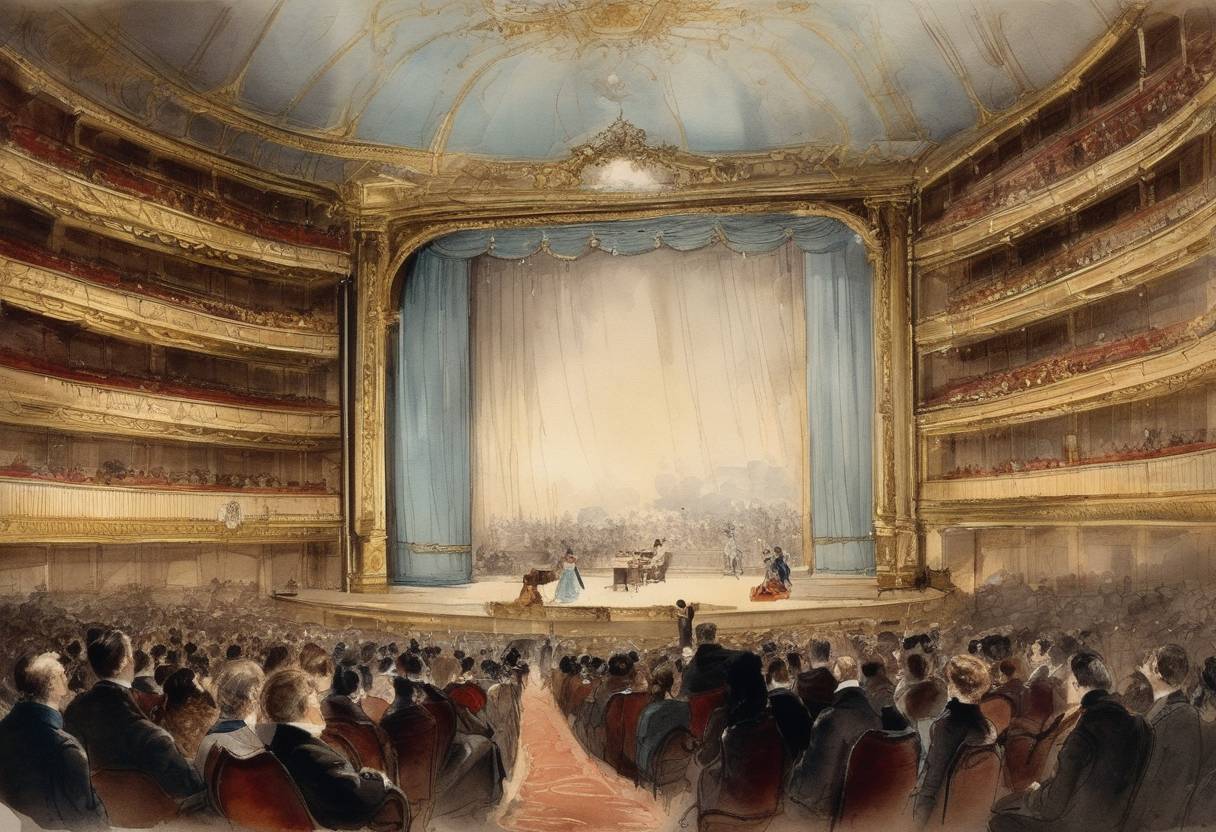
On April 16, 1881, a groundbreaking event in the history of telecommunications and performing arts occurred at the Théâtre de l’Opéra in Paris, France. This date marks the first time a live performance was transmitted over the telephone, allowing listeners to experience an opera remotely. This innovative experiment was led by Clément Ader, a French engineer and inventor who significantly contributed to the development of early audio transmission technology.
Clément Ader utilized a system known as the “Théâtrophone,” which he devised to transmit sound using telephone lines. The Théâtrophone effectively captured audio with the use of multiple telephone receivers placed around the stage to create a primitive form of stereo sound. These receivers were connected via telephone lines to listeners who could access live performances from different locations, usually in a specially equipped listening room or via private subscriptions.
The event at the Théâtre de l’Opéra featured live performances of well-known operatic works, including fragments from Charles Gounod’s “Roméo et Juliette.” The live audio was transmitted to the electrical exhibition underway in Paris at the time, where attendees could listen to the opera through receivers.
This demonstration showcased the potential of telecommunications in enhancing the accessibility of cultural performances, paving the way for future innovations such as radio broadcast and modern live streaming services. The success of this event demonstrated the feasibility of using telecommunication technologies to reach a wider audience beyond those physically present in the theater.
The event is a significant milestone in both the history of telecommunications and the performing arts. Clément Ader’s vision and technical acumen laid the groundwork for subsequent developments in audio technology and broadcasting, marking a pivotal moment in the cultural, technological, and social history of the late 19th century.
Source: en.wikipedia.org