The Battle of St. George and the Brucean Wars: August 15, 1310
1310 · St. George, Scotland
The Battle of St. George resumes, part of the Brucean Wars, highlighting Robert the Bruce's efforts to reclaim Scottish lands.
June 25, 1306
Robert the Bruce, King of Scots, was excommunicated by Pope Clement V after failing to comply with papal commands regarding Scottish church matters during his conflict with King Edward I of England.
Ayrshire, Scotland | Catholic Church
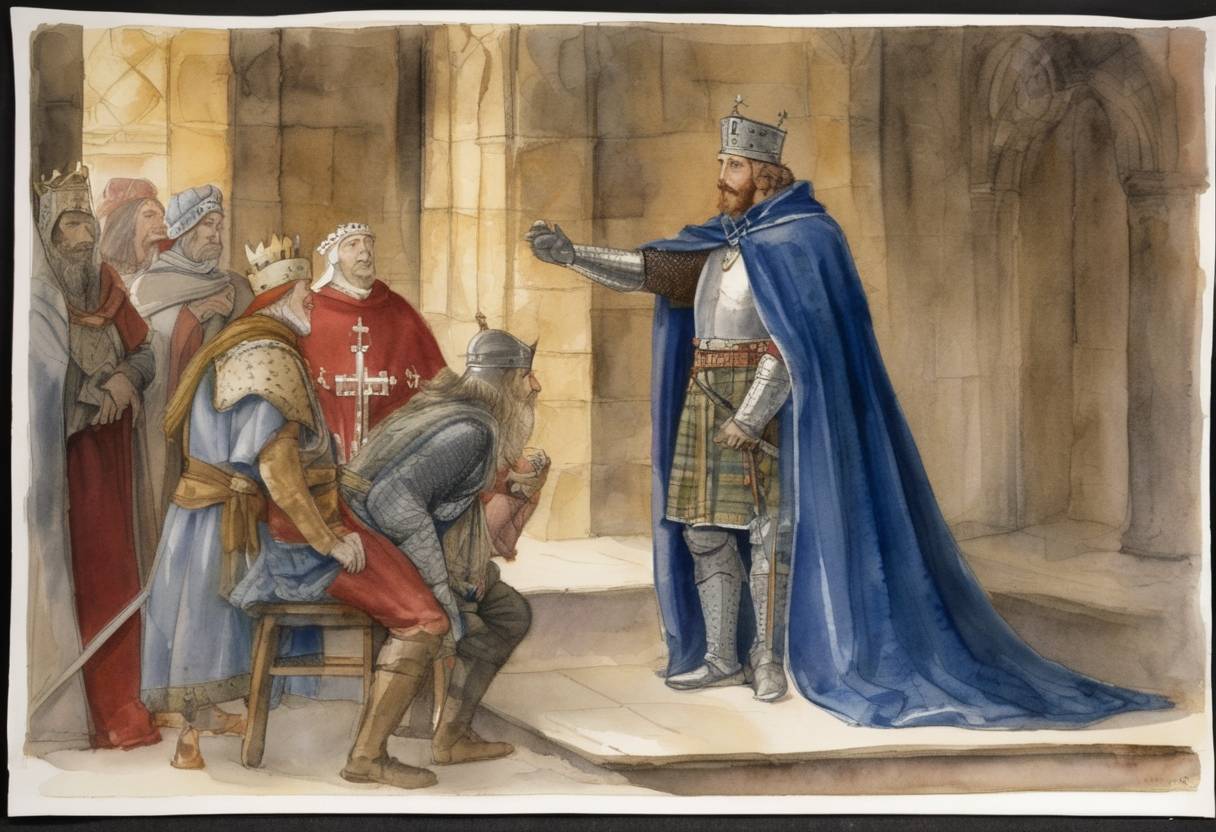
On June 25, 1306, Robert the Bruce, the newly crowned King of Scots, was excommunicated by Pope Clement V. This dramatic ecclesiastical censure was a significant episode in the ongoing conflict between Scotland and England during the Wars of Scottish Independence.
Robert the Bruce seized the Scottish throne in March 1306, following the assassination of his rival, John Comyn, at Greyfriars Church in Dumfries. The circumstances of Comyn’s death shocked Christendom, as it occurred within a sacred space, an act that was severely condemned by the Church.
In the political landscape of the early 14th century, Scotland was embroiled in a struggle for sovereignty against the English crown, led by King Edward I. Robert’s ascension to the throne was met with resistance, both domestically and from England, which viewed Scotland as a vassal state.
Robert’s actions, particularly the murder of Comyn, placed him at odds with the Church. Pope Clement V, at the behest of Edward I and under pressure from English representatives at the papal court, issued the excommunication decree as Robert’s actions were considered a grave violation of church sanctity.
The excommunication highlighted the considerable influence held by the Church during this period, as spiritual legitimacy was a crucial aspect of any monarch’s reign. The papal censure was intended to undermine Robert’s authority by depriving him of church support, which was vital for unifying the Scottish nobility and populace under his rule.
Despite his excommunication, Robert the Bruce continued his campaign to secure Scotland’s independence. The excommunication, while a spiritual barrier, did not prevent him from rallying supporters. His resilience eventually led to military victories against English forces, culminating in the Battle of Bannockburn in 1314, where he decisively defeated the army of Edward II.
By 1324, Robert successfully negotiated for papal recognition of his kingship, which was critical in legitimizing his rule. King Robert I of Scotland’s excommunication did not mark the end of his reign but rather a turning point in his quest to assert Scotland’s sovereignty and establish himself as a legitimate ruler.
The excommunication of Robert the Bruce underscores the complex interplay between church authority, political ambition, and national identity. It exemplifies the challenges medieval monarchs faced when religious and political realms intersected, and demonstrates the broader context of conflict that defined and reshaped the British Isles in the medieval era.
Source: www.britannica.com