Opening of the Manhattan Bridge
1909 · New York City, United States
The Manhattan Bridge, a suspension bridge connecting Manhattan and Brooklyn in New York City, officially opened to traffic.
December 22, 1937
The Lincoln Tunnel in New York City was opened to traffic, providing a crucial connection between Manhattan and New Jersey under the Hudson River.
New York City, United States | Port Authority of New York and New Jersey
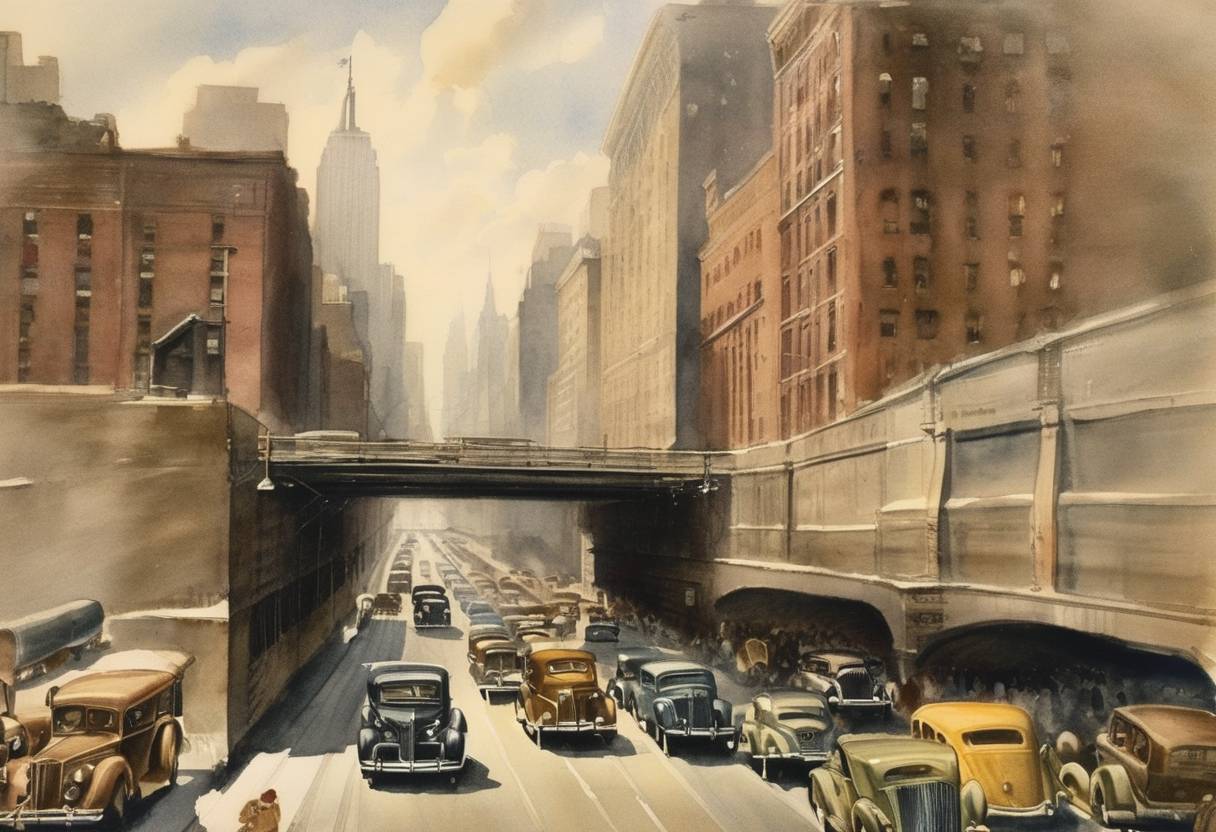
On December 22, 1937, the Lincoln Tunnel in New York City officially opened to traffic, marking a significant development in the infrastructure of the northeastern United States. This engineering marvel provided a vital connection between Midtown Manhattan and Weehawken, New Jersey, traversing beneath the Hudson River.
The concept of the Lincoln Tunnel came as a response to growing transportation demands between New York and New Jersey. Named after President Abraham Lincoln, the tunnel was initially conceived in the early 1930s with the purpose of alleviating congestion on the nearby George Washington Bridge and ferry services.
Construction of the tunnel began in March 1934 under the direction of the Port Authority of New York and New Jersey. The ambitious project took nearly four years to complete, navigating challenges such as working beneath a busy river and managing the complexities of tunneling with mid-20th-century technology.
The original design consisted of a single tube running 1.5 miles in length and 21.5 feet in diameter. Norwegian-born civil engineer Ole Singstad was a pivotal figure in the tunnel’s design and construction, utilizing innovative ventilation systems to ensure air quality within the tunnel—a significant engineering concern given the vehicular emissions of the time.
Upon its opening, the Lincoln Tunnel immediately became a critical passage for traffic between New York City and the various communities in New Jersey. The tunnel minimized travel time and provided a more reliable cross-river route, facilitating economic and social interactions that were previously constrained by waterway limitations.
The tunnel’s opening contributed significantly to the regional economy by supporting the movement of goods and commuters. It played a role in the expansion of suburban areas in New Jersey as more people could seamlessly travel between the two states for work and leisure.
Following the successful opening of the first tube, increased demand led to the construction of two additional tubes, completed in 1945 and 1957. Today, the Lincoln Tunnel continues to serve as a major thoroughfare, handling tens of thousands of vehicles daily and remaining integral to the transportation infrastructure of the metropolitan New York area.
The Elizabeth Tunnel not only serves as a testament to the engineering prowess of its time but also exemplifies the transformative impact of effective infrastructure on urban development and connectivity.
Source: www.panynj.gov