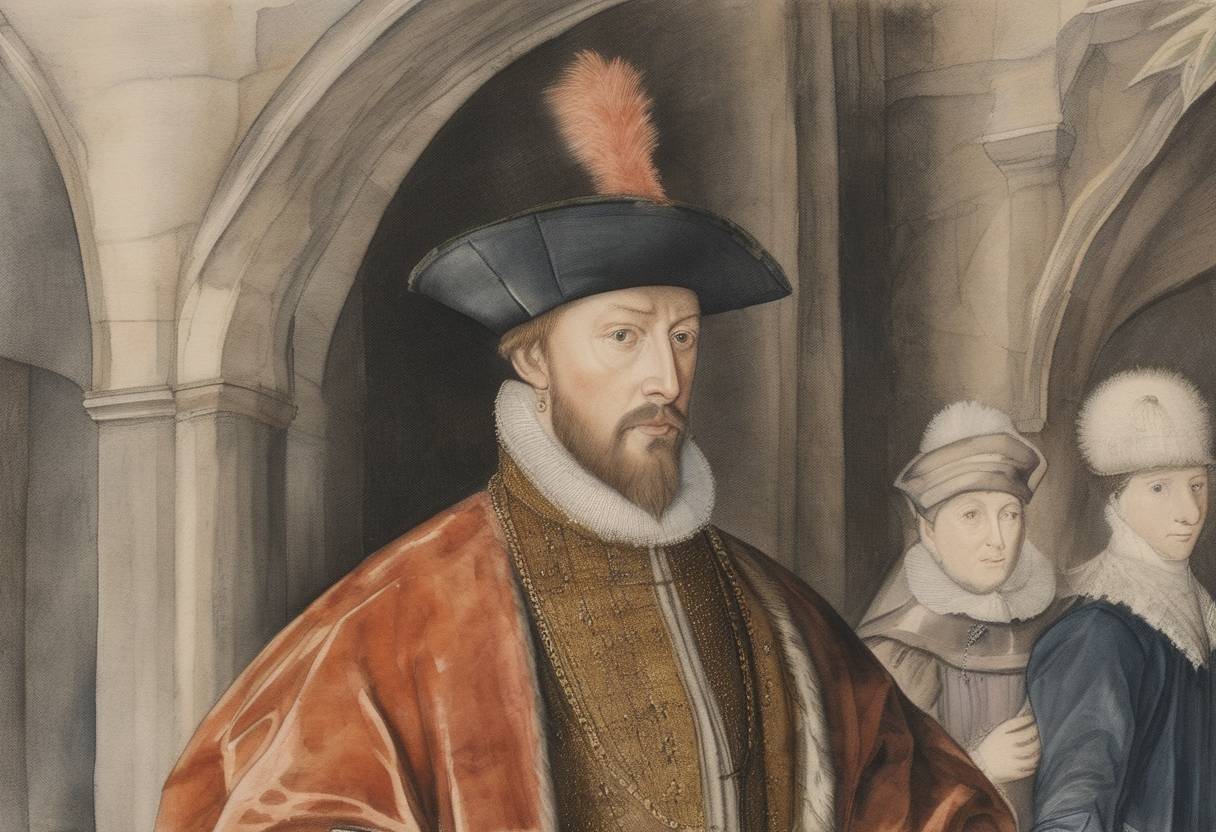
Thomas Howard, 4th Duke of Norfolk, Arrested for Conspiracy
On September 7, 1571, Thomas Howard, the 4th Duke of Norfolk, was arrested for his involvement in a conspiracy against Queen Elizabeth I of England. This event was a significant development during Elizabeth I’s reign, highlighting the tensions between Protestant England and the Catholic powers of Europe, particularly Spain.
Background
Thomas Howard was a prominent English nobleman, holding the title of Duke of Norfolk, the premier dukedom in the English peerage. Born into a powerful Catholic family, Howard’s loyalties were often under scrutiny in a Protestant-ruled England under Elizabeth I. As a central figure in the English court, his ambition and connections made him a focal point for Catholic plots aiming to replace Elizabeth.
The Ridolfi Plot
The Ridolfi Plot, masterminded by Roberto di Ridolfi, was a plan intended to assassinate Queen Elizabeth I and install Mary, Queen of Scots, a Catholic and legitimate heir in the eyes of many Catholics, on the English throne. Howard’s role was crucial, as he was to marry Mary, thus solidifying the Catholic claim. The plot promised support from King Philip II of Spain and the Pope, highlighting the international scope of the conspiracy.
Arrest and Implications
The plot was uncovered due to the diligent espionage network led by Sir Francis Walsingham, Elizabeth’s Secretary of State. The arrest of Norfolk marked a turning point, emphasizing the vulnerability of the monarch and the increasing tensions between Protestant reformers and Catholic traditionalists in Europe. After his arrest, Norfolk was held in the Tower of London and subjected to intense scrutiny.
Consequences
The exposure of the Ridolfi Plot, and Norfolk’s involvement, led to a hardening of attitudes against Catholic conspiracies in England. The arrest further strained Anglo-Spanish relations, as Spain’s involvement in the plot underscored the ongoing religious and political threat posed to Elizabeth’s reign.
Despite his status, Howard was found guilty of treason. He was executed in June 1572, making him one of the highest-ranking English noblemen to be executed under Elizabeth I’s rule. This event reinforced the severity of the penalties for treason and signaled Elizabeth’s determination to defend her throne against external and internal threats.
Historical Significance
The arrest and subsequent execution of Thomas Howard were pivotal in Elizabethan England, as they underscored the perils and intrigues surrounding the Tudor monarchy. It also illustrated the complex web of international and religious politics of the time, setting a precedent for subsequent actions against conspirators and ensuring the security and prominence of the Protestant establishment in England.