Earthquake in Northern Japan on August 23, 2003
2003 · Hokkaido, Japan
A strong earthquake measuring 7.2 on the Richter scale strikes northern Japan, killing at least two people and injuring more than 240.
October 13, 1948
A major earthquake, registering 7.3 magnitude on the Richter scale, hit the Ryukyu Islands in Japan.
Okinawa, Japan | Japan Meteorological Agency
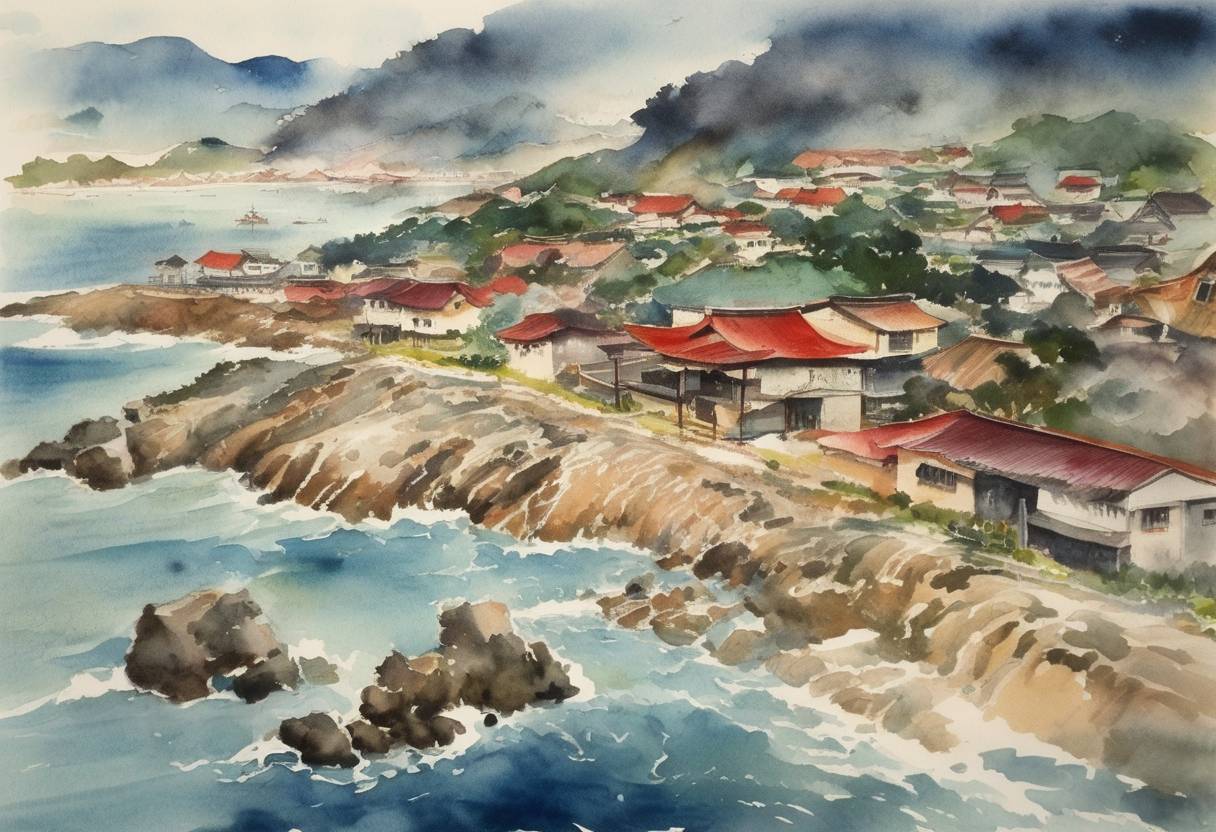
On October 13, 1948, a significant earthquake with a magnitude of 7.3 struck the Ryukyu Islands of Japan. This seismic event occurred in a region prone to earthquakes due to the complex tectonic interactions between the Eurasian Plate, the Philippine Sea Plate, and the Pacific Plate.
The Ryukyu Islands archipelago lies along the boundary of the Philippine Sea and Eurasian tectonic plates. The convergence and subduction of these plates create a dynamic and seismically active zone. The interaction results in frequent seismic activities, ranging from minor tremors to large, destructive earthquakes.
The 1948 event was centered near the northern part of the Ryukyu Archipelago. The earthquake’s epicenter was offshore, contributing to the generation of a local tsunami. The rupture along the fault line caused significant ground shaking, which was felt throughout the islands.
While detailed records from this period are limited, it is known that the earthquake caused considerable damage to infrastructure. Buildings in the affected areas suffered structural damage, and some collapsed due to the intensity of the shaking.
The accompanying tsunami posed additional threats to coastal communities. Waves inundated low-lying areas, causing further destruction to properties and contributing to the overall impact of the event.
This earthquake was part of Japan’s extensive seismic history, reflecting the persistent threat posed by geological processes in the region. Such events have continuously shaped the disaster preparedness initiatives in Japan, leading to advanced seismic monitoring and building techniques in later years.
In the months and years following the earthquake, the affected communities worked to rebuild and recover from the damage. The event underscored the need for improved infrastructure resilience and emergency response strategies in regions exposed to similar seismic risks.
The Ryukyu Islands earthquake of 1948 remains a significant part of the historical record of seismic activity in Japan, reminding of the ongoing need for vigilance and preparedness in the face of natural disasters.
Source: en.wikipedia.org