The Fall of Acre: May 10, 1291
1291 · Acre, Israel
The city of Acre, the last major stronghold of the Crusader states in the Holy Land, fell to the Mamluks, marking the end of Crusader presence in the region.
September 15, 1228
Holy Roman Emperor Frederick II lands at Acre, starting his crusade.
Acre, Kingdom of Jerusalem | Crusaders
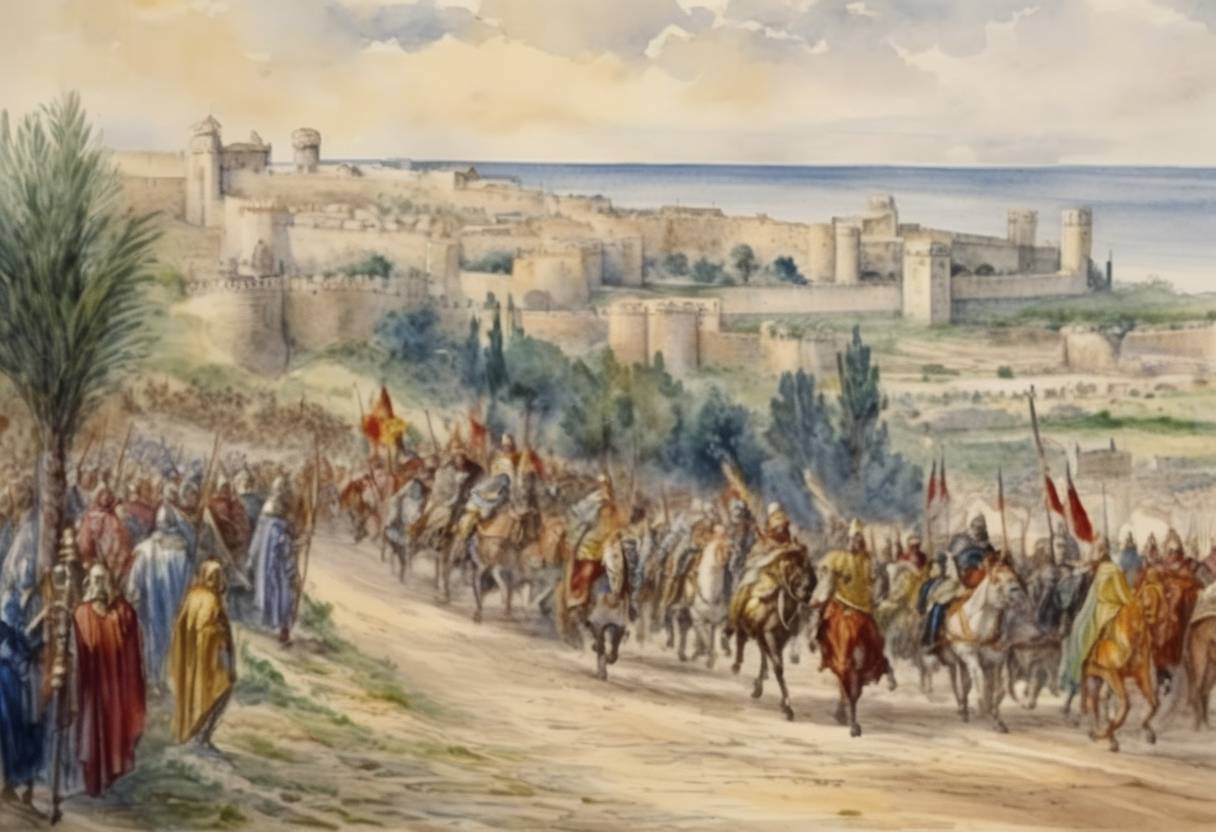
On September 15, 1228, Holy Roman Emperor Frederick II made a significant move in the history of the Crusades by landing at Acre, in what is now Israel, marking the beginning of the Sixth Crusade. This event was a key moment in the complex and often tumultuous relationship between European powers and the Muslim states of the Levant during this era.
Frederick II’s involvement in the Crusades was predicated on a vow he had made during his coronation as Holy Roman Emperor. However, his commitment to the endeavor had been delayed due to various political obligations and conflicts within Europe, which led to tensions with the papacy. Pope Gregory IX excommunicated Frederick in 1227 after he failed to embark on the Crusade as previously promised, citing illness.
Unlike the previous Crusades, Frederick’s approach involved more diplomacy than military confrontation. Upon his arrival in Acre, Frederick’s efforts were not primarily focused on warfare; instead, he sought a diplomatic solution to the conflicts in the region. His goal was to secure Jerusalem, which held significant religious importance to Christians.
Frederick’s journey culminated in the Treaty of Jaffa, signed in February 1229 with the Ayyubid Sultan al-Kamil. This treaty granted Christians control over several important sites in Jerusalem and a corridor to the city, while the Muslim population retained sovereignty over the Temple Mount and al-Aqsa Mosque. Remarkably, the treaty was achieved largely without bloodshed, underscoring Frederick’s unique diplomatic strategy.
Frederick’s diplomatic success was unprecedented among the Crusader campaigns and demonstrated an alternative route to achieving the religious and political aims of the Crusades. Despite his excommunication, Frederick crowned himself King of Jerusalem in the Church of the Holy Sepulchre in March 1229, further complicating his relationship with the papacy.
The Treaty of Jaffa and Frederick’s actions were met with mixed reactions. While some lauded the peaceful resolution, others criticized the terms as a compromise that did not achieve full Christian control over the Holy Land.
In sum, Frederick II’s landing at Acre set in motion events that would significantly impact the relationships between Christian and Muslim powers, reflecting the complexities of religious diplomacy during the Crusading era.
Source: en.wikipedia.org