Excommunication of Venice by Pope Clement V on March 27, 1309
1309 · Venice, Italy
Pope Clement V excommunicated Venice and placed the city under interdict due to its refusal to return Ferrara to the Papal States.
December 25, 1223
St. Francis of Assisi is credited with creating the first nativity scene in the town of Greccio, Italy. This event marked the inception of a tradition that sought to focus on the celebration of Christ's birth in a simple and humble manner.
Greccio, Italy | Fransiscan Order
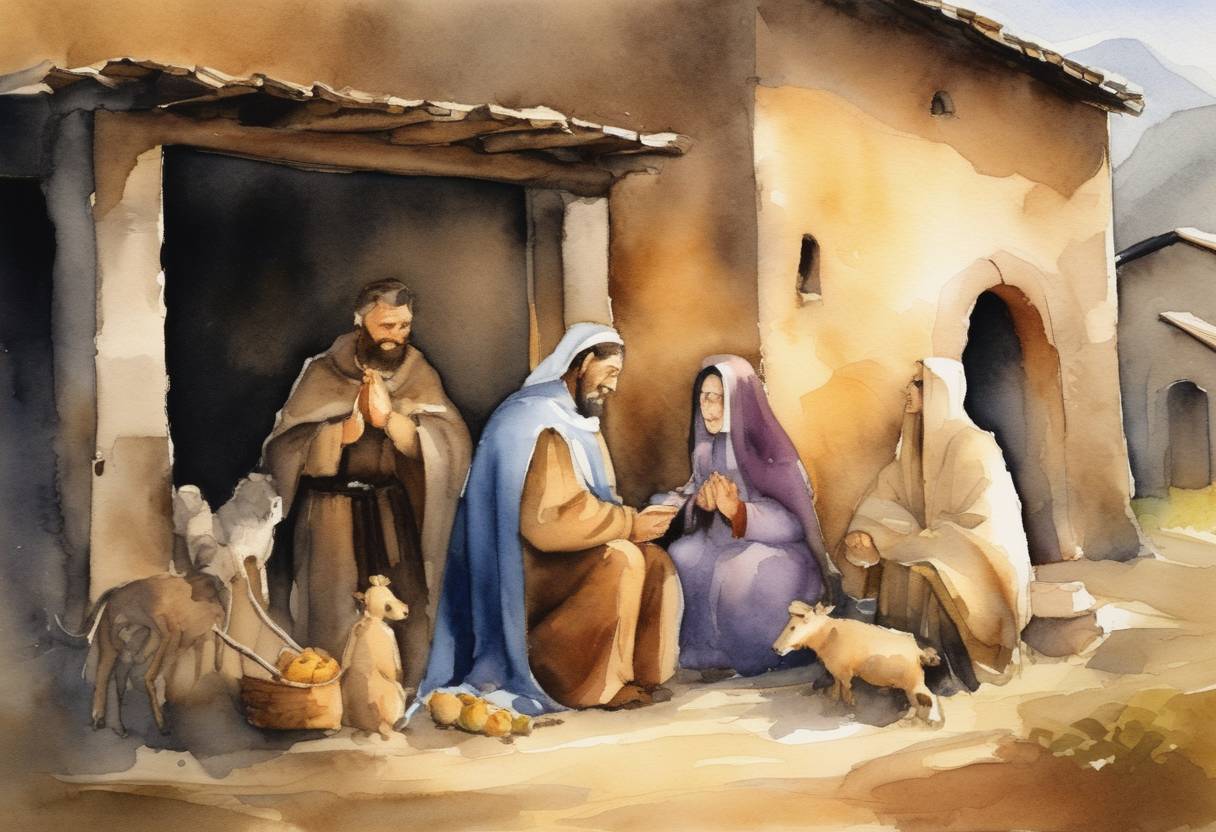
On December 25, 1223, St. Francis of Assisi is credited with creating the first nativity scene in the small Italian town of Greccio. This event marked a pivotal moment in Christian tradition, emphasizing humility and the simplicity of Christ’s birth.
St. Francis, known for his devout religious piety and commitment to poverty, sought to bring the story of Jesus Christ’s birth to life to allow believers to experience it more directly and personally. Inspired by a visit to the Holy Land, where he likely saw the original birthplace of Jesus, he envisioned a living representation of the nativity to enhance the emotional and spiritual connection to the Christmas story.
The nativity scene created by St. Francis was a live tableau. He set up a manger, and with the help of local villagers, included a live ox and donkey to recreate the setting of Jesus’ birth in Bethlehem. While no statues or sculptures were used at the time, this living scene fostered a sense of realism and immediacy.
During the event, a mass was held, and St. Francis delivered a sermon focusing on the humility and simplicity of the nativity. His words emphasized the significance of embracing poverty and humility, virtues he saw as central to Christian life.
The event in Greccio is considered the origin of modern nativity scenes, a tradition that spread throughout the Christian world. Over the centuries, the practice evolved into the more elaborate and artistic depictions seen today, ranging from simple arrangements to ornate displays and performances.
This nativity experience remains a powerful symbol of St. Francis’s enduring impact on Christian rituals and traditions. By focusing on the modest circumstances of Christ’s birth, he highlighted the profound spiritual significance of the event, inviting followers to contemplate its deeper meaning.
St. Francis of Assisi’s nativity scene not only innovated the way Christmas was celebrated but also reinforced the themes of humility and simplicity, aligning with his broader teachings and lifestyle.
Source: www.catholicnewsagency.com