Assassination of Abraham Lincoln
1865 · Washington, D.C., United States
U.S. President Abraham Lincoln was shot by John Wilkes Booth at Ford's Theatre in Washington, D.C. He died the following day, marking a pivotal moment in American history.
September 24, 1828
Shaka Zulu, the leader of the Zulu kingdom renowned for his military innovations and leadership, was assassinated by his half-brothers.
KwaDukuza, South Africa | Zulu Kingdom
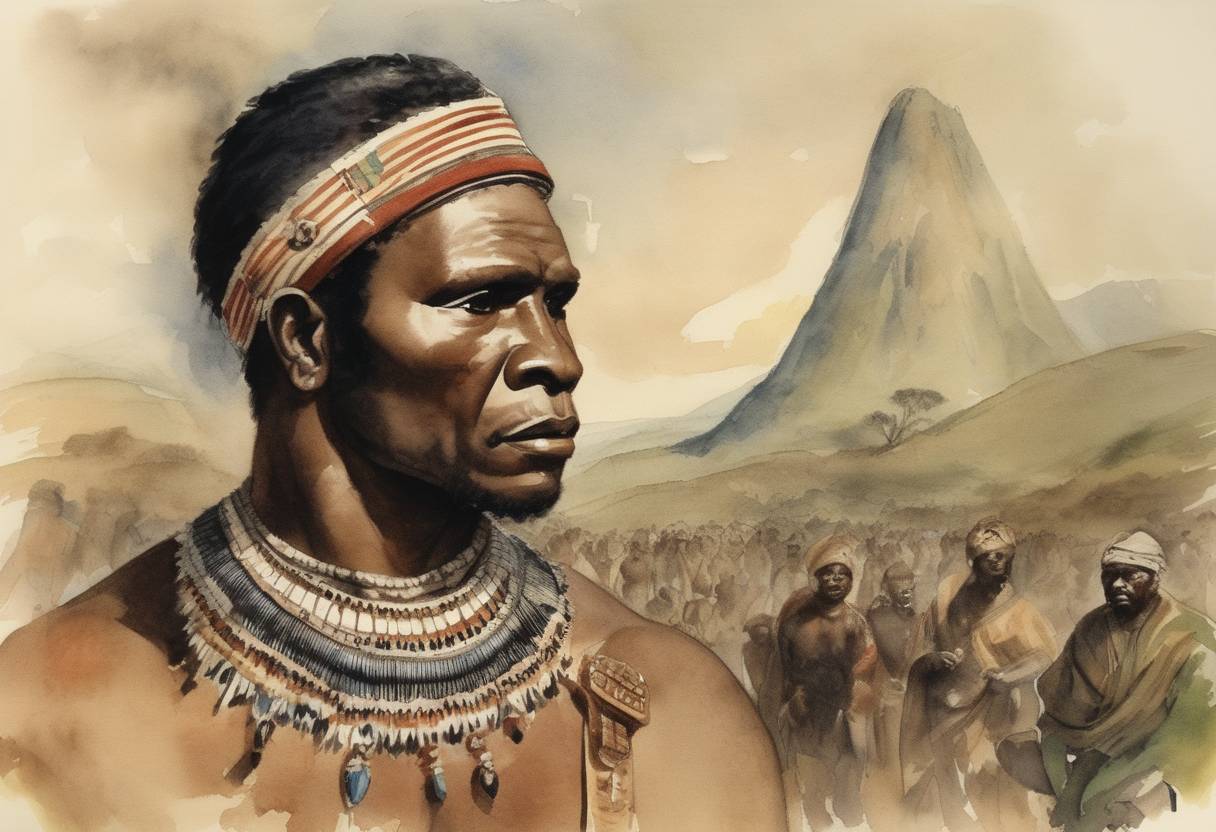
Shaka Zulu, one of the most influential leaders in African history, was assassinated on September 24, 1828, by his half-brothers Dingane and Mhlangana, along with an aide named Mbopha. Shaka was the founder and ruler of the Zulu Kingdom, renowned for his military innovations and visionary leadership between 1816 and 1828.
Born around 1787, Shaka was the illegitimate son of Senzangakhona, the Zulu chieftain, and Nandi, a woman of the Elangeni clan. Shaka’s early life was marked by hardship due to his status, but he rose through the ranks in the Mthethwa empire of Dingiswayo. When Shaka became chieftain of the Zulu clan following his father’s death, he began transforming it into a formidable kingdom.
He revolutionized traditional warfare, which involved skirmishes using light throwing spears. Shaka introduced the “iklwa,” a shorter stabbing spear, and organized his warriors into regiments known as “impis,” encouraging close-contact combat. His strategies involved rigorous training and the “bull horn” formation, which allowed the Zulu forces to encircle and defeat their enemies efficiently.
Under Shaka’s leadership, the Zulu Kingdom expanded rapidly, conquering nearby tribes and assimilating them into his domain through both diplomacy and brute force, laying the foundation for a powerful state.
Despite his successes, Shaka’s rule became increasingly autocratic and brutal, particularly following the death of his mother in 1827, which deeply affected him. His mourning resulted in significant social disruptions and executions, with accounts of his ordering widespread grieving customs that led to hardships for his people.
The discontent towards Shaka grew within the Zulu leadership and among his people due to his erratic behavior and perceived despotism. His half-brothers, Dingane and Mhlangana, seized upon this dissatisfaction, conspiring to remove him from power.
On September 24, 1828, with the assistance of Mbopha, Dingane and Mhlangana successfully executed their plan to kill Shaka. The assassination occurred at kwaDukuza, his royal homestead.
Following Shaka’s death, Dingane became the king of the Zulu people. Under his rule, the strategies and structures established by Shaka continued to influence the Zulu kingdom. However, Dingane’s reign marked a decline in the power and cohesion that Shaka had achieved, especially with increasing tension and conflict with European settlers.
The impact of Shaka’s leadership persists in the cultural memory and historical narrative of Southern Africa, marking him as a pivotal figure in the pre-colonial African history for his profound impact on the Zulu nation and military tactics.
Source: www.britannica.com