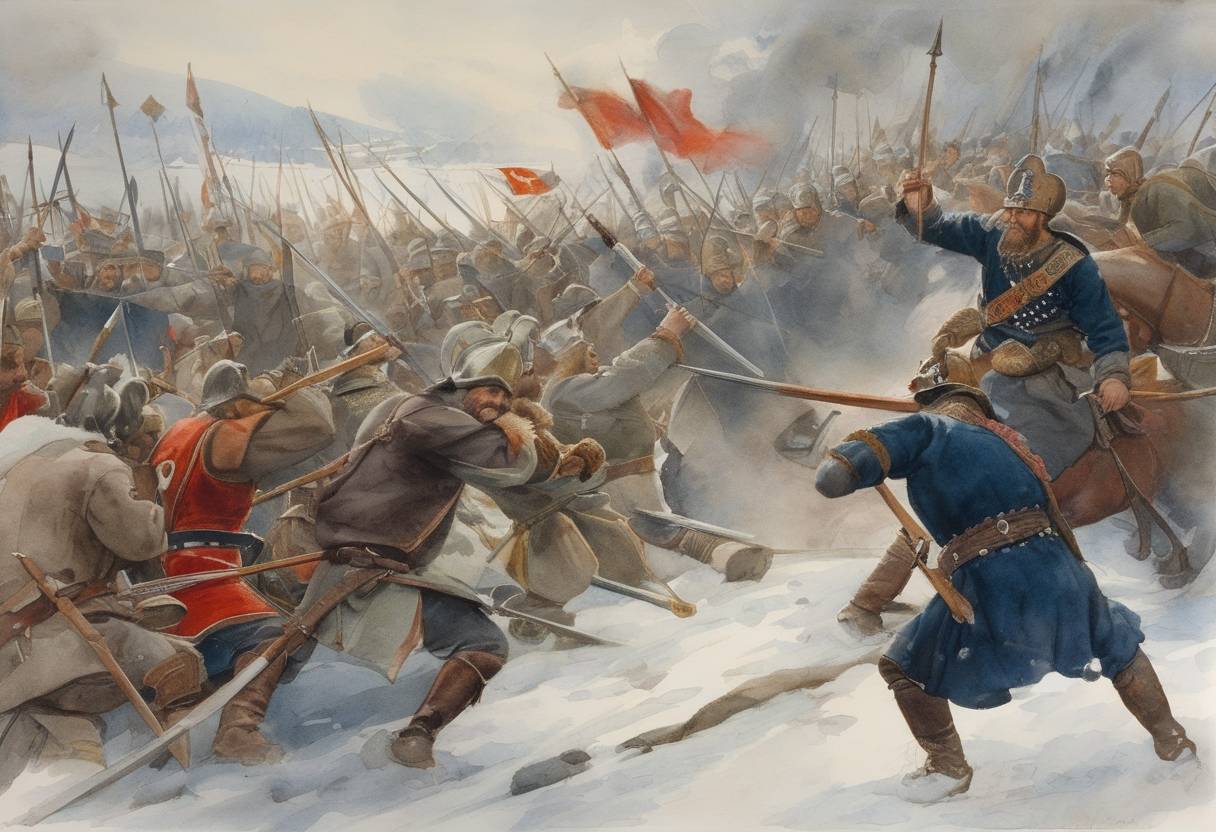
Battle of Nesjar: March 25, 1016
The Battle of Nesjar took place on March 25, 1016, not September 1, as a pivotal naval engagement that solidified the rule of King Olaf II of Norway. The conflict was fought off the coast of Norway, near the location known today as Nesjar in the Oslofjord region. This battle marked a significant turning point in Norwegian history and was crucial in the unification of the country under a single monarch.
Background
Leading up to the battle, Norway was a fragmented region with various chieftains and earls vying for control. Olaf Haraldsson, later known as Olaf II and canonized as Saint Olaf, returned to Norway from exile with ambitions of consolidating power and converting the Norwegians to Christianity. His main opponent was Earl Svein Håkonsson, a powerful noble who had claimed rulership over parts of Norway with the support of Danish King Cnut the Great.
Olaf sought to unify Norway and centralize authority, which threatened the regional power held by local chieftains and earls. The tension culminated in the strategic confrontation at Nesjar.
The Battle
Little is known about the exact details of the battle itself, as contemporary accounts are scarce. However, sagas and historical records suggest that the battle involved Olaf’s formidable fleet, composed of ships with battle-hardened warriors, engaging Svein’s coalition of forces at sea. The Norwegians under Olaf’s command were determined to assert his claim to the throne and resist external influence, particularly from Denmark.
Olaf’s forces, benefiting from his leadership and strategic prowess, managed to decisively defeat Svein’s coalition. The victory at Nesjar cemented his authority and was a step toward eliminating opposition from local chieftains resistant to his rule and religious reforms.
Aftermath
The result of the battle was significant in establishing King Olaf II’s dominance over Norway. Following his victory at Nesjar, Olaf continued to consolidate power and pursue his mission to Christianize the region, which involved building churches and exerting royal authority.
The victory also symbolized a shift away from the decentralized rule of local chieftains, paving the way for the establishment of a more unified Norwegian kingdom. Olaf’s subsequent reign had lasting impacts on Norway’s political and religious landscape, with his dedication to Christianity eventually leading to his sainthood.
In historical terms, the Battle of Nesjar stands out as a landmark moment in the formation of the Norwegian nation-state and the expansion of Christianity in Scandinavia.