Capture of Benito Mussolini - April 27, 1945
1945 · Dongo, Italy
Benito Mussolini was captured by Italian partisans while attempting to flee Italy during the final days of World War II.
October 4, 1940
Adolf Hitler and Benito Mussolini meet at the Brenner Pass in the Alps.
Brenner Pass, Italy | Nazi Germany, Fascist Italy
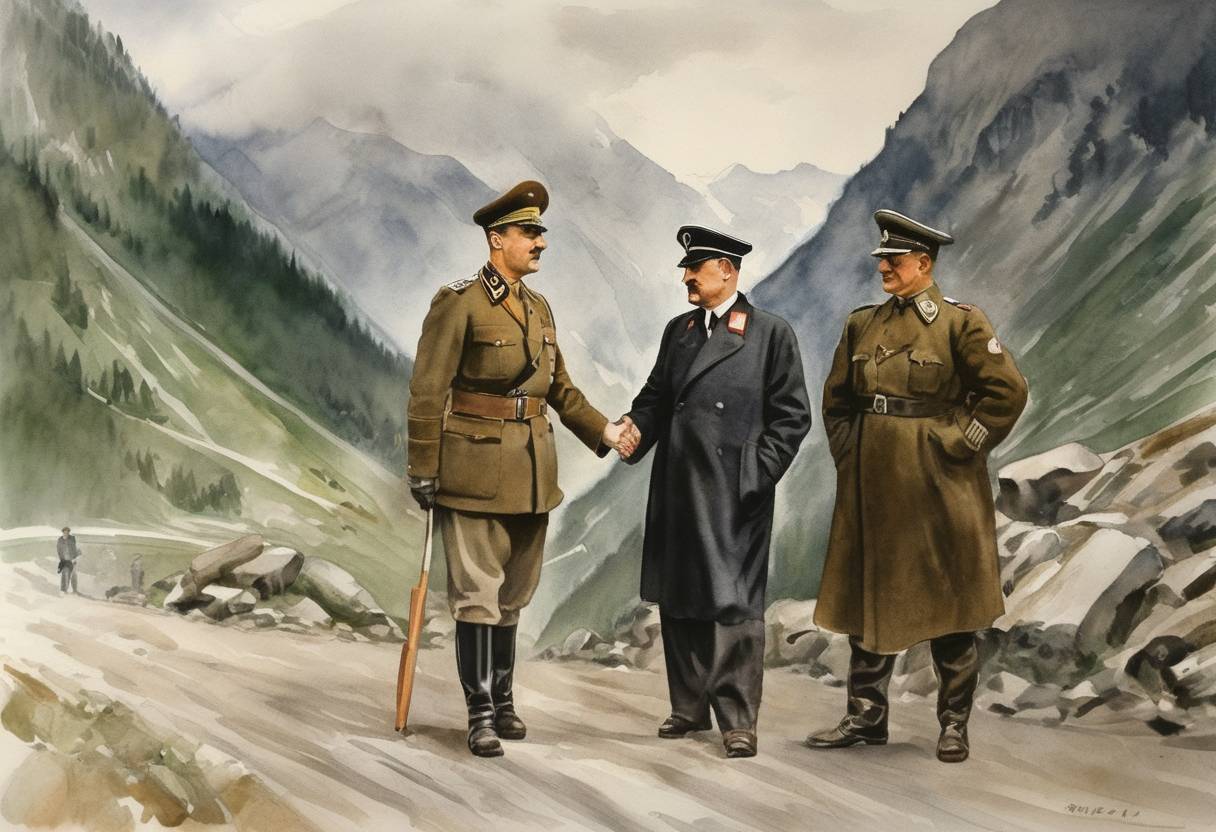
On October 4, 1940, Adolf Hitler and Benito Mussolini met at the Brenner Pass in the Alps, marking a significant moment in the alliances of World War II. The meeting between the leaders of Nazi Germany and Fascist Italy was held as Europe was deeply embroiled in the conflict, with both nations having a vested interest in the political and military landscape of the continent.
The meeting came at a time when Germany had achieved a series of military successes, including the invasion and occupation of much of Western Europe. Italy, which had joined the war on Germany’s side in June 1940, was grappling with the challenges of its military campaign, particularly in North Africa.
The Brenner Pass serves as a symbolic and strategic connection between Italy and Austria (at the time, under German control following the Anschluss in 1938). It had previously been the site of meetings between the two leaders who were bound by the Axis Pact, aiming to solidify their military and political cooperation.
During their discussions at the Brenner Pass, Hitler and Mussolini addressed several critical issues:
The Brenner Pass meeting underscored the complexities of the Axis alliance. While both leaders shared similar ideological frameworks—fascist Italy and Nazi Germany were based on totalitarian principles—they often had divergent priorities and strategic interests. Mussolini’s appeals for assistance highlighted Italy’s dependence on German military might, while Germany sought to ensure Italy remained a reliable partner in their broader geopolitical ambitions.
The outcomes of this meeting contributed to the subsequent military campaigns in Greece and North Africa, areas where Italy would face significant challenges and require ongoing German intervention. This alliance would continue until Italy’s eventual armistice with the Allies and German occupation of parts of Italy in 1943.
Overall, the meeting at the Brenner Pass exemplifies the strategic cooperation and tension within the Axis powers during World War II, setting the stage for broader developments as the conflict continued to unfold.
Source: www.history.com