The Construction of the Church of the Holy Sepulchre
328 · Jerusalem, Roman Empire
The construction of the Church of the Holy Sepulchre in Jerusalem is ordered by Emperor Constantine the Great.
February 18, 0310
Saint Pamphilus of Caesarea, a Christian scholar and presbyter, was martyred during the Diocletianic Persecution.
Caesarea, Roman Empire | Roman Empire
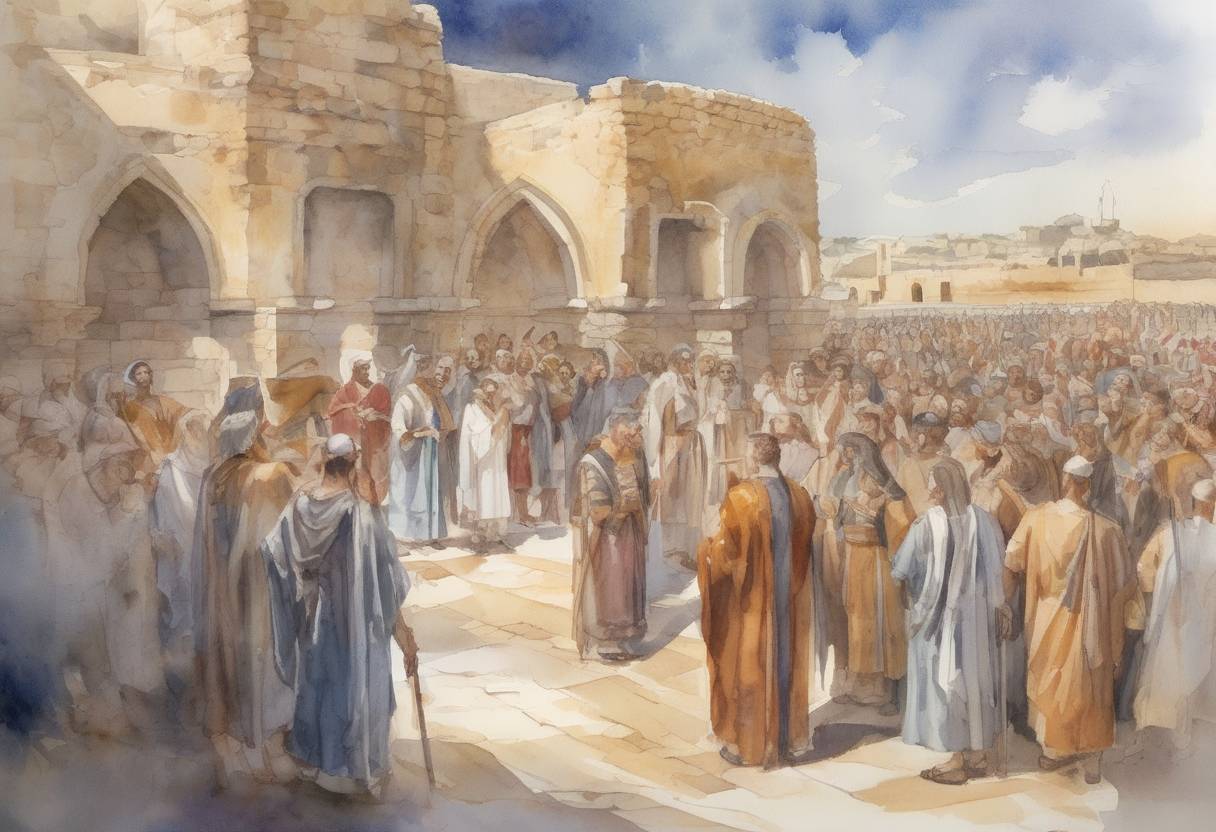
Saint Pamphilus of Caesarea was a prominent Christian scholar and presbyter in the early 4th century. He was born in Berytus, modern-day Beirut, and received an extensive education in both secular and theological studies. Pamphilus was deeply influenced by the teachings of Origen, an early Christian theologian, and he dedicated much of his life to preserving and promoting Origen’s works.
Pamphilus is best known for his scholarly work and his efforts to establish a significant theological library in Caesarea, which became a vital center for Christian learning. He collaborated with Eusebius of Caesarea, who later became a renowned church historian, to produce a comprehensive edition of the Septuagint, the Greek translation of the Hebrew Bible. This work was crucial in making biblical texts more accessible to Greek-speaking Christians.
The Diocletianic Persecution, initiated by Roman Emperor Diocletian in 303 AD, was one of the most severe persecutions of Christians in the Roman Empire. It aimed to suppress Christianity through a series of edicts that ordered the destruction of Christian scriptures, the dismantling of churches, and the imprisonment of clergy.
Pamphilus was arrested during this period of intense persecution due to his unwavering commitment to his faith and his refusal to renounce Christianity. He was imprisoned and subjected to torture in an attempt to force him to recant his beliefs. Despite the harsh treatment, Pamphilus remained steadfast in his faith.
On February 18, 310, Pamphilus was martyred in Caesarea. His execution was part of a broader campaign to eliminate Christian leaders who were seen as threats to the Roman religious order. Pamphilus’s martyrdom was a testament to his dedication to his faith and his role as a leader in the early Christian community.
Saint Pamphilus’s legacy endures through his contributions to Christian scholarship and his role in preserving important theological works. His life and martyrdom are commemorated by the Christian Church, and he is remembered as a symbol of faith and resilience in the face of persecution. His collaboration with Eusebius laid the groundwork for future Christian historiography and theological study, influencing generations of Christian scholars.
Source: en.wikipedia.org