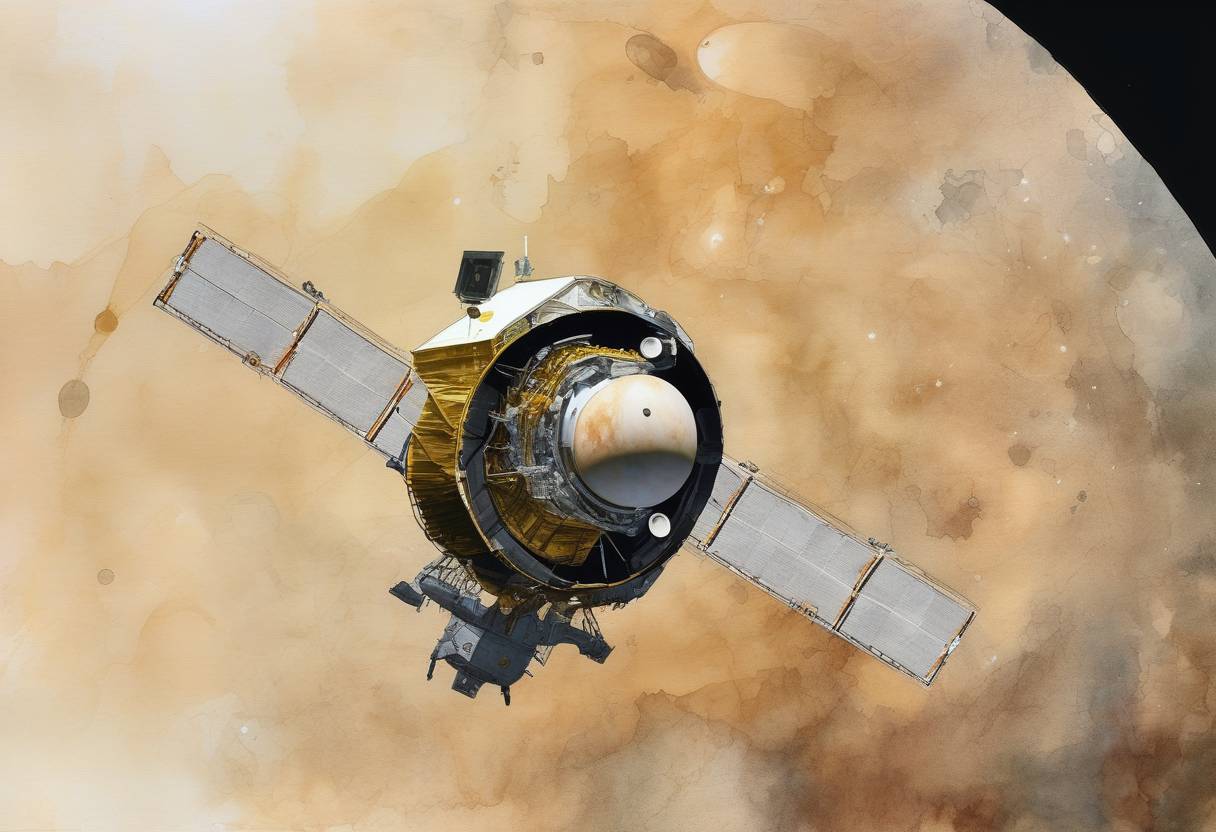
New Horizons Flyby of Pluto - July 14, 2015
On July 14, 2015, NASA’s New Horizons spacecraft made history by performing a flyby of Pluto, providing humanity with the first close-up images of the distant dwarf planet and its moons. This event marked a significant milestone in space exploration, as it was the first mission to explore Pluto and the Kuiper Belt, a region of the solar system beyond the orbit of Neptune.
Background
Launch and Mission: New Horizons was launched on January 19, 2006, from Cape Canaveral, Florida. The spacecraft was designed to study Pluto, its moons, and other objects in the Kuiper Belt. The mission aimed to gather data on Pluto’s atmosphere, surface, and geology.
Journey to Pluto: The spacecraft traveled over 3 billion miles (about 4.9 billion kilometers) over the course of 9.5 years. It utilized a gravity assist from Jupiter in 2007 to increase its speed and adjust its trajectory toward Pluto.
The Flyby
Closest Approach: On July 14, 2015, New Horizons made its closest approach to Pluto, coming within approximately 7,800 miles (12,500 kilometers) of the surface.
Data Collection: During the flyby, New Horizons collected a vast array of data, including high-resolution images and measurements of Pluto’s atmosphere, surface composition, and temperature. It also studied Pluto’s largest moon, Charon, and smaller moons such as Nix, Hydra, Kerberos, and Styx.
Discoveries and Impact
Surface Features: The images revealed a diverse and complex surface, including vast plains, towering mountains, and evidence of geological activity. One of the most notable features was a heart-shaped region named Tombaugh Regio, in honor of Clyde Tombaugh, who discovered Pluto in 1930.
Atmosphere and Moons: The data indicated that Pluto has a thin atmosphere primarily composed of nitrogen, with traces of methane and carbon monoxide. The observations of Charon showed a varied landscape with canyons and cliffs, suggesting a dynamic history.
Scientific Significance: The flyby provided unprecedented insights into the characteristics of Pluto and its moons, challenging previous assumptions and expanding our understanding of the outer solar system. It also demonstrated the capabilities of long-duration space missions and the potential for future exploration of the Kuiper Belt.
Aftermath
Continued Exploration: Following the Pluto flyby, New Horizons continued its mission to explore other Kuiper Belt objects. In January 2019, it conducted a flyby of Arrokoth (formerly known as Ultima Thule), providing further insights into the early solar system.
Legacy: The success of the New Horizons mission has inspired future missions to the outer solar system and beyond, highlighting the importance of exploring distant worlds to gain a comprehensive understanding of our solar system’s formation and evolution.
The New Horizons flyby of Pluto stands as a testament to human curiosity and the relentless pursuit of knowledge, offering a glimpse into the mysteries of the farthest reaches of our solar neighborhood.