The Continental Congress Votes for Independence: July 2, 1776
1776 · Philadelphia, United States
The Continental Congress votes in favor of independence from Great Britain, leading to the adoption of the Declaration of Independence two days later.
May 10, 1775
The Second Continental Congress convenes in Philadelphia, Pennsylvania.
Philadelphia, United States | Continental Congress
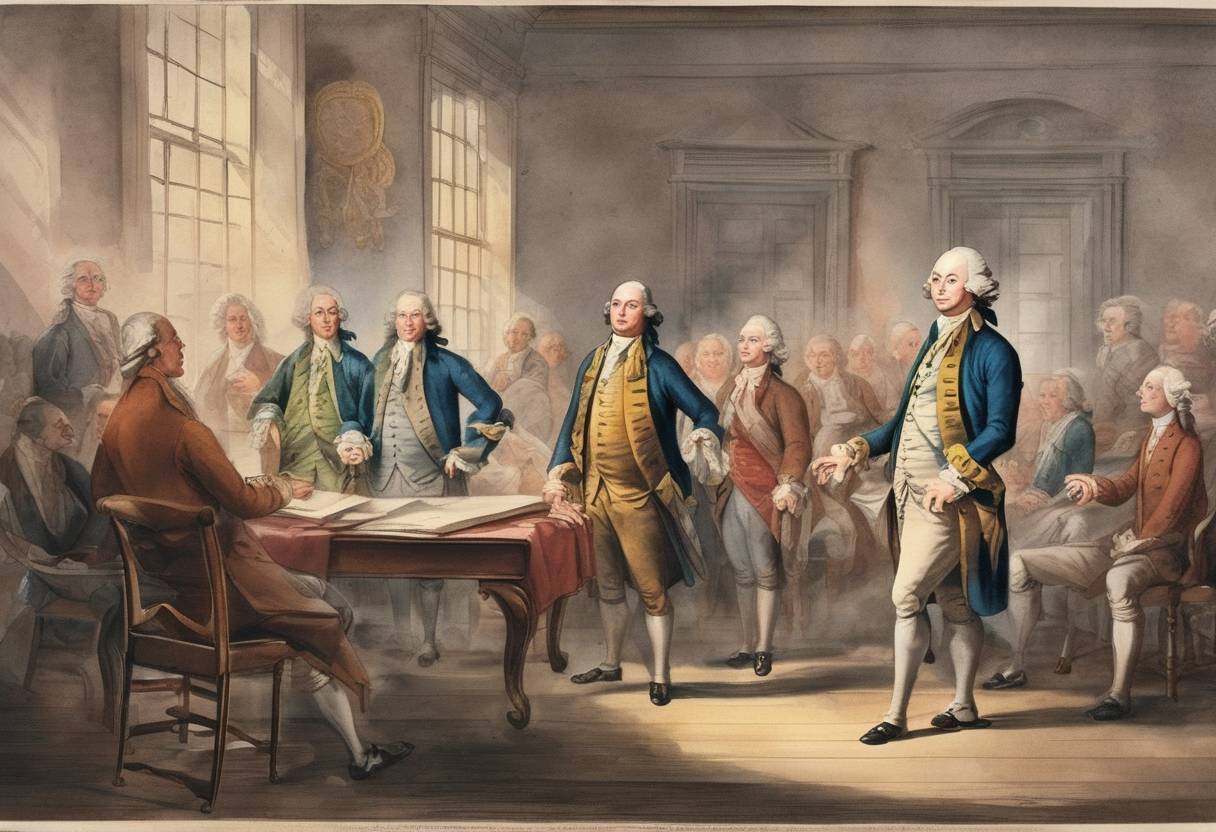
The Second Continental Congress convened in Philadelphia, Pennsylvania, on May 10, 1775, against a backdrop of escalating tensions between the American colonies and Great Britain. The First Continental Congress had met in 1774 to address colonial grievances over British policies, but by the time the Second Congress assembled, the situation had deteriorated further. The Battles of Lexington and Concord had occurred on April 19, 1775, marking the outbreak of armed conflict between colonial militias and British forces.
The Second Continental Congress brought together delegates from all thirteen colonies. Notable figures included John Hancock, who was elected president of the Congress, Benjamin Franklin, Thomas Jefferson, and John Adams. The Congress met at the Pennsylvania State House, now known as Independence Hall.
The Second Continental Congress played a pivotal role in the American Revolution, transitioning the colonies from a state of protest to one of open rebellion. It laid the groundwork for the eventual Declaration of Independence, which would be adopted on July 4, 1776. The Congress functioned as the de facto national government of the United States during the Revolutionary War, overseeing military strategy, diplomacy, and financial matters.
The actions taken by the Second Continental Congress set the stage for the colonies’ eventual independence from Britain. The establishment of a unified military command and the move towards self-governance were critical steps in the formation of the United States. The Congress continued to meet throughout the war, adapting to the changing needs of the revolutionary cause and laying the foundation for the future governance of the nation.
In summary, the convening of the Second Continental Congress on May 10, 1775, marked a significant turning point in American history, as the colonies moved from protest to revolution, setting the stage for the birth of a new nation.
Source: en.wikipedia.org