2005 · Yangon, Myanmar
The Saffron Revolution's largest protest in Myanmar, with over 10,000 demonstrators, takes place. The protests marked a significant challenge to the military junta.
August 8, 1988
8888 Uprising: A pro-democracy protest in Myanmar (Burma) began, which was violently suppressed by the military government, resulting in thousands of deaths.
Yangon, Myanmar | Myanmar Military Government
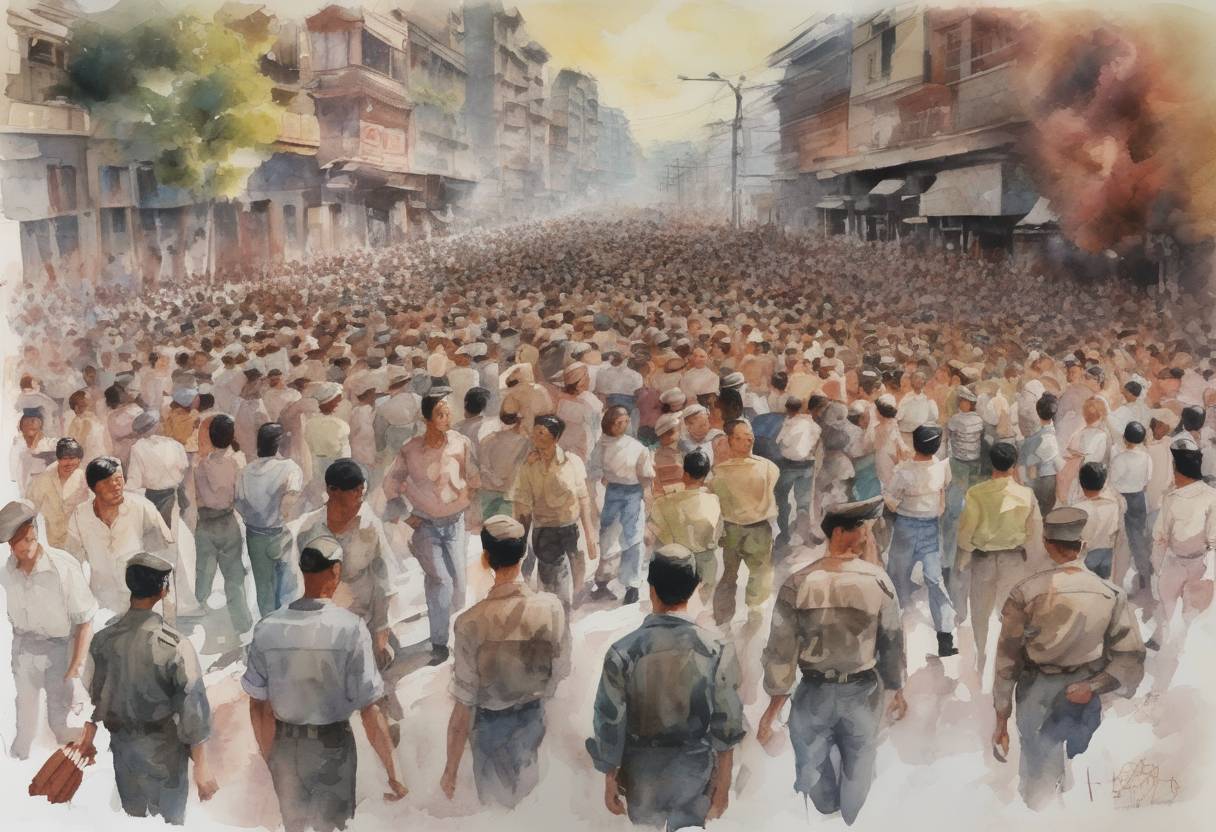
The 8888 Uprising refers to a series of nationwide protests, marches, and civil unrest in Myanmar (then known as Burma) that began on August 8, 1988. The movement was primarily driven by widespread dissatisfaction with the military government led by General Ne Win, who had been in power since a coup in 1962. Under his rule, Burma experienced economic decline, political repression, and isolation from the international community.
Economic Decline: Ne Win’s socialist policies, particularly the “Burmese Way to Socialism,” led to economic stagnation and widespread poverty. The demonetization of the currency in 1987, which rendered a significant portion of the population’s savings worthless, further fueled public discontent.
Student Protests: The unrest began with student protests in March 1988, following the death of a student, Phone Maw, at the hands of police during a demonstration at the Rangoon Institute of Technology. These protests were met with brutal crackdowns, but they ignited a broader movement against the regime.
August 8, 1988 (8/8/88): The date was chosen symbolically for its numerological significance, believed to bring good fortune. On this day, hundreds of thousands of people, including students, monks, workers, and civil servants, took to the streets across Burma, demanding democratic reforms and the resignation of Ne Win.
Government Response: The military responded with extreme violence. Troops were deployed to suppress the protests, using live ammunition against unarmed demonstrators. The crackdown resulted in the deaths of an estimated 3,000 people, though exact numbers remain uncertain due to the chaotic nature of the events and government censorship.
Political Changes: In the wake of the uprising, Ne Win resigned, and a new military junta, the State Law and Order Restoration Council (SLORC), took control. Despite initial promises of reform, the SLORC maintained strict military rule.
Aung San Suu Kyi: The uprising marked the emergence of Aung San Suu Kyi as a prominent political figure. She became the leader of the National League for Democracy (NLD), advocating for nonviolent resistance and democratic reform. Her efforts would later earn her the Nobel Peace Prize in 1991.
Long-term Impact: The 8888 Uprising is considered a pivotal moment in Myanmar’s history. It highlighted the people’s desire for democracy and set the stage for future political movements. However, the military’s continued grip on power delayed significant democratic progress for decades.
The 8888 Uprising is a testament to the resilience and courage of the Burmese people in the face of authoritarian rule. It drew international attention to the human rights abuses in Myanmar and inspired subsequent generations to continue the struggle for democracy. Despite the violent suppression, the spirit of the uprising lived on, influencing political developments in the region and contributing to the eventual political changes in Myanmar in the 21st century.
Source: www.britannica.com