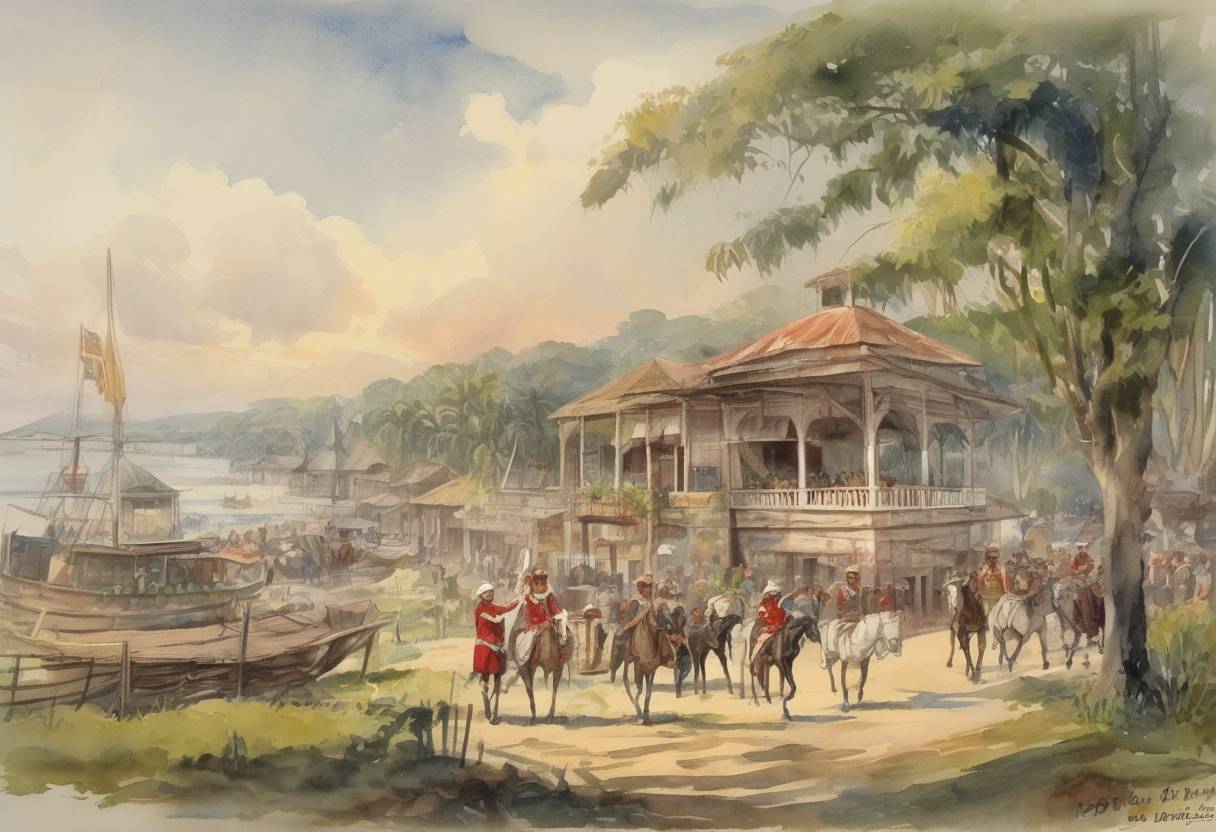
The Philippines Declares Independence from Spain
On June 12, 1898, the Philippines declared its independence from Spanish colonial rule, marking a pivotal moment in the nation’s history. This event signified the end of over 300 years of Spanish colonization, which began with the arrival of Ferdinand Magellan in 1521 and the subsequent establishment of Spanish settlements.
Context Leading to Independence
The path to independence was shaped by a series of significant events and movements:
The Propaganda Movement: In the late 19th century, Filipino intellectuals and reformists, such as José Rizal, Graciano López Jaena, and Marcelo H. del Pilar, advocated for political reforms and greater autonomy through writings and peaceful advocacy. Their efforts laid the groundwork for a growing sense of national identity and resistance against colonial rule.
The Katipunan and the Philippine Revolution: Founded by Andrés Bonifacio in 1892, the Katipunan was a secret society that sought complete independence from Spain through armed revolt. The Philippine Revolution began in 1896, leading to widespread uprisings across the archipelago.
Execution of José Rizal: The execution of José Rizal on December 30, 1896, galvanized the Filipino people and intensified the revolutionary fervor. Rizal’s martyrdom became a symbol of the struggle for independence.
Spanish-American War: The outbreak of the Spanish-American War in April 1898 provided a strategic opportunity for Filipino revolutionaries. The United States, seeking to weaken Spanish control in the Pacific, engaged in military operations in the Philippines.
The Declaration of Independence
Proclamation: On June 12, 1898, General Emilio Aguinaldo, a leading figure in the revolution, proclaimed Philippine independence in Kawit, Cavite. The declaration was made from the balcony of Aguinaldo’s residence, and the Philippine flag was unfurled for the first time, accompanied by the playing of the national anthem, “Lupang Hinirang.”
The Act of the Declaration of Independence: The declaration was documented in the “Acta de la Proclamación de la Independencia del Pueblo Filipino,” which was read by Ambrosio Rianzares Bautista. It asserted the sovereignty and independence of the Filipino people from Spanish rule.
Aftermath and Consequences
Treaty of Paris: Despite the declaration, the Treaty of Paris, signed on December 10, 1898, ended the Spanish-American War and ceded the Philippines to the United States for $20 million. This led to the Philippine-American War as Filipinos resisted American colonization.
Recognition of Independence: The Philippines would not gain full recognition of its independence until July 4, 1946, following the end of World War II and the signing of the Treaty of Manila.
Historical Significance
The declaration of independence on June 12, 1898, is a cornerstone of Philippine national identity. It represents the enduring struggle for self-determination and sovereignty. Today, June 12 is celebrated annually as Philippine Independence Day, a national holiday commemorating the bravery and sacrifices of those who fought for the nation’s freedom.