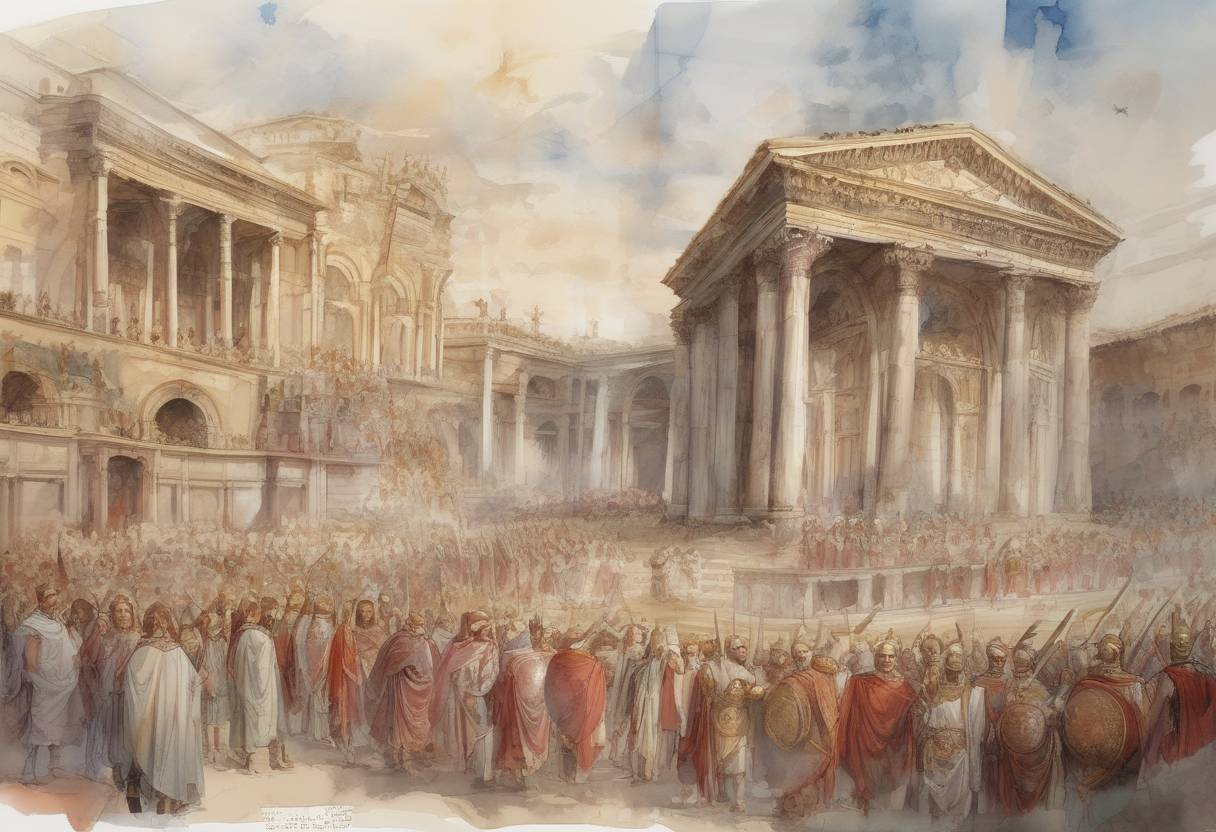
The Edict of Milan: A Turning Point in Religious Tolerance
Background
The Edict of Milan, issued in February 313 AD, was a pivotal moment in the history of the Roman Empire and Christianity. Prior to this edict, Christians had faced periods of severe persecution, most notably under Emperor Diocletian. The Roman Empire, traditionally polytheistic, viewed the monotheistic Christian faith with suspicion, leading to widespread discrimination and violence against its followers.
Constantine I: Also known as Constantine the Great, he was the Roman Emperor of the Western Roman Empire. He is renowned for his conversion to Christianity and his role in its spread throughout the empire.
Licinius: He was the Roman Emperor of the Eastern Roman Empire. Initially a pagan, Licinius played a crucial role in the establishment of religious tolerance alongside Constantine.
The Edict
The Edict of Milan was not a single document but rather a proclamation of religious tolerance agreed upon by Constantine and Licinius. It marked the end of the Diocletianic Persecution and granted Christians the freedom to practice their religion openly without fear of retribution. The edict also restored properties confiscated from Christians during the persecutions.
Key Provisions
Religious Freedom: The edict declared that all individuals were free to worship any deity according to their own beliefs, effectively legalizing Christianity and other religions within the empire.
Restoration of Property: It mandated the return of confiscated Christian properties, including places of worship, to their rightful owners.
State Neutrality: The edict emphasized the state’s neutrality in religious matters, allowing for a diverse religious landscape.
Historical Significance
The Edict of Milan is often seen as a foundational moment for the Christian Church, as it allowed for the religion’s expansion and integration into Roman society. It set a precedent for religious tolerance that would influence future legal and cultural developments within the empire and beyond.
Consequences
Rise of Christianity: With newfound freedom, Christianity rapidly spread throughout the Roman Empire, eventually becoming the dominant religion.
Political Alliances: The edict strengthened the political alliance between Constantine and Licinius, although this alliance would later dissolve, leading to conflict.
Cultural Shift: The acceptance of Christianity marked a significant cultural shift in the Roman Empire, influencing art, philosophy, and governance.
Conclusion
The Edict of Milan was a landmark decree that not only transformed the religious landscape of the Roman Empire but also laid the groundwork for the future relationship between church and state. Its emphasis on religious tolerance and freedom remains a significant milestone in the history of human rights and religious liberty.