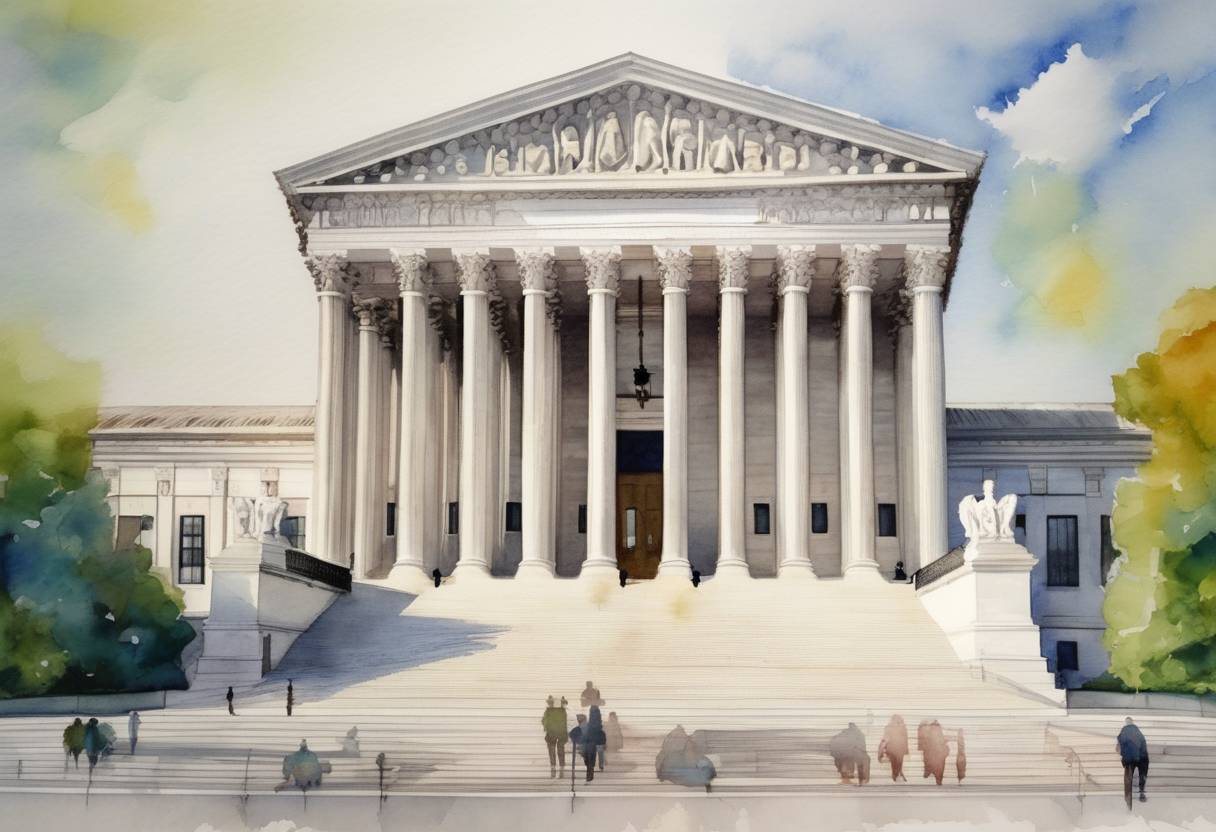
King v. Burwell: U.S. Supreme Court Ruling on June 22, 2015
On June 22, 2015, the U.S. Supreme Court delivered a landmark decision in the case of King v. Burwell, which played a crucial role in upholding the Affordable Care Act (ACA), commonly known as Obamacare. The ruling was pivotal in maintaining the structure and functionality of the ACA, particularly concerning federal subsidies for health insurance.
Background
The Affordable Care Act, enacted in 2010, aimed to increase the quality and affordability of health insurance, reduce the uninsured rate, and lower healthcare costs. A key component of the ACA was the provision of subsidies to help individuals afford insurance purchased through health insurance exchanges.
The controversy in King v. Burwell centered around the interpretation of the phrase “established by the State” in the ACA. The plaintiffs argued that subsidies should only be available to those purchasing insurance through exchanges established by individual states, not through the federal exchange.
The Case
Plaintiffs’ Argument: The plaintiffs contended that the Internal Revenue Service (IRS) was unlawfully providing subsidies to individuals in states that had not set up their own exchanges, as the ACA’s language specified subsidies for exchanges “established by the State.”
Government’s Argument: The federal government argued that the intent of the ACA was to provide subsidies to all eligible Americans, regardless of whether their state had established its own exchange or relied on the federal exchange.
Supreme Court Decision
Ruling: In a 6-3 decision, the Supreme Court ruled in favor of the government, allowing federal subsidies to continue for individuals in all states, regardless of whether the exchange was state or federally established.
Majority Opinion: Chief Justice John Roberts wrote the majority opinion, emphasizing that the ACA’s broader purpose was to improve health insurance markets, not destroy them. The Court interpreted the law in a manner that would allow it to function as intended.
Dissenting Opinion: Justice Antonin Scalia, joined by Justices Clarence Thomas and Samuel Alito, dissented, arguing that the Court was overstepping by interpreting the law beyond its clear wording.
Significance and Aftermath
The decision in King v. Burwell was significant for several reasons:
Stability of the ACA: The ruling preserved the ACA’s framework, ensuring that millions of Americans continued to receive subsidies, thereby maintaining their access to affordable health insurance.
Legal Precedent: The decision reinforced the principle of interpreting statutes in a way that aligns with legislative intent, particularly in complex regulatory schemes.
Political Impact: The ruling was a major victory for the Obama administration and supporters of the ACA, solidifying the law’s standing amidst ongoing political and legal challenges.
In summary, the Supreme Court’s decision in King v. Burwell was a critical moment in the history of U.S. healthcare policy, affirming the ACA’s subsidy provisions and reinforcing the law’s goal of expanding healthcare access to Americans nationwide.