Luna 1: The First Spacecraft to Reach the Vicinity of the Moon
1959 · Baikonur, Kazakhstan
Luna 1, the first spacecraft to reach the vicinity of the Moon and to orbit the Sun, was launched by the Soviet Union.
August 17, 1970
Venera 7, a Soviet spacecraft, is launched. It later becomes the first spacecraft to successfully transmit data from the surface of another planet, Venus.
Baikonur, Kazakhstan | Soviet Space Program
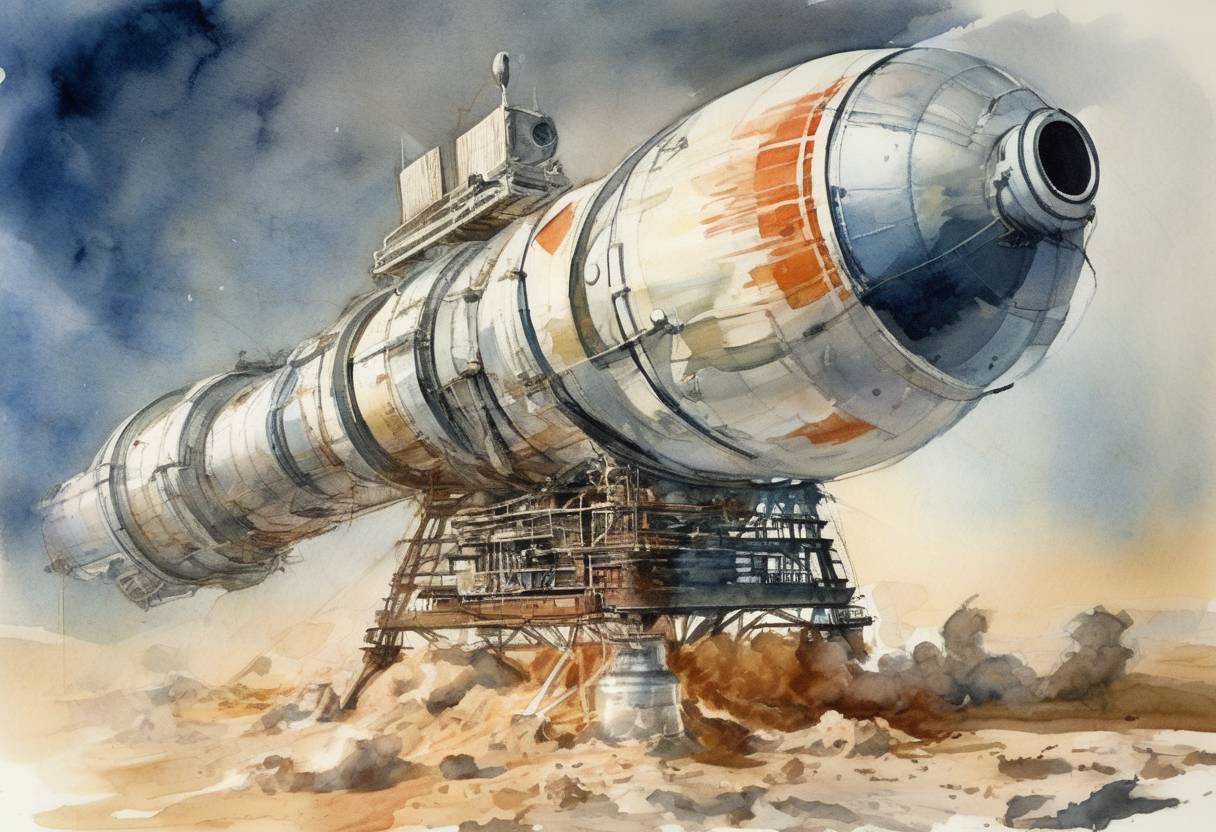
On August 17, 1970, the Soviet Union launched the Venera 7 spacecraft, marking a significant milestone in the history of space exploration. This mission was part of the Soviet Venera program, which aimed to explore Venus, Earth’s closest planetary neighbor. Venera 7 holds the distinction of being the first spacecraft to successfully transmit data from the surface of another planet.
The Venera program was initiated by the Soviet Union in the early 1960s, with the goal of exploring Venus, a planet shrouded in mystery due to its thick cloud cover. Previous missions, such as Venera 4, had attempted to study Venus’s atmosphere, but none had successfully transmitted data from the planet’s surface.
Venera 7 was designed to withstand the extreme conditions on Venus, including high temperatures and pressures. The spacecraft’s descent module was equipped with a robust cooling system and a parachute to slow its descent through the Venusian atmosphere.
On December 15, 1970, Venera 7 entered the atmosphere of Venus. Despite a partial failure of its parachute, which caused a faster-than-expected descent, the spacecraft managed to land on the planet’s surface. It transmitted data back to Earth for 23 minutes, providing the first direct measurements from the surface of another planet.
These measurements confirmed the harsh conditions on Venus, which were far more extreme than previously estimated.
The success of Venera 7 was a landmark achievement in planetary exploration. It demonstrated the feasibility of landing on and studying the surface of other planets, paving the way for future missions to Venus and beyond. The data collected by Venera 7 contributed significantly to our understanding of Venus’s environment and atmospheric conditions.
The mission’s success also underscored the capabilities of the Soviet space program during the Cold War era, highlighting its role in advancing human knowledge of the solar system.
Venera 7’s successful transmission of data from Venus’s surface remains a testament to human ingenuity and the relentless pursuit of knowledge. It set the stage for subsequent missions in the Venera program and inspired future explorations of our planetary neighbors.
Source: www.nasa.gov